Titling a Machine Bought in Virginia
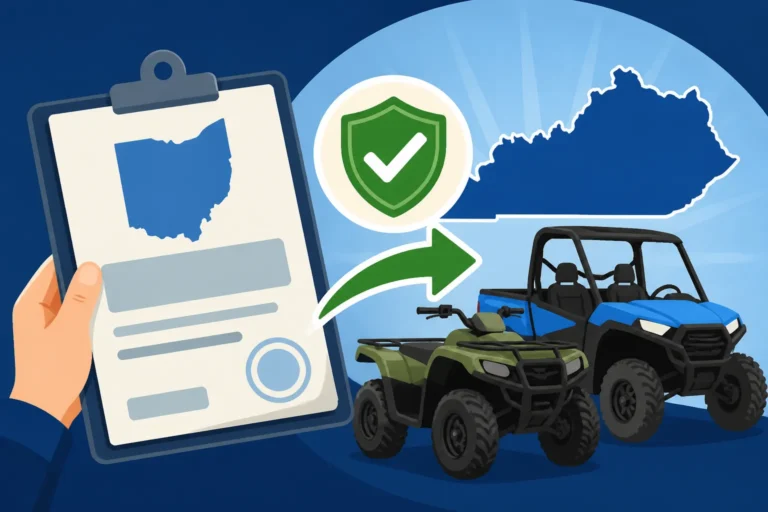
You've just found what seems like the perfect ATV or UTV deal across the border in Virginia, a state known for its beautiful landscapes and, sometimes, confusing vehicle laws. Bringing that machine back to your Kentucky home can feel like stepping into a bureaucratic maze, especially when you realize Virginia's approach to ATV ownership is quite different from ours. This guide is here to untangle that frustration, walking you through the specific challenges and steps involved in successfully titling an ATV or UTV purchased in Virginia here in the Bluegrass State.
The Virginia-Kentucky Titling Conundrum: Understanding the Differences
It's easy to assume that if a machine is legally sold in one state, it should be simple to title it in another. However, state laws vary wildly, and Virginia's approach to ATV and UTV ownership is often the root of confusion for Kentuckians. Understanding these differences is the first step toward a smooth titling process.
Virginia's Approach to ATV Ownership
Historically, Virginia has not required titles for ATVs. While other states, like Kentucky, have moved towards a more formalized titling system for off-road vehicles, Virginia's laws often treat them differently from cars or motorcycles. This means that when you buy an ATV from a private seller in Virginia, they might only have an old bill of sale, a dealer's receipt from when they first bought it, or sometimes, no formal paperwork beyond a handwritten note. This isn't necessarily a red flag or an indication that the machine is stolen; it simply reflects Virginia's legal framework.
Imagine you're chatting with a seller in Roanoke, and they show you a great looking quad. You shake hands on a price, they give you a handwritten receipt, and you load it up. You might feel good about the purchase, but once you get back to Kentucky, that handwritten receipt can become a major sticking point. The seller often isn't trying to be difficult; they're just operating within the norms of their own state. It's crucial to understand this reality before you even drive away, so you can anticipate what Kentucky will expect.
Why Kentucky Demands a Title
Kentucky's position on ATV and UTV titling is much clearer, especially for machines purchased after July 15, 2010. For us, a title serves several vital purposes: it officially establishes ownership, facilitates the collection of sales tax, and provides a clear record for potential liens if the machine is financed. This distinction is why you're going through this process in the first place, and why a simple Virginia bill of sale isn't always enough on its own.
Kentucky law aims to create a consistent ownership record for these vehicles, recognizing their value and the need for clear accountability. Without a title, proving you are the rightful owner, especially if you ever need to sell it or address a legal issue, becomes significantly more complicated. This is also why we have a relatively short [Kentucky's Fifteen-Day Titling Deadline] to get things sorted once you bring a machine home. The state wants a clean, verifiable record as quickly as possible. You can learn more about this general rule by reading [Why Kentucky Titles Machines Bought After July 2010].
Gathering Your Documents: What Kentucky Needs From a Virginia Purchase
Since you won't be receiving a neatly signed-over title from Virginia, your focus shifts entirely to proving ownership through other means, primarily a robust bill of sale and Kentucky's own application process. Being prepared with the right paperwork is key to avoiding multiple trips to the county clerk's office.
The All-Important Bill of Sale
Because Virginia likely doesn't issue titles for ATVs, your bill of sale becomes the single most critical document for proving ownership. This isn't just any receipt; it needs to be comprehensive and clearly detail the transaction. What should it include?
First, the full legal names and current addresses of both the buyer and the seller. Next, the exact date of purchase and the agreed-upon purchase price. Don't forget the specifics of the machine: its make (e.g., Honda, Polaris), model, year, and most importantly, the complete 17-character Vehicle Identification Number (VIN). This VIN is what links you directly to that specific machine and will be verified by the clerk. You might even find it helpful to use a service like LawDepot to generate a formal bill of sale, ensuring all the necessary fields are covered and it looks professional. While notarization isn't always strictly required for a bill of sale in every Kentucky county, it adds a significant layer of authenticity and can smooth over any potential questions at the clerk's counter. It shows a clear intent and agreement from both parties in the presence of a neutral third party. For more details on what makes a good bill of sale, check out [A Kentucky Bill of Sale for an ATV].
If you're dealing with a private seller in Virginia, especially if they've only ever had a basic receipt themselves, gently guide them toward creating a solid bill of sale with you. Explain that Kentucky's titling requirements are strict, and a detailed document will save both of you potential headaches later. You can also get more insight on this by reading [Using a Bill of Sale From a Non-Titling State].
Completing Kentucky Form TC 96-182
This form, the "Application for Kentucky Certificate of Title/Registration," is the cornerstone of your Kentucky titling process. You'll fill this out at your local county clerk's office, but knowing what to expect can speed things up immensely. You'll need to accurately transfer all the information from your detailed bill of sale onto this form, ensuring consistency. This includes the vehicle's make, model, year, and, yes, that crucial 17-character VIN.
The clerk will take this form and use it to initiate the titling process. They'll compare the information on your bill of sale and other supporting documents with what you've put on TC 96-182. They'll also likely verify the VIN on the machine itself, so make sure it's accessible and legible. Understanding this form is so important that we have a whole article dedicated to it: [Kentucky Form TC 96-182 Explained]. Taking a moment to review [Filling Out TC 96-182 in Kentucky] beforehand can definitely make your visit quicker.
Proving Your Identity and Residency
Beyond the machine's paperwork, you'll need to prove who you are and that you're a Kentucky resident. This means bringing a valid form of photo identification, typically your Kentucky driver's license or a state-issued ID card. The titling process for your ATV or UTV will occur at the county clerk's office in the Kentucky county where you reside. This ensures that the record is properly associated with your address and locality for tax and administrative purposes. It's a straightforward step, but one that can sometimes be overlooked in the rush to get all the vehicle documents together. Always remember to bring your [A Kentucky Photo ID at the Clerk's Counter] when you head to the clerk.
Navigating Potential Roadblocks and Special Situations
Even with the best preparation, titling an out-of-state ATV can sometimes present unique challenges. Knowing what to expect and how to address common issues can save you a lot of time and frustration.
The Missing or Inadequate Bill of Sale
This is arguably the most common and frustrating roadblock. What if the Virginia seller only provided a flimsy, incomplete receipt, or worse, nothing at all? Kentucky's clerks need clear proof of the transaction. If you're in this bind, your first step, if possible, is to contact the seller and request a more complete bill of sale. If they're amenable, you might even offer to send them a template, perhaps one generated from a platform like LawDepot, to ensure it contains all the necessary details.
If you absolutely cannot get a proper bill of sale from the original seller, things get significantly more complicated. The county clerk might require additional forms, affidavits, or even a physical inspection of the ATV by a sheriff or law enforcement officer to verify the VIN and ensure it's not stolen. This is why we emphasize getting a solid bill of sale upfront. Without it, you might be looking at a much longer process, potentially involving legal counsel to establish ownership through alternative means. It's a headache you definitely want to avoid. Always double-check [Checking a VIN Before a Kentucky Purchase] before you finalize any deal.
VIN Verification and Non-Standard VINs
Kentucky is particular about the Vehicle Identification Number. For most machines made after 1981, a 17-character VIN is standard. The county clerk will physically inspect the VIN on your ATV, so make sure it's clean and accessible. However, if you've purchased an older machine from Virginia, it might have a shorter VIN, which can cause a hiccup.
Machines manufactured before 1981 often have VINs that are fewer than 17 characters long. While this doesn't automatically disqualify your machine from being titled in Kentucky, it does mean the clerk might need to take extra steps to verify its legitimacy and origin. They might refer to special manuals or require additional documentation to confirm that the shorter VIN is original and correct for that particular model and year. It’s a point of scrutiny, so be prepared for a slightly longer verification process. For an in-depth look at this, you should read [Kentucky's Seventeen-Character VIN Rule]. Even if your machine isn't imported, [Imported Machines With Fewer Than 17 VIN Characters] might offer some relevant context on handling non-standard VINs.
Sales Tax and Fees
When you title your Virginia-bought ATV in Kentucky, you'll be responsible for paying Kentucky sales tax. This tax is typically calculated at 6% of the purchase price listed on your bill of sale. If the purchase price seems unusually low, the clerk's office might use a standard valuation guide to determine a fair market value for tax purposes. It's important to be honest about the sale price to avoid complications.
In addition to sales tax, there will be standard titling fees. These are state-mandated charges for processing the paperwork and issuing your new Kentucky title. While the exact amounts can fluctuate and are generally consistent across all county clerk offices, it's always a good idea to contact your specific [Titling at a Kentucky County Clerk] office beforehand to confirm the current figures and accepted payment methods. Having all your funds ready will ensure a smooth transaction. For more information, see [Kentucky ATV Sales Tax at Titling] and [What a Kentucky ATV Title Costs].
The Fifteen-Day Deadline
Kentucky imposes a strict deadline for titling any newly acquired vehicle, including ATVs and UTVs. You have 15 days from the date of purchase (as recorded on your bill of sale) to present all the necessary paperwork to your county clerk's office and complete the titling process. Missing this deadline can result in penalties or additional fees.
This means that as soon as you bring that ATV home from Virginia, the clock starts ticking. It's not a situation where you can let the machine sit in the garage for a few months before getting around to the paperwork. Being proactive, having your bill of sale in order, and knowing what forms you need are crucial for meeting this deadline. This is a common point of frustration for new owners who aren't aware of the strict timeline. To avoid any late penalties, ensure you understand [Kentucky's Fifteen-Day Titling Deadline].
Here's a quick summary of the key documents and requirements you'll need:
| Document / Item | Purpose | Notes |
|---|---|---|
| Completed TC 96-182 | Application for Kentucky Certificate of Title | Available at county clerk's office or online; fill out accurately. |
| Detailed Bill of Sale | Primary proof of purchase from Virginia seller | Must include VIN, buyer/seller info, price, date. Notarization recommended. |
| Valid Kentucky Photo ID | Proof of your identity and Kentucky residency | Kentucky Driver's License or State ID. |
| Physical VIN Verification | Clerk confirms the VIN on the machine | Ensure VIN is clean, accessible, and matches paperwork. |
| Payment for Taxes & Fees | Kentucky sales tax (6%) and standard titling fees | Contact your county clerk for current rates and payment options. |
| Machine On-Site (Optional) | For direct VIN verification by clerk | May be requested if documentation is questionable or VIN is hard to read. |
Titling a machine from Virginia in Kentucky requires careful attention to detail and a good understanding of Kentucky's specific requirements. While it might seem like a bit of a hurdle, with the right documentation and a clear plan, you'll have your ATV or UTV legally titled and ready for the trails in no time.
Disclaimer
This article is for general informational purposes only and does not constitute professional advice. Laws, prices and regulations vary by location and change over time. Consult a qualified professional for guidance on your specific situation.