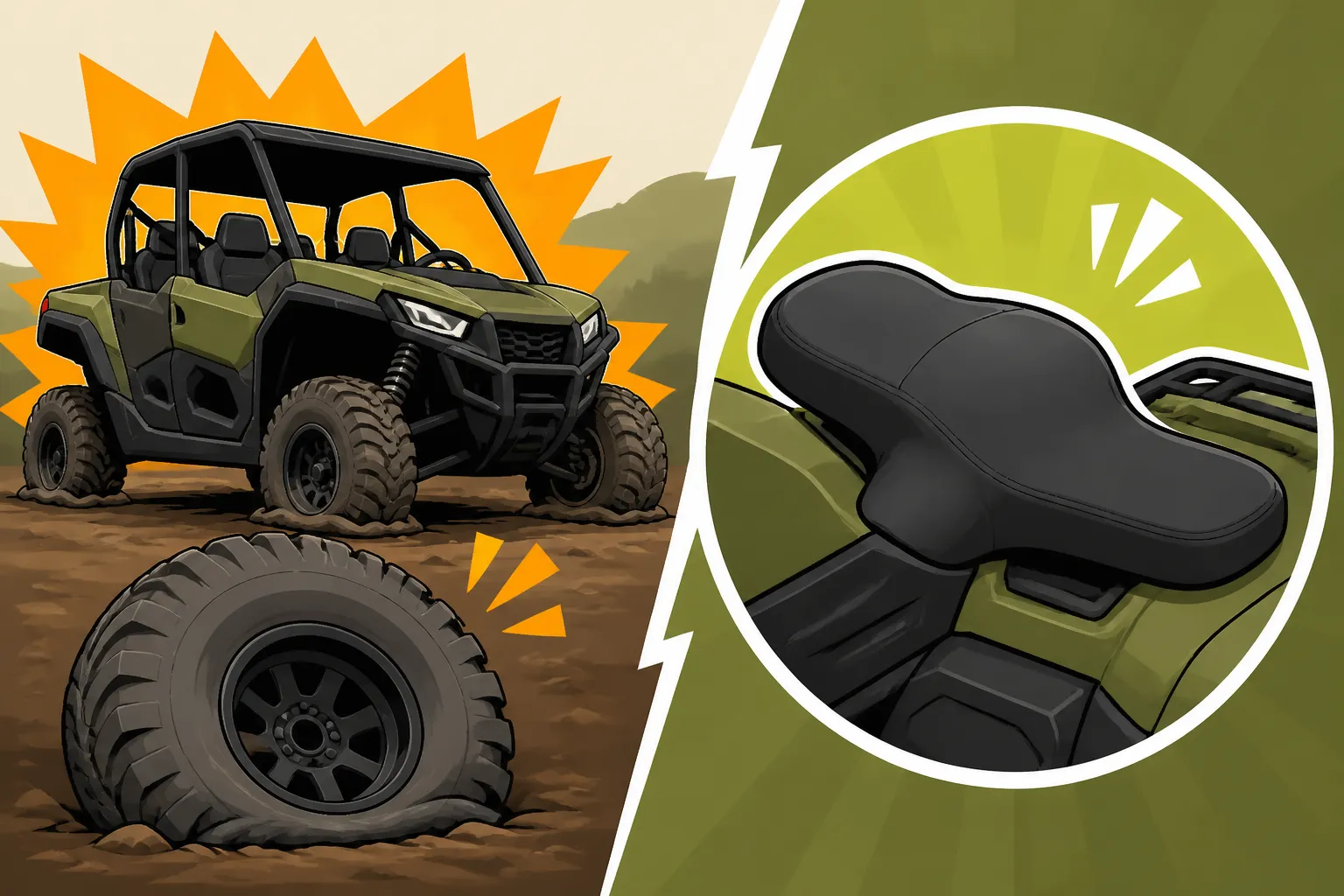
Four Low-Pressure Tires and a Straddle Seat
One of the most common headaches new ATV owners, or those who've bought a machine secondhand, run into here in Kentucky is figuring out if their shiny (or not-so-shiny) new toy even counts as an ATV for titling purposes. It sounds simple, right? It's a quad, of course, it's an ATV! But Kentucky law has a very specific definition, and if your machine doesn't fit neatly into that box, you could be in for some unexpected challenges at the county clerk's office. This guide is going to walk you through exactly what Kentucky considers an ATV, delving into the nuances of its physical characteristics so you can title your machine without a hitch.
The Heart of the Matter: Kentucky's ATV Definition for Titling
Let's be real, the world of off-road vehicles is a diverse place these days. You've got your traditional four-wheelers, side-by-sides (UTVs), dirt bikes, three-wheelers, and even some hybrid machines that blur the lines. For those of us living and riding in Kentucky, understanding the state's official definition of an "all-terrain vehicle" (ATV) isn't just academic; it's the gateway to properly titling your machine and ensuring you're compliant with the law. Without a clear understanding, you might find yourself hitting roadblocks when you go to register your new ride.
Why the Definition Even Matters for Your Machine
You might think, "It has four wheels and goes off-road, so it's an ATV!" But Kentucky's specific legal language dictates which machines are required to have a title and, by extension, how they are treated under various other regulations, like those concerning road use or even sales tax. If your machine doesn't meet the ATV definition, it might fall into another category, like a utility vehicle (UTV) or even just general off-road equipment, each with its own set of rules – or lack thereof. This distinction is crucial for avoiding frustration at the county clerk's office when they tell you your "ATV" doesn't qualify for an ATV title. It's also important for understanding any potential [Kentucky Fines for an Untitled ATV] you might face if you get it wrong.
Imagine you've just bought a fantastic side-by-side, thinking it's just a bigger, more comfortable ATV. You head to the clerk's office with your bill of sale, only to be told they can't issue you an ATV title because your machine doesn't fit the statutory definition. Now you're left scratching your head, wondering what to do next. This scenario is all too common and highlights why getting this definition straight from the beginning is so important. It saves you time, potential legal headaches, and the general annoyance of unexpected bureaucratic hurdles.
The Core Components: Tires, Seats, and Control
At its heart, the Kentucky statute defines an ATV by a few key physical characteristics. It's usually described as a motor vehicle that's designed for off-road use, primarily for a single operator, and has specific features. We're talking about things like the number of wheels, the type of tires, the seating arrangement, and even the handlebar steering. These aren't just arbitrary details; they're the elements that legally distinguish an ATV from other types of vehicles. These specific attributes help the Kentucky Transportation Cabinet categorize machines for titling purposes.
Think of it like this: the state needs a clear, objective way to categorize these machines to apply laws consistently. Without these specifics, every different type of off-road vehicle would be open to interpretation, leading to confusion and inconsistency. So, when you look at your machine, the county clerk will be looking for these very specific details to confirm it matches the legal definition. This is why when you're preparing your [Kentucky ATV Title Paperwork], you'll want to ensure all documentation accurately reflects these physical characteristics.
The "Not Quite an ATV" Conundrum: Side-by-Sides and Other Machines
Here's where it often gets tricky. Many machines that look and feel like ATVs to the average person don't actually meet Kentucky's strict legal definition. The most common example is the side-by-side, often referred to as a UTV (Utility Terrain Vehicle). While they're incredibly popular for work and recreation, their very design often pushes them out of the ATV category for titling purposes. This can be a real point of frustration for owners who just want to legally own and operate their machine.
The key differences often lie in the seating (side-by-sides usually have bucket seats or a bench, not a straddle seat), the steering (a steering wheel, not handlebars), and sometimes the width. These distinctions mean that a side-by-side may not be titled as an ATV in Kentucky, which then leads to questions about how they can be titled, or if they need one at all. It's a significant point of confusion, and we'll dive deeper into [Why a Side-by-Side Sits Awkwardly in Kentucky Law] later, but for now, just know that "looks like one" isn't enough for the law.
Diving Deep into the 'Four Low-Pressure Tires' Rule
When Kentucky law talks about an ATV, one of the first things it zeroes in on is the wheels and tires. Specifically, it mentions "four low-pressure tires." This isn't just a casual observation; it's a foundational element of the legal definition that helps differentiate a true ATV from other off-road vehicles. Understanding what "low-pressure" means and why the number four is so critical can save you a lot of grief when you're trying to get your machine titled.
What "Low-Pressure" Really Means for Your Tires
The term "low-pressure tires" refers to the large, soft tires commonly found on ATVs, designed to provide maximum traction and flotation over varied terrain. These tires operate at much lower inflation pressures compared to typical car or truck tires, often in the range of 3-7 PSI. This low pressure allows the tire to deform and spread out over obstacles, increasing the contact patch with the ground and improving grip on soft or uneven surfaces. It's a hallmark feature of a machine truly built for traversing challenging off-road environments.
From a legal perspective, "low-pressure" isn't usually defined by an exact PSI number in the statute, but rather by the type of tire and its intended use. If your machine has hard, high-pressure tires like those on a golf cart or a street vehicle, it’s a clear indication to the clerk that it might not fit the ATV definition. This is why you rarely see ATVs with skinny, high-pressure bicycle-type tires; they simply wouldn't perform as expected, nor would they satisfy the legal description for titling purposes in Kentucky.
The Importance of Having Four, Not Three or Six
Kentucky's definition specifically calls for four low-pressure tires. This might seem like a minor detail, but it's incredibly significant. This immediately excludes three-wheelers (ATCs) and six-wheel ATVs or utility vehicles from being titled as standard ATVs. While three-wheelers were once common, their production largely ceased due to safety concerns, but some older models are still out there. Similarly, some larger, specialized off-road vehicles have six or even eight wheels for increased load capacity or traction.
For titling purposes, if your machine only has three wheels, or if it has six, it simply does not fit Kentucky's ATV definition. This means you won't be able to get an ATV title for it, regardless of its other characteristics. This can be particularly frustrating for someone who just bought an older three-wheeler, thinking it would be as straightforward as a quad. It's a clear cut-off point that the county clerk will be looking for.
How Tire Count Impacts Your Titling Journey
The number of tires is a non-negotiable aspect of the ATV definition in Kentucky. If your machine doesn't have exactly four low-pressure tires, your journey to obtaining an [Titling an ATV in Kentucky] will likely veer off into a different, more complex path, or you might find that no title is available at all under current ATV titling laws. This is not the clerk being difficult; it's them adhering strictly to the law.
For example, if you own a six-wheeled agricultural machine, even if it looks like an ATV, the six wheels disqualify it from being titled as an ATV. It might be classified as farm equipment, which often has different or no titling requirements depending on its use. Similarly, a vintage three-wheeler, despite being an "all-terrain vehicle" in a general sense, won't get an ATV title in Kentucky. It's a critical detail to confirm before you even begin the titling process, especially if you're buying a used machine that might have an unconventional configuration. Make sure your bill of sale, which you can often find templates for on sites like LawDepot, accurately describes the machine you are purchasing.
Understanding the 'Straddle Seat' Requirement
Beyond the tires, another critical element of Kentucky's ATV definition revolves around how the operator sits on the machine. The law specifically calls for a "straddle seat." This is a feature that directly impacts the design and primary function of the vehicle, and it's a key differentiator from other types of off-road machines.
Defining the Straddle Seat Versus a Bench or Bucket
A "straddle seat" is exactly what it sounds like: a seat designed for the operator to sit astride it, much like riding a motorcycle or a horse. The operator's legs straddle the engine or frame of the vehicle. This design allows the rider to use their body weight to shift and control the ATV, which is essential for navigating challenging terrain. It's a highly active riding position, where the rider is an integral part of the machine's movement.
Contrast this with a bench seat or bucket seats, which are common in side-by-sides, jeeps, or even golf carts. On these vehicles, the operator sits in the machine, not astride it. Their feet are typically placed on floorboards, and their body movement plays a different role in vehicle control. This distinction is paramount in Kentucky's ATV definition. If your machine has a bench seat like a mini-truck or individual bucket seats like a small car, it will not qualify as an ATV for titling purposes, no matter how capable it is off-road.
Why a Straddle Seat Differentiates an ATV
The straddle seat is more than just a seating arrangement; it's indicative of the ATV's design philosophy and how it's intended to be operated. An ATV with a straddle seat and handlebar steering requires the rider to actively engage with the machine through body English, leaning into turns, and absorbing shocks with their legs. This provides a level of agility and maneuverability often required in tight off-road conditions.
From a legal standpoint, this specific seating arrangement, combined with handlebar steering (which we'll touch on next), firmly places the vehicle in the "ATV" category. It distinguishes it from other multi-purpose vehicles that might use similar engines or chassis but are designed for a different kind of operation, often with more emphasis on utility or carrying multiple passengers. This is one of the main reasons that a UTV often encounters issues when trying to get an [Titling a Side-by-Side in Kentucky].
Passenger Seating and the Straddle Seat Rule
While the primary ATV definition focuses on the single operator's straddle seat, the question of passenger seating also sometimes comes up. Traditional ATVs are generally designed for a single rider. While some ATVs are marketed as "two-up" or have extended seats for a passenger, they still fundamentally maintain the straddle-seat design for both the operator and the passenger. The passenger sits behind the operator, also straddling the vehicle, rather than sitting side-by-side in a different type of seat.
If your machine has a separate, non-straddle seat next to the driver, or a rear-facing bench, it likely falls outside the strict ATV definition. This is another area where side-by-sides clearly diverge, as they typically feature bench or bucket seats for multiple passengers arranged side-by-side. The presence of such seating arrangements on what might otherwise seem like an ATV will almost certainly lead to its exclusion from the state's ATV titling framework.
The Power and Weight Limits: More Than Just a Definition
Beyond the physical characteristics of tires and seats, Kentucky's definition of an ATV also often includes parameters around its size, specifically engine displacement and weight. While not always the first things a clerk will look at, these limits ensure that the titled "ATV" aligns with the common understanding of what an ATV is, preventing oversized or underpowered machines from being miscategorized.
Engine Displacement and Weight in the ATV Equation
Many ATV definitions, including those sometimes referenced in state laws, incorporate engine size (measured in cubic centimeters, or cc) and/or dry weight. These limits help to define the general class of vehicle. For instance, a very large, heavy machine with an enormous engine might be considered more of a specialized utility vehicle or even light industrial equipment, rather than a recreational ATV. The idea is to keep the definition tethered to the kind of machine that a typical rider would recognize as an ATV.
While Kentucky's primary titling statute emphasizes physical features like tires and seats, these underlying power and weight characteristics are part of the overall understanding of an ATV. If you have a machine that's significantly outside the typical range for an ATV – say, something extremely heavy or with a massive engine displacement that's more akin to a small car – you might find additional scrutiny, even if it has the right tires and seat. Always be prepared to describe your machine fully, and if you're buying privately, consider using a detailed [Kentucky Bill of Sale for an ATV] that clearly outlines these specifications. LawDepot offers customizable templates for this purpose.
Youth Machines: A Special Category
Youth ATVs represent a distinct category within the broader ATV landscape. These machines are specifically designed for younger riders, often featuring smaller engines (e.g., 50cc to 125cc) and reduced top speeds. While they fit the "four low-pressure tires and a straddle seat" description, their smaller size and intended demographic often mean they have specific age-related restrictions for operation.
For titling purposes, a youth machine in Kentucky generally follows the same rules as an adult ATV if it meets the physical definition. However, their use, particularly concerning age limits for riders, is governed by separate regulations. So, while you'll need to follow the same titling process for a youth machine, be mindful that the rules for riding it, especially on public lands or trails, might be more stringent. You'll want to review [Kentucky Rules for Riders Under 16] if you have a younger enthusiast in your family.
How These Limits Affect Titling
Ultimately, the engine displacement and weight guidelines function as a secondary filter. If a machine clearly fits the primary physical description (four low-pressure tires, straddle seat, handlebars), it's highly likely to be titled as an ATV. However, for machines that are borderline, or that push the boundaries of what's commonly understood as an ATV, these limits can come into play. It's about ensuring consistency and preventing machines that are fundamentally different from being shoehorned into the ATV category.
Consider a heavily modified machine, perhaps one that's been beefed up with a car engine or significantly altered chassis. Even if it retains four low-pressure tires and a straddle seat, its sheer weight and power might lead the clerk to question its classification. While the statute primarily relies on the visual and functional characteristics, being aware of these implicit boundaries can help you anticipate any questions or challenges you might face during the titling process. It's all part of the due diligence when dealing with the state's specific vehicle categories.
What Happens When Your Machine Doesn't Fit the Mold?
So, you've looked at your machine, compared it to Kentucky's definition, and realized it doesn't quite fit. Maybe it has a steering wheel, or bucket seats, or even six wheels. This isn't necessarily a dead end, but it means you need to adjust your expectations about how your vehicle will be handled for titling purposes in Kentucky.
The Side-by-Side Dilemma: UTVs and Their Titling Challenges
This is perhaps the biggest area of confusion for many off-road enthusiasts. Side-by-sides (UTVs) are incredibly versatile, popular, and often used for similar purposes as ATVs. However, as we've discussed, their design — typically with a steering wheel, bench or bucket seats, and often a wider stance — almost universally excludes them from Kentucky's ATV definition for titling. This means you generally cannot obtain an ATV title for a side-by-side.
This doesn't mean side-by-sides are unregulated or untrackable. Often, they are treated as "utility vehicles" or simply "off-road vehicles" that may not require a specific state-issued title unless they are explicitly classified under a different vehicle category, like a "Special Purpose Vehicle" (SPV) if you intend to make it street legal in specific areas. The lack of an ATV title can create a perception that the vehicle isn't legally recognized, which isn't always true. It simply means it falls outside the ATV titling framework. For machines that are technically side-by-sides but are sometimes mistakenly referred to as ATVs, knowing the precise [Titling a Side-by-Side in Kentucky] process is paramount. You might find yourself needing a different form or process entirely, so it's best to confirm with your local county clerk.
Homebuilt and Modified Machines: A Grey Area
What about a machine you built yourself, or one that's been heavily modified? This is where things can get particularly murky. If a homebuilt machine perfectly matches the statutory definition of an ATV – four low-pressure tires, straddle seat, handlebars, etc. – it might be possible to title it as such. However, proving its origin and ensuring it meets safety standards can be a significant hurdle. This might involve inspections or additional paperwork, especially concerning the vehicle identification number (VIN).
Heavily modified machines face similar challenges. If modifications alter the fundamental characteristics that define an ATV (e.g., adding a steering wheel, changing the seating), it could push the vehicle out of the ATV titling category. For these unique cases, a standard bill of sale template from a service like LawDepot might be a good starting point, but you'll need to be exceptionally thorough in documenting every aspect of the machine. The county clerk will be looking for a verifiable VIN and clear proof that the machine aligns with the state's classification for an ATV. Getting a title for such a machine can be complicated, especially if you can't provide clear documentation or a proper VIN, as outlined in [Kentucky's Seventeen-Character VIN Rule].
Seeking Clarity for Ambiguous Cases
If you're truly unsure about your machine's classification, don't guess. The best course of action is always to contact your local county clerk's office. They are the frontline for vehicle titling and will have the most up-to-date information and guidance specific to Kentucky law. Bring any documentation you have – a bill of sale, previous registration, or even photos of the machine – and be prepared to describe its features in detail.
It's also a good idea to research [What Kentucky Counts as an ATV] by looking directly at the Kentucky Revised Statutes (KRS) related to vehicle definitions. While legal language can be dense, it's the ultimate source of truth. Understanding these nuances before you make a purchase or head to the clerk's office can save you immense frustration and ensure you're taking the correct steps to legally own and operate your off-road vehicle in the Bluegrass State. Remember, prevention is always better than trying to fix a problem after the fact!
Disclaimer
This article is for general informational purposes only and does not constitute professional advice. Laws, prices and regulations vary by location and change over time. Consult a qualified professional for guidance on your specific situation.