Blaze Orange on a Kentucky Trail
A rider can round a bend on a Kentucky trail and meet hunters, hikers, or another group before there is much room to react. During hunting season, dark riding gear can make you hard to see among trees and brush. This guide explains when blaze orange is a sensible choice, how to wear it effectively, and what to check before you ride.
Why blaze orange matters on Kentucky trails
Visibility changes in the woods
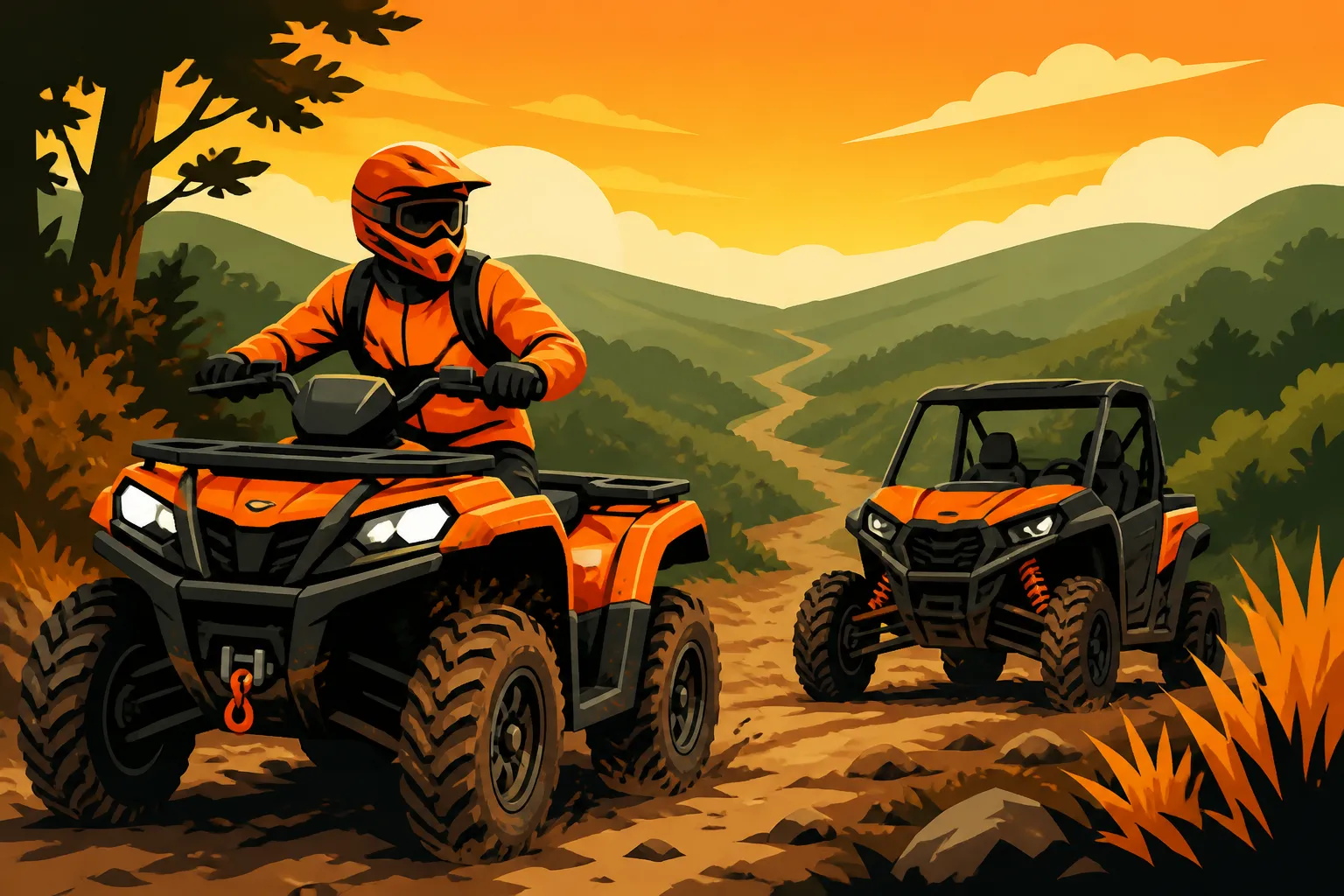
Blaze orange helps other people spot you against the greens, browns, and shadows of a wooded trail. That matters most where sightlines are short: a narrow bench road, a creek crossing, or a bend screened by leaves. A rider may be moving slowly and still be difficult to notice if their helmet and jacket blend into the landscape.
The risk can feel especially real during hunting season, when hunters may be moving through the same broader area as riders. You may not know whether anyone is nearby until you hear a vehicle, see a parked truck, or come upon a trail junction. Orange does not guarantee that someone will see you, but it gives them a more noticeable color to pick out.
Visibility is also a two-way safety issue. Hunters need to be recognizable to other people in the woods, and riders benefit from being recognizable too. A bright vest or jacket can make it easier for a hunter to distinguish a person on a machine from the background. It can also help your riding group keep track of one another when dust, trees, or changing light break up the view.
Is blaze orange required for every ATV or UTV rider?
Do not assume that every ATV or UTV rider in Kentucky is automatically required to wear blaze orange just because it is hunting season. Requirements can depend on what activity you are doing, where you are riding, and the rules that apply to that specific property or trail system. Hunting regulations and riding-area rules are not always the same thing.
If you are hunting from or with a machine, or riding on land where hunting is taking place, check the applicable hunting rules and site requirements before you go. A public forest, a leased coal property, and a privately operated off-road park may each have different notices or operating rules. Read posted signs and check the park or land manager’s information rather than relying on what a friend remembers from last season.
Even when orange is not specifically required for your ride, wearing it can be a practical choice during busy hunting periods. The question is less “Can I get away without it?” and more “Would I rather be easier to spot if someone comes around a blind corner?” For many riders, especially families and groups, a visible outer layer is a low-effort precaution.
For more context on shared use, see Kentucky Riding in Hunting Season and Sharing a Mountain With Deer Hunters.
What orange can and cannot do
A blaze-orange garment improves visibility, but it does not make a trail safe by itself. Riders still need to control speed, stay on permitted routes, and be ready for people or machines around blind corners. A bright helmet or vest is a supplement to careful riding, not a reason to assume others have noticed you.
Orange also works best when it is visible. A vest hidden beneath a dark jacket does little for visibility. A small orange patch on a backpack may disappear behind a passenger or cargo. Think about what someone approaching from the front, side, or rear can actually see while you are seated on the machine.
And remember that a rider’s gear is only part of the picture. Keep lights working where required, avoid sudden stops in narrow sections, and use a pull-off or wide area when your group needs to regroup. If someone in your party is wearing orange but riding around a blind bend too quickly, the color cannot make up for the lack of time to react.
How to wear blaze orange while riding
Choose visible gear that works with riding equipment
A blaze-orange vest, jacket, or outer layer is often more useful than a small accessory because it covers a larger area. A hat or helmet cover can add visibility, but it should not interfere with the fit or function of your helmet. Choose gear that stays in place when you turn your head, lean, or ride over rough ground.
Before buying or packing a garment, consider how you ride. A vest may be easy to put on over a riding jacket, while a lightweight orange jacket may be more comfortable in cool weather. If you expect rain or mud, check whether the fabric is easy to clean and whether the garment remains visible when damp or dirty. A layer that ends up stuffed in a cargo box is not helping you on the trail.
Make sure any vest or jacket does not catch on controls, snag on branches, or block access to necessary safety equipment. In a UTV, passengers should be able to sit securely and use their restraints as intended. In an ATV, avoid loose fabric that could interfere with movement or become caught. Visibility matters, but safe fit comes first.
Make sure your whole group is easy to identify
Group rides can become scattered quickly. One rider stops to check a map, someone else rounds a bend, and a child or newer rider may be separated by a short stretch of trail. If everyone has a visible orange item, it is easier to recognize members of your group through gaps in the trees or across a staging area.
For children and inexperienced riders, choose gear that is comfortable enough that they will keep it on. A vest that rides up or a jacket that overheats a child may be taken off before the ride is over. Check the fit before loading the machines, and bring an extra layer if weather could change.
It helps to agree on a simple group routine before setting out: ride at a pace that keeps the group together, stop in a safe place if someone falls behind, and do not leave a rider alone at a junction. Orange makes people easier to see; a clear plan makes it easier to know where they are supposed to be.
| Riding situation | Practical visibility choice | What else to do |
|---|---|---|
| Riding during a busy hunting period | Wear a visible orange vest or outer layer | Check property notices and applicable rules |
| Riding with children or new riders | Give each rider a visible orange item | Keep the group together and use a manageable pace |
| Riding in rain, fog, or fading light | Choose orange that remains visible over other layers | Reconsider the ride if conditions make it hard to see |
| Riding a narrow or blind trail | Keep orange visible from more than one direction | Slow down, sound an alert when appropriate, and stay to the permitted route |
| Stopping to regroup | Keep outer layers on | Pull fully out of the travel path where possible |
Keep visibility in mind when choosing a route
Some trail systems are near hunting areas, while others may share land or access roads with hunters. Before riding, look for seasonal notices, closures, and local guidance. A route that was quiet on a summer weekday may feel very different during a fall weekend when hunters and riders are both using the surrounding landscape.
OnX Offroad can help riders review mapped routes and plan where they intend to go, but a digital map is not a substitute for current signs or land-manager instructions. Use it as one part of your preparation: know the route, identify likely turnarounds, and avoid treating an app line as permission to cross onto land that is not open to riding.
If you are heading to a place such as Black Mountain or another managed riding area, check that location’s current trail information before loading up. Conditions and access can change. Kentucky Trail Closures to Check First and Checking a Kentucky Trail Notice First are useful reminders to verify the details close to your trip, rather than assuming an old post or saved route still applies.
Plan a safer ride during hunting season
Check the land and trail rules before you leave
Start by confirming that the area is open to your kind of riding. A route on a map does not necessarily mean the land is open, and trail access can differ across parks, forests, and private or leased property. Review the site’s rules, pay attention to posted signs, and turn around if a gate or notice indicates that a route is closed.
If your ride crosses or approaches land where hunting may be happening, take extra care with your timing and route. Look for seasonal restrictions and any instructions about shared access. When details are unclear, contact the property manager or riding area before you trailer in. It is frustrating to arrive ready for a day out and discover that access has changed, but checking first is better than finding out after you have ridden onto a closed route.
OnX Offroad can be useful for organizing a planned route and understanding the general area around it. Still, check the map against on-the-ground signage and the land manager’s directions. Boundaries, access permissions, and seasonal notices deserve particular attention when a route passes near a property line or a hunting area.
Ride for limited sightlines and changing conditions
On wooded Kentucky trails, a rider may have only a few seconds to respond to someone coming the other way. Reduce speed before blind corners, stay alert at trail junctions, and leave enough room to stop without swerving into brush or off the trail. Mud, wet leaves, fog, and low light can make a familiar route harder to read than it was on a clear afternoon.
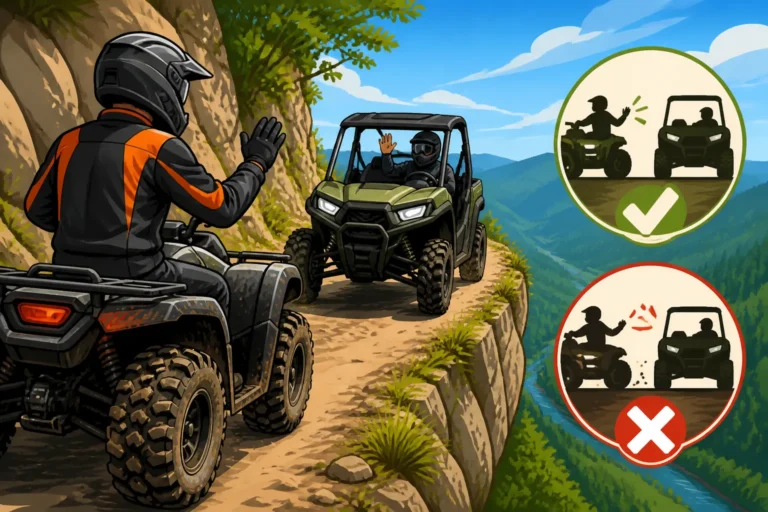
Narrow benches and steep sections call for extra patience. If you meet someone in a tight spot, avoid crowding them toward an edge. Wait for a safe passing area, communicate calmly, and make sure the machines are stable before moving. Orange helps people notice one another, but courtesy and space are what prevent a tense meeting from becoming a dangerous one. See Kentucky Trail Etiquette on Narrow Benches for more on sharing these tight sections.
A route check should include more than the map. Look at the forecast, recent rain, and trail notices; carry a charged phone or other communication option appropriate for the area; and tell someone where you expect to ride. Cell service can be unreliable in hollers and wooded terrain, so do not count on a signal to solve every problem. Kentucky Trail Conditions Before You Ride offers a useful checklist for thinking through the ground and weather before you head out.
Make visibility part of your regular riding checklist
Before loading, check that each person has their orange gear and that it is easy to see over their riding clothes. Confirm helmets fit correctly, lights work, and passengers can sit safely. If the weather is warm, choose a breathable layer and plan for water and breaks; if it is cool or wet, make sure the orange layer still fits over your other gear.
Once you reach the trail, keep the same habits throughout the ride. Do not take off a visible layer just because the first stretch seems empty. Stay on designated routes, slow down where visibility drops, and pause in a safe place if you need to check the map or wait for someone. If you are using onX Offroad, review your route before entering an area with limited cell coverage and do not stop in a blind or narrow section to study the screen.
Finally, follow the instructions for the specific riding area, even if your usual park does things differently. A fall ride near a hunting area calls for more awareness than a quiet trip on familiar private ground. Wearing blaze orange is a straightforward way to be easier to see, but the strongest safety plan combines visible clothing, current route information, thoughtful speed, and respect for everyone sharing the land. For seasonal riding ideas and changing scenery, see Riding Black Mountain in Autumn.
Disclaimer
This article is for general informational purposes only and does not constitute professional advice. Laws, prices and regulations vary by location and change over time. Consult a qualified professional for guidance on your specific situation.