Winter Hours at the Turkey Bay Gate
Turkey Bay’s winter gate hours can be confusing because the gatehouse schedule, riding access, and permit rules are not always the same thing. If you are planning a cold-weather ride at Land Between the Lakes, this guide explains what to confirm before you leave, how to avoid arriving at a closed or unstaffed entrance, and what winter conditions can mean for trail access.
What winter hours at the Turkey Bay gate mean
Gatehouse hours are not the same as riding access
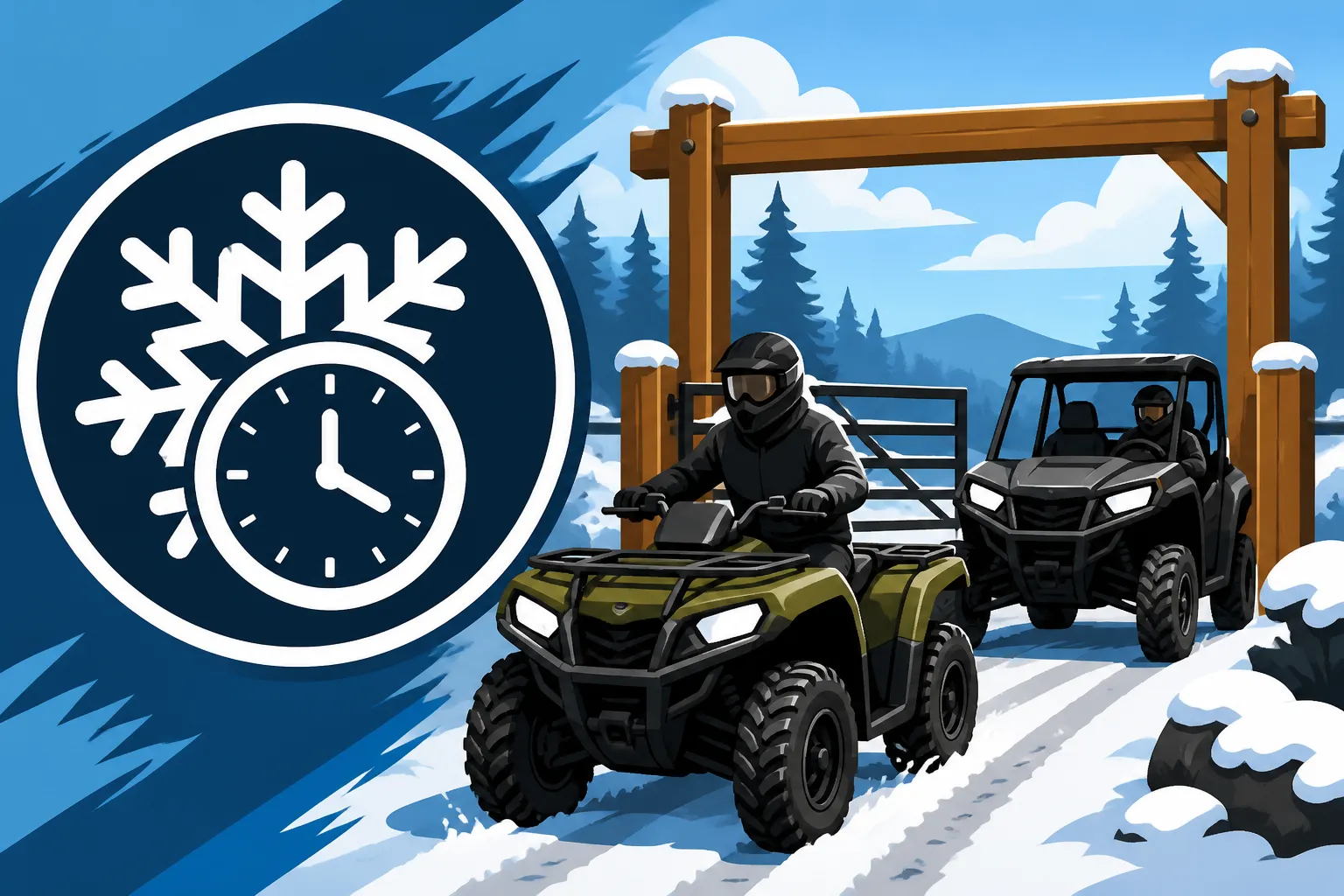
Turkey Bay’s gatehouse operates seasonally, so its usual staffed hours should not be assumed to apply through winter. During the off-season, the booth may be unstaffed or operate on a different schedule. That affects practical matters such as buying a permit in person, asking staff about trail conditions, or getting help at the entrance.
An unstaffed gatehouse does not automatically tell you whether the riding area is open. Access may depend on posted rules, trail conditions, maintenance, or a temporary closure. In other words, “the booth is closed” and “the trails are closed” are separate questions. Check both before you load your machine.
The seasonal distinction is covered in [Turkey Bay's Season and Gatehouse Hours Explained]. For a winter visit, look for the latest information from Land Between the Lakes or the Turkey Bay OHV Area before setting out, rather than relying on a schedule you remember from a summer trip.
Why the schedule may not be a simple winter timetable
Winter operations can be less predictable than the regular riding season. Shorter daylight, staff availability, maintenance needs, and weather-related trail conditions can all affect what is available on a particular day. A holiday weekend or a stretch of mild weather does not necessarily mean the gatehouse will be staffed.
That uncertainty is frustrating when you have already loaded a trailer, arranged time off, or coordinated a group. The best way to avoid a wasted drive is to confirm three separate details: whether the riding area is open, whether the gatehouse is staffed, and how riders can obtain the required permit if the booth is closed.
| What to confirm | Why it matters in winter | What to do before leaving |
|---|---|---|
| Riding-area access | Trails can be closed even when the broader area is accessible | Check the latest official Turkey Bay or Land Between the Lakes notice |
| Gatehouse staffing | A closed booth may mean you cannot buy a permit or ask questions there | Confirm the gatehouse schedule for your planned day |
| Permit purchase | Permit options may differ when staff are not present | Find out whether an approved alternative is available |
| Trail conditions | Rain, thawing ground, and freezing temperatures can affect safe access | Check for condition updates and closures |
| Daylight | Winter days leave less time for a full ride | Plan a conservative route and return time |
Check the current notice, not an old trip report
A post from a previous winter can help you understand what to ask, but it is not a reliable substitute for current operating information. Gate schedules and access arrangements can change, and a social media comment or an old travel page may describe a different season.
Before hauling to Turkey Bay, use the official Land Between the Lakes or Turkey Bay information channels to confirm the day’s status. If the information is unclear, call before you leave. [Call Before You Haul to Turkey Bay] is a useful reminder: a quick check can save hours of driving and the disappointment of finding that the plan you made no longer fits the conditions.
Permits and planning when the gatehouse is unstaffed
Do not assume you can pay at the entrance
When the gatehouse is unstaffed, do not count on being able to buy a permit at the counter when you arrive. Find out in advance whether permits are available through another approved method and what proof of purchase you should carry. Do not rely on a past visit, another rider’s recollection, or a payment method that has not been confirmed for the current operating period.
Permit rules can also vary by visit type. A short ride, a longer stay, and camping can involve different planning questions. Start with [How the Turkey Bay OHV Permit Works] and confirm the current requirements directly before your trip. The important thing is to arrive with the correct permit arrangement already understood—not to assume the gatehouse will be open to sort it out.
If you are riding with a passenger or a group, check whether each person or machine has a separate requirement. Avoid splitting up at the entrance to look for answers. If the booth is closed and you have not confirmed the process, you could be left deciding whether to turn around or risk riding without understanding the rules.
Build your day around a shorter winter window
Even if Turkey Bay is open on the day you plan to ride, winter daylight is limited. A route that feels comfortable in July may leave little margin when you start later, ride more slowly, or encounter muddy sections. Set a turnaround time before you leave the staging area, and make sure everyone in the group knows it.
A conservative plan might include a shorter loop, a fuel check before departure, and enough time to return without rushing as the light fades. Keep the route manageable if you are riding with children, newer riders, or people unfamiliar with the area. Turkey Bay’s trails and riding terrain are a major part of its appeal; its scale is described in [Turkey Bay's 100 Miles in Kentucky], but winter is a good reason to choose a route based on conditions rather than ambition.
If you use a navigation app such as onX Offroad, treat it as a planning aid, not confirmation that a route is currently open. Download or save the information you need before you lose cell service, and compare your planned route with official trail notices. onX Offroad can help you think through navigation, but the park’s posted rules and closures take priority.
Keep the permit and trip details easy to access
If you arrange your permit before arriving, keep the confirmation or other required proof somewhere you can reach without unpacking the trailer. Bring a charged phone, but do not make the phone your only plan: cold weather drains batteries, and reception may be unreliable in some areas.
It can also help to make a simple group checklist before departure:
- Confirm that Turkey Bay is open for riding on your planned day.
- Confirm the gatehouse schedule and permit process.
- Check for trail closures or weather-related notices.
- Share the meeting location and return time with everyone.
- Pack any required documents, safety equipment, warm layers, water, and basic recovery supplies.
For general route planning, onX Offroad can be useful for reviewing navigation details ahead of time. Save what you need before you get to the riding area, and avoid treating a map line as permission to use a route that is closed or restricted.
Winter weather, trail conditions, and closures
A cold day is not necessarily a good trail day
Winter riding can be enjoyable, but cold weather does not guarantee firm, dry trails. A mild day after rain may leave the ground soft, while a freeze followed by a thaw can create changing conditions over the course of a day. Mud and standing water can make a route slower and more demanding than it appears on a map.
Turkey Bay may close or restrict access when the ground is saturated to protect the trails. That can happen even when the weather at home looks manageable. Review [Why Turkey Bay Closes on Saturated Ground] and check for current notices before you head out. If a closure is in effect, do not assume a familiar route remains available just because it was open on your last visit.
onX Offroad may help you prepare a route and understand the area, but it should not be used to override a closure notice. Keep checking official updates for access decisions, especially after heavy rain, during a thaw, or when the forecast shifts.
Plan for changing light and cold-weather delays
Winter makes small delays more consequential. A stuck machine, a slow group member, a mechanical issue, or an unexpected detour can use up the daylight you thought you had. Dress in layers that work while riding and during a stop, and bring gloves and other gear that remain useful if conditions turn colder or wetter.
Before you start, make sure the machine is ready for the day. Check fuel, tires, lights, brakes, and any equipment you rely on for communication or recovery. If you ride with a group, agree on a simple plan for what happens if someone falls behind or a machine needs attention. A short ride with a clear turnaround time is usually a better winter choice than a long route that depends on everything going perfectly.
For wider area planning, [Kentucky Trail Conditions Before You Ride] and [Kentucky Trail Closures to Check] offer useful ways to think about conditions and access across riding areas. For Turkey Bay itself, however, prioritize the latest local notice.
Have a backup plan before you load
If the gatehouse is closed, the trails are unavailable, or the permit process is unclear, a backup plan can keep the day from becoming a costly disappointment. That might mean rescheduling, choosing a different legal riding area after checking its own rules, or turning the trip into a visit to another part of Land Between the Lakes.
Do not simply ride somewhere nearby because Turkey Bay is closed. Other public lands and private properties have their own access rules, permits, and closures. A road, trail, or open-looking stretch of land is not automatically available for off-highway vehicles. Confirm that any alternative is explicitly open to the type of machine you are riding.
A practical pre-trip checklist for Turkey Bay
The day before your ride
Start by checking the gatehouse schedule and the riding-area status separately. Confirm how to obtain the required permit if staff will not be present, and look for updates about weather closures or saturated ground. If you are staying overnight, verify the relevant camping arrangements rather than assuming they follow the riding schedule; [Turkey Bay Camping at Land Between the Lakes] can help you identify the questions to check.
Next, decide on a route that fits the available daylight and the experience level of your group. Review the map before leaving home, save any navigation information you need, and tell someone when you expect to return. If the trip depends on a specific route or facility being available, confirm that detail directly rather than relying on a general description of Turkey Bay.
Before you pull out of the driveway
Run through this final list:
- Confirm the riding area is open on your planned date.
- Confirm whether the gatehouse is staffed and when.
- Verify the current permit process and have proof ready.
- Check for rain, thaw, saturated-ground warnings, and closures.
- Plan a route and turnaround time that suit winter daylight.
- Carry warm, weather-appropriate clothing and basic safety gear.
- Save navigation details and keep a backup plan.
The most reliable answer to “What are Turkey Bay’s winter gate hours?” is to confirm the schedule for your exact visit. Winter gatehouse staffing may differ from the regular season, and it does not by itself establish whether riding access is open. Verify the gate, permit process, and trail status separately, then plan around current conditions rather than a remembered schedule.
Disclaimer
This article is for general informational purposes only and does not constitute professional advice. Laws, prices and regulations vary by location and change over time. Consult a qualified professional for guidance on your specific situation.