Kentucky Pay-to-Ride Parks Compared
Choosing a pay-to-ride ATV or UTV park in Kentucky can be harder than it looks: one trip may mean steep coal-country climbs, while another is better suited to easier loops, family riding, or a weekend near camp. This guide compares the main riding areas, explains how their access and terrain differ, and helps you choose a park that fits your machine and plans.
Kentucky pay-to-ride parks at a glance
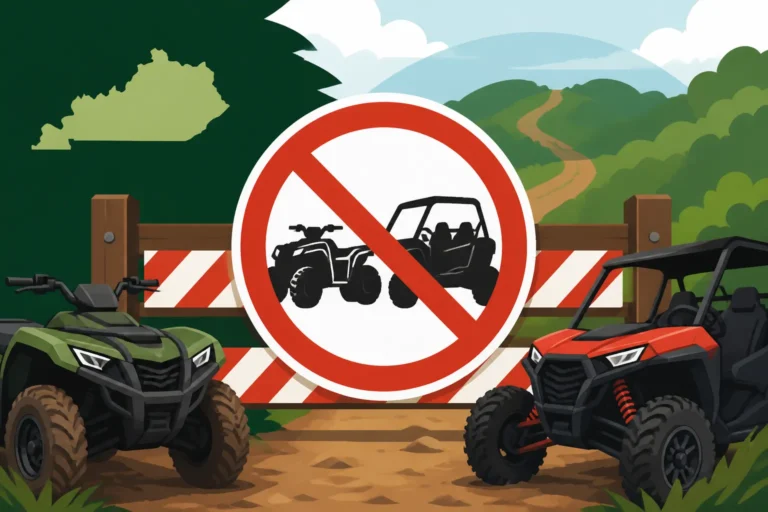
“Pay-to-ride” can mean different things in Kentucky. Some destinations are privately operated parks where riders buy access from the park. Others are public recreation areas that require a site-specific permit or pass. Either way, do not assume that one park’s permit covers another destination—or that a road ride to the trailhead is legal.
| Riding area | Location | General character | Best fit for |
|---|---|---|---|
| Black Mountain Off-Road Adventure Area | Harlan County, near Evarts and Putney | Large mountain trail system with steep climbs and coal-country terrain | Experienced riders and multi-day trips |
| Leatherwood Off-Road Park | Eastern Kentucky, in the Hazard area | Extensive trail network across former mining land | Riders planning a longer stay with varied routes |
| Turkey Bay OHV Area | Land Between the Lakes in western Kentucky | Managed off-highway area with forest and lakes-region scenery | Riders looking for a public recreation-area experience |
| Rush Off-Road | Near Rush in northeastern Kentucky | Large private riding area with varied off-road terrain | Day rides and groups wanting a managed park |
| Hollerwood Off-Road Park | Near Stanton in eastern Kentucky | Smaller park setting near Red River Gorge country | Riders combining off-roading with a regional getaway |
These are broad descriptions, not promises about what will be open on the day you arrive. Trail access, park operations, permits, and conditions can change. Confirm current details with the operator or managing agency before loading up.
If you are deciding between two similar trips, start with the practical questions: How far are you willing to drive? Is your machine appropriate for the terrain? Do you need lodging nearby? Are you comfortable riding in remote areas where phone service may be unreliable? Those answers often matter more than raw acreage or advertised trail mileage.
Private parks and public riding areas are not the same
Black Mountain, Leatherwood, Rush, and Hollerwood are commonly approached as managed riding parks. Riders should check the individual park’s access rules, permit process, machine requirements, operating information, and any restrictions on passengers or riding after dark. Each property has its own policies, so don’t rely on a friend’s old pass or an old online discussion.
Turkey Bay is part of the Land Between the Lakes recreation area, so its access and pass requirements are connected to that managed public setting. That does not make it interchangeable with a private park. Rules, permitted routes, gate procedures, and closures can differ. Check the current official information for the specific area you plan to visit, including [How the Turkey Bay OHV Permit Works](How the Turkey Bay OHV Permit Works) and [Why a Kentucky Park Permit Is Not a State Permit](Why a Kentucky Park Permit Is Not a State Permit).
A simple but important planning habit is to confirm what your payment covers. It may apply to a machine, a person, a particular access period, or another arrangement set by that destination. If you’re bringing passengers, a second machine, or a rental, ask whether each person or vehicle needs a separate permit. For a broader overview of access requirements, see [Do You Need a Permit for Kentucky Trails?](Do You Need a Permit for Kentucky Trails?).
Choose terrain before choosing a name
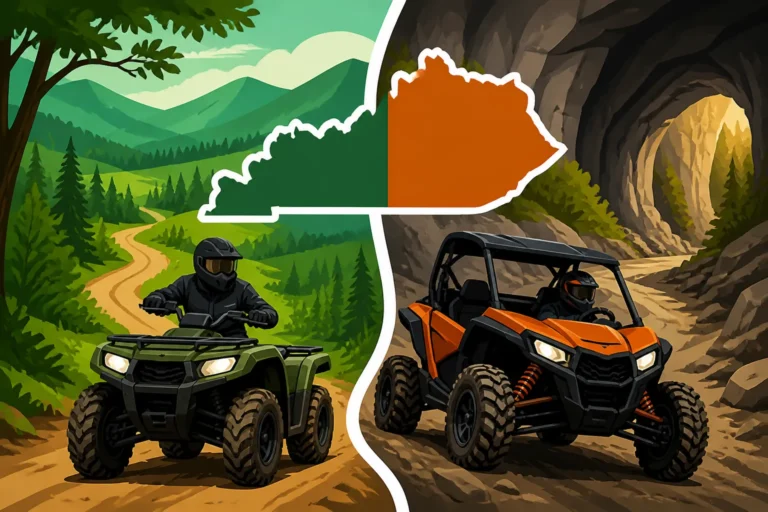
A trail park’s reputation can sound appealing until you match it against your actual riding comfort. Eastern Kentucky’s mountain parks can involve long climbs, narrow benches, rocky sections, ruts, and quick changes in trail conditions. That can be a great fit for a capable machine and a confident rider, but stressful for someone who expected a gentle loop through the woods.
Turkey Bay offers a different setting in the Land Between the Lakes region. The landscape and riding experience are not the same as a steep mountain route in Harlan County. Even there, though, trails can be affected by weather and site management. Do not equate “less mountainous” with “effortless,” especially if you are new to off-highway riding.
If your group has mixed experience, agree on a realistic plan before you arrive. A rider who is comfortable tackling a steep, rocky climb may be ready to head farther into the trail system than a beginner or a family with young passengers. Choose a destination and route that let the least-experienced rider feel safe, rather than treating the group’s most confident rider as the benchmark.
Comparing the main parks by riding style
No single Kentucky destination is best for everyone. The right choice depends on the kind of ride you want, how much time you have, and whether you prefer a remote mountain trip or a more contained outing. A little research before departure can prevent the familiar frustration of arriving with the wrong machine, missing paperwork, or a plan that doesn’t match current access conditions.
Black Mountain for a mountain-focused trip
Black Mountain Off-Road Adventure Area, in Harlan County, is a strong option for riders specifically seeking coal-country mountain terrain. The area is associated with the Evarts and Putney trailheads, and riders often build a longer visit around the trail system rather than treating it as a quick stop. Its scale and setting make it especially appealing to groups who want to spend more than a few hours riding.
The trade-off is that mountain terrain demands preparation. A route that looks manageable on a map can feel very different when it includes a steep grade, loose material, a narrow bench, or a descent after rain. Before setting out, check trail notices, understand your machine’s limits, and make a plan for regrouping if riders become separated. [Black Mountain Off-Road Adventure Area in Kentucky](Black Mountain Off-Road Adventure Area in Kentucky) and [Kentucky Trail Conditions Before You Ride](Kentucky Trail Conditions Before You Ride) are useful starting points for trip planning.
Black Mountain may be less suitable for a first ride if you’re expecting wide, flat paths or if your group has little experience navigating remote terrain. A beginner can still enjoy a mountain park, but it helps to keep the first outing modest, ride with an experienced partner, and avoid pushing into difficult trails just because they are nearby. Ask the park about current conditions and suitable routes for your group.
Leatherwood for a longer eastern Kentucky stay
Leatherwood Off-Road Park is another eastern Kentucky option, often considered by riders planning a longer trip and looking for a broad trail network. Its location in the Hazard area can make it part of a multi-day visit, especially for riders who want to pair trail time with nearby lodging or a group gathering. As with any large riding area, the experience depends on which routes are open and appropriate for your machine.
Before you go, clarify the park’s current access procedures and how its permits work for everyone in your group. A common planning mistake is to check only the machine’s access and forget about passengers, guests, or an additional vehicle. If you want to understand how a per-person approach can affect the total trip, read [Why Leatherwood Charges Every Person](Why Leatherwood Charges Every Person) and verify the details directly with the park.
A longer network also makes navigation and group communication more important. Decide where you’ll stop, how often you’ll regroup, and what you’ll do if someone turns onto the wrong trail. Download maps or save route information before entering an area with weak reception. A tool such as onX Offroad can help you review terrain and prepare a route, but use it alongside the park’s own map and notices; app information should not replace local rules or closure updates.
Turkey Bay for a public recreation-area experience
Turkey Bay OHV Area sits within Land Between the Lakes, a well-known recreation region in western Kentucky. It offers a distinct option for riders who want an off-highway outing in a forested, lake-country setting rather than a coal-mountain destination. Because it operates within a managed recreation area, it’s especially important to check site-specific information before making the drive.
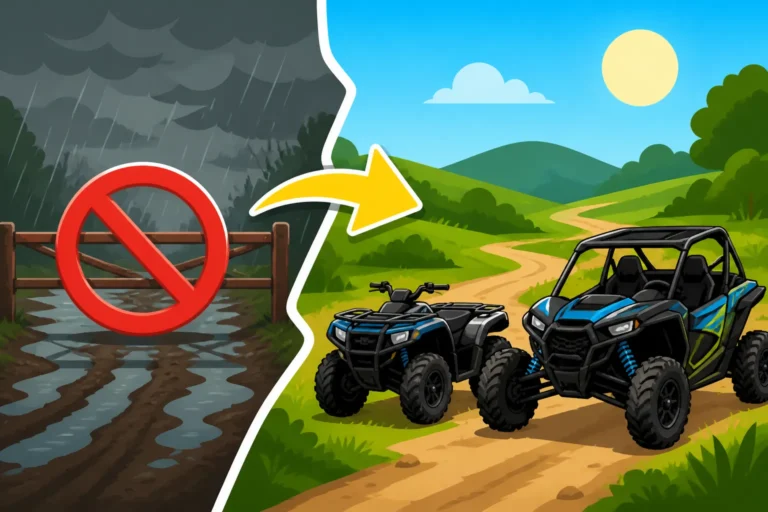
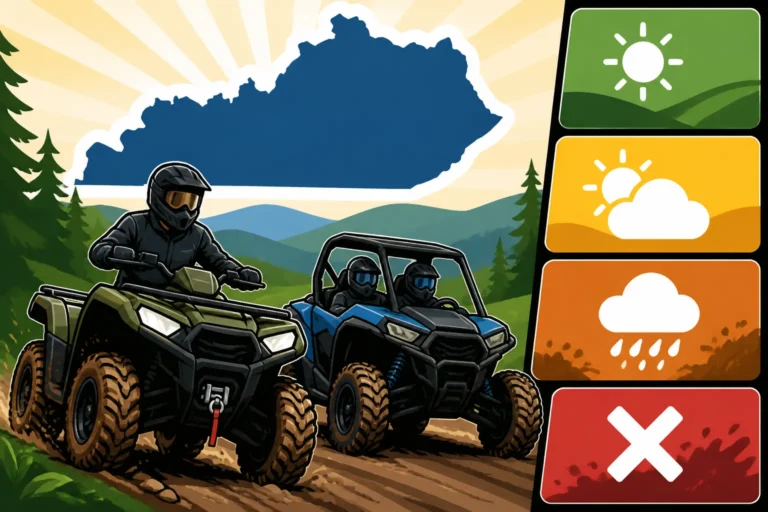
Weather can have a direct effect on access. Wet ground may lead to closures or restrictions, and a trip that was planned around a particular riding day can require a backup plan. Check conditions close to departure, not only when you first book a campsite or arrange a group weekend. For useful preparation, see [Why Turkey Bay Closes on Saturated Ground](Why Turkey Bay Closes on Saturated Ground) and [Call Before You Haul at Turkey Bay](Call Before You Haul at Turkey Bay).
Turkey Bay’s permit process is also distinct from those of private parks. Bring the required documents and make sure you understand the current entry procedure before reaching the gate. If you are traveling from out of state, don’t assume that a home-state registration or trail permit will substitute for the destination’s requirements. The area’s own information should be your final check.
Rush and Hollerwood for different kinds of day trips
Rush Off-Road, near the community of Rush in northeastern Kentucky, is often considered for a managed-park day ride or group outing. Its location may suit riders coming from parts of northeastern Kentucky or neighboring areas, but drive time alone should not decide the trip. Check the park’s access, terrain, operating details, and machine rules to see if it matches the group.
Hollerwood Off-Road Park near Stanton offers another eastern Kentucky option, with proximity to the Red River Gorge region making it possible to build a broader getaway around the ride. That combination can be appealing if some members of your party want trail time while others prefer scenery, hiking, or other local activities. Confirm the park’s current access and trail conditions rather than assuming that a destination’s general reputation tells you what’s open.
For both parks, ask about the details that tend to cause last-minute trouble: whether your machine type is allowed, how permits are handled, whether passengers need separate access, and what happens if weather affects your ride. onX Offroad may help you orient yourself before the trip, but rely on park directions and official trail information for access rules.
How to choose a park for your group
A good trip is not just about finding a park with trails. It’s about matching the destination to the riders, the machine, and the amount of time you have. A family with a newer rider may need a very different plan from a group of experienced riders bringing larger machines for a full weekend.
Match the park to the least-experienced rider
Start by talking honestly about riding experience. Has everyone ridden off-road before? Can each rider manage a hill, an uneven surface, and a slow-moving machine without feeling pressured? Is there a young passenger who may need frequent breaks? These details will help you decide whether to prioritize a gentler introduction or a more challenging mountain setting.
If one rider is nervous about steep terrain, don’t frame that as a problem to overcome on the first day. Pick a destination and route where that person can learn without feeling rushed. Agree that the group will stop and regroup rather than leaving someone to catch up alone. A relaxed ride usually goes better than one where a newer rider is trying to keep pace on terrain they’re not ready for.
Before you book or depart, check trail difficulty information where available, then call the park with specific questions about your machine and experience level. General descriptions like “beginner-friendly” can mean different things to different people. Ask what a novice rider can reasonably expect and whether there are routes the group can avoid.
Check machine fit and group logistics
UTVs and ATVs can behave differently on the same route, and trail width or surface conditions may make a machine unsuitable for some areas. Confirm that the park allows your type and size of machine, and ask whether there are limits on width or passenger configuration. A wide side-by-side that works well on open routes may be awkward on narrow or rocky trails.
Group size matters too. A large group needs a simple plan for spacing, stops, and communication. Decide who leads, who rides at the back, and what everyone should do if the group gets separated. Carry a basic first-aid kit, water, appropriate protective gear, and anything needed for minor trail-side issues. For a remote ride, don’t count on a phone call being available at every point.
Navigation planning can reduce confusion, especially when trails branch or service drops out. You might review the route in onX Offroad before leaving home and save what you need for offline use, but do not treat a downloaded map as confirmation that a trail is open. Check park notices, carry any recommended paper map, and make sure everyone understands the planned route and turnaround point.
Compare the full trip, not just the ride
A park that is farther away can still make sense if the group wants a weekend trip with lodging nearby. Conversely, the closest park may be the better choice for a short outing if the group only has a day and wants to avoid a long tow. Include travel time, fuel stops, campsite or lodging plans, and the time needed to unload and prepare the machines.
Think about what happens if the weather changes. Are you willing to move your trip to another day? Do you have a backup activity? Is your lodging flexible? A plan that depends on riding every hour of a long weekend can become frustrating if a trail closes or conditions turn muddy. Keep your expectations flexible and confirm access before you leave.
The same care applies to permits and trail information. Fees and requirements vary by destination, and they can change. Check the park or managing agency’s own information for current details instead of relying on an old forum post or a friend’s memory. If you’re comparing costs, consider what the access covers and whether other expenses—such as lodging, fuel, or separate passenger access—may affect the total.
A practical checklist before you load the trailer
Once you’ve picked a destination, spend a few minutes checking the things that are easiest to overlook. This is especially helpful when the group is traveling from outside the region, carrying multiple machines, or planning a ride during a busy weekend.
Confirm access and conditions
Call or check the destination’s official information before departure. Confirm that the area is open, that your machine is permitted, and that your planned riding dates fit the current access arrangements. Ask about trail closures, weather impacts, gate procedures, and any restrictions that could change your route.
For Turkey Bay, pay close attention to recreation-area updates and permit procedures. For private parks, check the park’s own terms rather than assuming policies carry over from another destination. For background on broader seasonal planning, [Kentucky Trail Closures to Check First](Kentucky Trail Closures to Check First) offers another useful reminder to verify access before a trip.
Prepare the route and the people
Share the address or trailhead location with everyone in the group, and agree on a meeting point if anyone gets separated on the drive. Once there, set a ride plan that fits the group’s experience and machine capabilities. Let someone outside the riding group know where you’re going and when you expect to return.
Cell coverage can be inconsistent in remote terrain, so download needed maps and directions in advance. A navigation app such as onX Offroad can be useful for trip preparation, but check its information against the park’s current map and directions. Don’t rely on a phone battery alone: bring a charging method and have a backup plan for navigation.
Pack for the actual terrain
Bring protective gear suitable for the ride, water, food, basic repair supplies, and a first-aid kit. In mountain areas, weather can make a route feel very different from the conditions at the parking area. Pack layers and plan for mud, dust, or a longer return than expected. A pair of gloves or an extra dry layer can make a big difference after a chilly or wet ride.
Finally, take a few minutes to inspect the machine before unloading. Check tires, brakes, lights, fuel, and any recovery equipment you plan to carry. A quick check at home or at the staging area is easier than discovering a problem on a remote trail.
Disclaimer
This article is for general informational purposes only and does not constitute professional advice. Laws, prices and regulations vary by location and change over time. Consult a qualified professional for guidance on your specific situation.