Kentucky Trails With Rock
Rocky ATV trails can turn a fun Kentucky ride into a tire, traction, or recovery problem faster than you expect. The challenge is that “rocky” can mean anything from scattered limestone to steep, uneven ledges—and conditions change with rain and traffic. This guide explains what to expect, how to choose a route, and how to prepare your machine and group for a safer ride.
What Kentucky rock trails are like
Loose rock, ledges, and slick stone are not the same
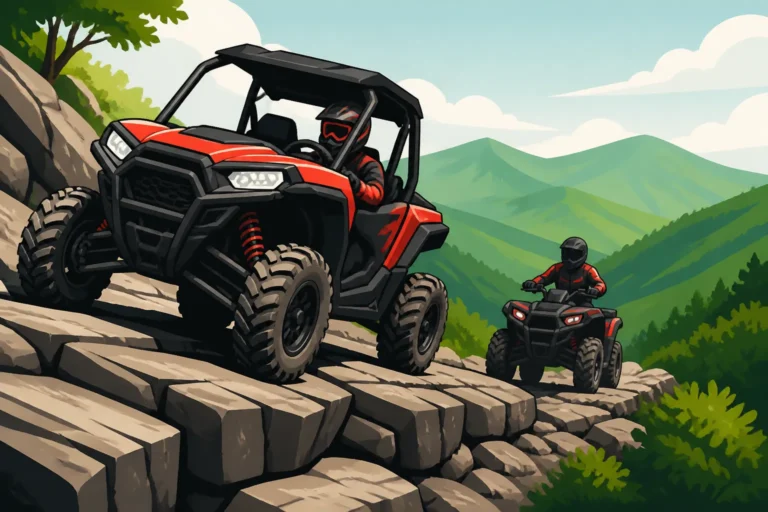
A trail described as rocky might have loose stones that shift beneath your tires, exposed bedrock, embedded rock steps, or a mix of all three. Each surface asks something different of the rider. Loose rock can make a tire skate when you accelerate or brake abruptly. Embedded rocks can catch a tire or undercarriage. A steep ledge may require careful line choice and steady momentum rather than a sudden burst of throttle.
Kentucky’s riding areas also vary by region and route. In eastern Kentucky, off-road routes can pass through mountainous terrain shaped by mining and steep slopes. Other areas include wooded routes where rock appears in short sections rather than making up the whole ride. Even on the same outing, a smooth approach can lead into a rough climb or a rocky descent.
Rain complicates the picture. Water can wash loose material across a trail, soften the edges of a rut, or leave exposed stone slick. A route that felt manageable in dry weather may be harder after a wet spell. Before leaving, check the park’s official notices and ask staff about recent conditions rather than relying on a trail description alone. For a broader sense of what to expect, compare routes using [Kentucky Trail Difficulty Ratings] and review [Kentucky Trail Conditions Before You Ride].
Where to look for rocky riding
Several well-known Kentucky riding areas are worth researching if you want varied off-road terrain. [Black Mountain Off-Road Adventure Area in Kentucky] is in the Harlan County area, while [Leatherwood Off-Road Park in Kentucky] is another Eastern Kentucky option. [Rush Off-Road in Eastern Kentucky] and [The Redbird Crest Trail in Kentucky] are also names riders may encounter while planning trips.
Those names alone do not tell you whether a particular route fits your machine or experience. Conditions and available routes can differ across a large riding area, and an individual trail may not be open or suitable for every vehicle. Read the park’s own trail information, confirm which machines are allowed, and ask about closures or difficult sections before choosing a route.
| Riding area to research | What to confirm before you go |
|---|---|
| Black Mountain Off-Road Adventure Area | Current route access, difficulty, vehicle rules, and conditions |
| Leatherwood Off-Road Park | Which trails suit your machine, plus current operating information |
| Rush Off-Road | Open routes, terrain notes, and any weather-related restrictions |
| Redbird Crest Trail | Access details, route conditions, and requirements for your vehicle |
Treat this as a starting list, not a ranking. If rocky terrain is your main goal, ask specifically what the word “rocky” means locally: scattered stones, long stretches of rock, technical ledges, or steep climbs with exposed rock. That question is much more useful than assuming every trail with a challenging rating will offer the same kind of ride.
Choose routes that match your machine and experience
Read trail descriptions with your whole setup in mind
A trail’s difficulty is only one part of the decision. Your experience matters, but so do your vehicle’s width, tires, ground clearance, drivetrain, and passenger load. A route that is manageable on a compact ATV may be awkward in a wider side-by-side. A heavily loaded machine may also behave differently on an incline than it did during a quick test ride on level ground.
Before heading out, confirm the trail is open to your vehicle type and check for any posted width or other restrictions. If you are new to rocky terrain, favor a route with room to stop and assess an obstacle rather than starting with a steep, narrow climb. When a trail description is unclear, ask park staff for examples of what riders encounter and whether there is a practical way to turn around.
It is also worth planning around the least experienced rider in your group. A confident rider may be comfortable choosing a line through uneven rock, while a first-timer may need more time and space. Agree before you set off that anyone can pause or turn back without pressure. That simple agreement can prevent a stressful situation where a rider attempts an obstacle they do not feel ready to handle.
Pick lines carefully and keep a recovery plan
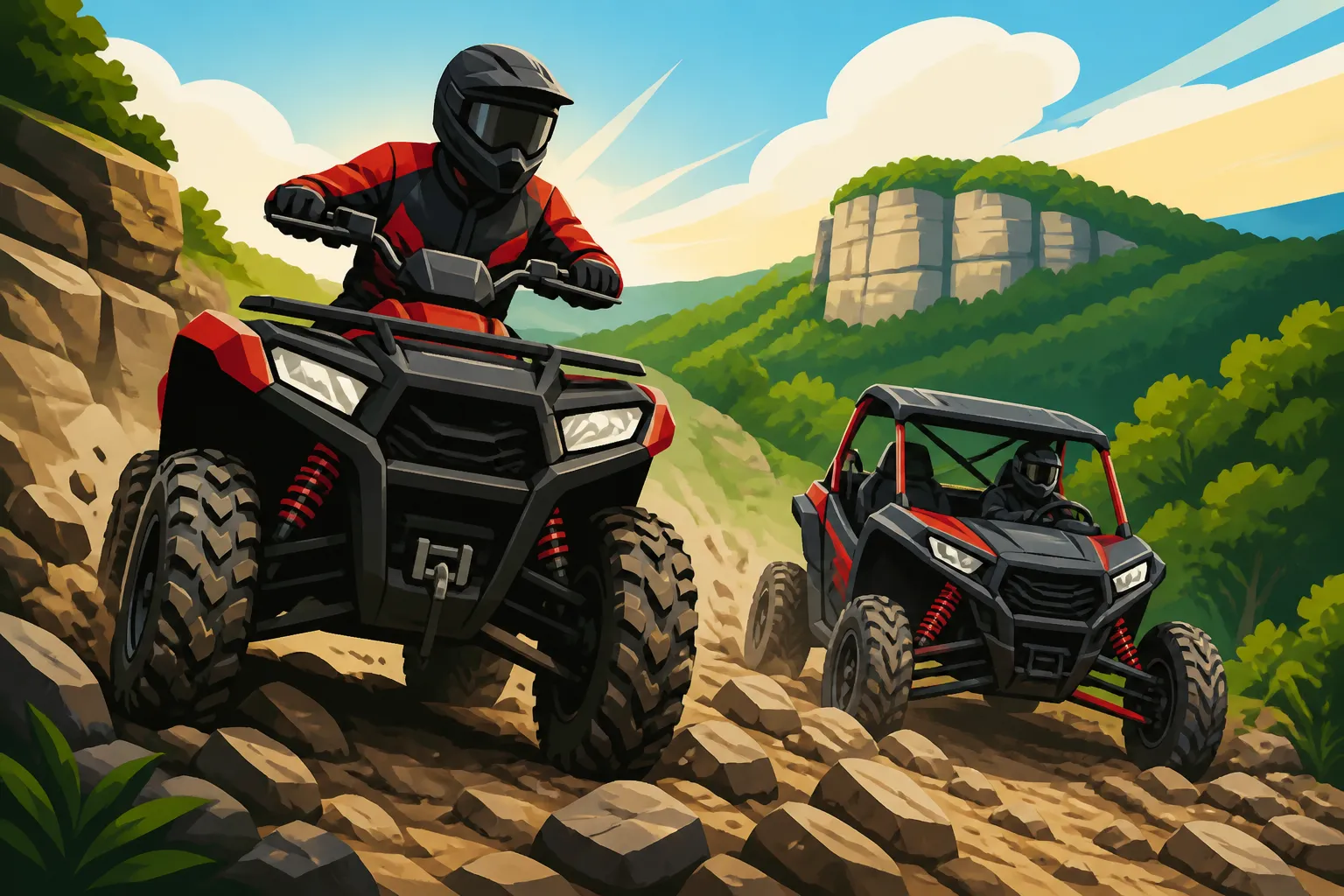
On a rocky section, slow down enough to look ahead and select a route over or around obstacles. Avoid making a last-second turn toward a line you have not checked. Keep a comfortable distance from the machine ahead so you can see the ground and have room to stop if it loses traction. In a group, communicate clearly before anyone attempts a steep or narrow section.
Do not assume that speed will solve a traction problem. A sudden throttle input can spin tires, disturb loose material, or make a machine harder to control. If the line looks beyond your comfort level, stop in a safe place and reconsider. Depending on the trail and the vehicle, backing out may be safer than committing to an obstacle. Never let the pressure of a waiting group decide for you.
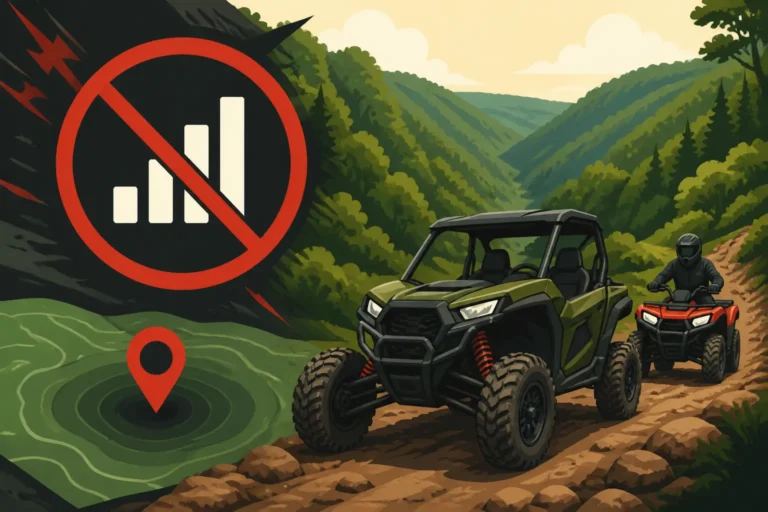
Before riding, discuss what the group will do if a machine gets stuck, breaks down, or cannot climb a section. Carry basic recovery and repair supplies appropriate to your vehicle, and know how to use them. Keep phones charged, but do not assume you will have reliable service in every hollow or remote area. A route plan, a check-in arrangement, and a realistic turnaround time are useful even on a familiar ride.
Prepare your ATV or UTV for rock
Check tires, clearance, and essential equipment
Tires are your contact with the ground, so inspect them before the trip. Look for cuts, bulges, worn tread, and damage around the sidewalls. Rock can be unforgiving when a tire is already compromised. Bring a repair kit suited to your tire type and a way to inflate a tire if your setup requires it. A spare tire or other backup may make sense for some trips, but the right choice depends on your machine, route, and how far you will be from assistance.
Ground clearance and underbody protection matter when rocks sit above the surrounding trail. A machine can appear to clear an obstacle at the front and still strike its underside as the rest of the chassis passes over. Learn where your ATV or UTV is most vulnerable and avoid dragging it across rocks. If you are considering equipment changes, make sure they are compatible with the vehicle and do not create new handling or fitment problems. For a more detailed look at surface preparation, see [Tire Choice for Kentucky Rock and Mud].
Pack for a delay, not just the ride you hope to have. Water, weather-appropriate layers, a first-aid kit, basic tools, and a dependable light source can matter if a repair takes longer than expected. Secure cargo so it cannot shift on uneven ground, and make sure anything carried on a UTV does not interfere with visibility, passenger space, or safe operation.
Use maps as backup, not as permission to explore
A good route plan helps you understand where you intend to ride, where you can stop, and how you might return if conditions change. Carry the official park map or follow the park’s required navigation guidance. A phone-based mapping tool such as onX Offroad can be useful for trip planning and keeping route context at hand, but it should not replace posted signs, park staff instructions, or official closure notices.
If you use onX Offroad or another mapping app, check that you have the information you need before leaving an area with dependable service. Confirm that the route shown is open to your machine and is within the riding area you are permitted to use. A visible track on a map does not by itself mean a route is legal, open, or safe to ride.
Carry a backup plan in case your phone battery dies, the screen becomes difficult to read, or you lose signal. Tell someone outside the group where you plan to ride and when you expect to be back. Before departure, review [Kentucky Trail Maps Worth Carrying] and check [Kentucky Trail Closures to Check First]. If a trail is closed, do not try to bypass the closure; choose an authorized alternative or postpone the ride.
Ride rocky Kentucky trails with care
Build a pace that leaves room to react
Rocky riding is tiring because you are constantly reading the ground, adjusting your body position, and managing the machine. Take breaks before fatigue turns into rushed decisions. If you notice that your grip is tightening, your focus is slipping, or you are missing obvious changes in the trail, stop somewhere safe and reset.
Keep passengers informed, especially in a side-by-side. Ask them to stay seated, use the provided restraints, and follow the manufacturer’s guidance for riding on uneven ground. Do not assume that a passenger can see or anticipate every bump. A brief explanation before a rocky section can help: keep hands and feet inside the vehicle, stay secured, and avoid shifting suddenly.
Give other riders space and communicate when you are stopping or letting someone pass. On a narrow section, do not block a blind approach if you can move to a safe pull-off. If you meet another group, slow down and make your intentions clear. Small courtesies matter on rough trails, where visibility may be limited and stopping distance can be affected by loose stones.
Decide when to turn around
Turning around is part of good trail judgment, not a failed ride. You might find that a route is wetter, steeper, narrower, or rockier than expected. Your machine may be handling poorly, a rider may be uncomfortable, or a minor mechanical issue may make continuing unwise. Any one of those is a reasonable reason to change plans.
Do not let sunk time, a distant destination, or a group’s excitement push you into an unsafe choice. If turning around is difficult, stop before the obstacle and ask whether there is a safe way to proceed or retreat. If no one in the group is confident about the answer, seek help from park staff or follow the designated procedure for assistance rather than improvising a risky recovery.
After the ride, inspect the machine while the trip is still fresh in your mind. Check tires, wheels, underbody components, and anything that may have taken an impact. Note which sections felt manageable and which ones you would avoid next time. Those observations make your next Kentucky ride easier to plan—and help you choose rocky trails that challenge you without forcing you beyond your limits.
Disclaimer
This article is for general informational purposes only and does not constitute professional advice. Laws, prices and regulations vary by location and change over time. Consult a qualified professional for guidance on your specific situation.