Rush Off-Road’s Daily Hours
Rush Off-Road’s trail day is commonly listed as beginning at 6 a.m., but trail access, office hours, and closing arrangements are not always the same thing. That distinction matters when you’re driving into eastern Kentucky with a trailer, planning a long ride, or arriving near dusk. Here’s how to plan around the daily schedule and avoid a frustrating trip.
What to know about Rush Off-Road’s daily hours
Trail access and office hours may differ
Rush Off-Road’s trails are commonly listed as opening at 6 a.m. That’s a useful starting point for planning, especially if you want to ride before the day gets hot or make the most of a short visit. But don’t assume that the park office, check-in counter, or other facilities open at the same time as trail access. A trail opening time and a staffed service window are two different things.
If you need to buy or confirm a permit, ask a question at check-in, or handle a last-minute change, find out when those services are available before setting your alarm. Arriving before the office opens could mean you’re ready to ride but still need to complete a check-in step. That’s a particularly frustrating surprise after a long drive from Ashland, Morehead, or farther away.
The best practical approach is to confirm the day’s schedule directly with Rush before you leave. Ask specifically when riders may enter the trail system, when the office or gatehouse is staffed, and when riders are expected to be off the trails. The distinction can save you from treating a listed 6 a.m. trail opening as a promise that every park service will be available at dawn.
Confirm the schedule for your exact day
A daily schedule is only useful if it applies to the day you plan to ride. Operating hours and access arrangements can be affected by the park’s calendar, special events, maintenance, weather, or temporary closures. A schedule you saw earlier may not reflect a change made for a particular weekend. Before loading the trailer, check the park’s own current notices or call to confirm.
This is especially important when traveling on a holiday weekend or during a busy riding period. You might plan an early arrival to avoid a line, only to discover that a special event has changed where riders check in or which routes are available. Conversely, a wet spell could affect access even if the park is otherwise operating. For broader preparation, see [Kentucky Trail Closures to Check First] and [Kentucky Trail Conditions Before You Ride].
It also helps to confirm what “closing” means for your visit. Does the time refer to the office closing, the gate closing, or the point by which riders should be off the trails? Don’t guess. A clear answer lets you build a sensible turnaround time, rather than racing the clock after a long loop.
Planning your arrival and ride time
Build the day around your travel time
An early trail opening can make for a full day, but it doesn’t erase the time it takes to get to the park. If you’re trailering from outside the area, plan for fuel, food, unloading, check-in, unloading gear, and any required vehicle preparation. A map estimate may not account for the slower final stretch on rural roads, a stop for fuel, or the time it takes to park and secure a trailer.
Try working backward from the time you want to start riding. If you hope to be on the trail early, decide when you need to leave home, when you expect to arrive, and how much time you need before riding. Be realistic about group logistics: a family or group of friends may need longer to get helmets on, adjust gear, and make sure everyone understands the plan. A smooth departure is better than an early arrival followed by a rushed, disorganized start.
If you’re unfamiliar with the area, add a little breathing room. Check where you’ll turn off, where you can park, and whether your phone’s map will work once you’re away from a main road. [Parking a Trailer at a Kentucky Trailhead] and [Fuel Between Eastern Kentucky Towns] are helpful topics to consider before you set out.
Choose a turnaround time before you leave
It’s easy to lose track of time once you’re riding. A route that looks short on a map can take longer than expected if the terrain is challenging, your group stops often, or someone needs help with a machine. Pick a turnaround time before you start, and leave enough margin to return, load up, and handle any check-out steps before the park’s closing arrangements take effect.
For example, if your group wants a relaxed lunch stop and several scenic pauses, don’t plan a route that uses every available minute. Keep the return leg manageable, especially if riders have different experience levels. One person may feel comfortable continuing along a rougher section while another is ready to head back. A plan that builds in flexibility makes it easier to turn around without anyone feeling pressured.
For a quick reference, use the table below as a planning checklist. It does not replace the park’s own schedule; it helps you identify what to confirm before you travel.
| Planning question | Why it matters | What to do |
|---|---|---|
| When does trail access begin? | The listed trail opening may not match office hours. | Confirm the access time for your specific day. |
| When is check-in available? | You may need to complete a step before riding. | Ask about staffed hours and any required check-in. |
| What time should riders return? | “Closing” can refer to different parts of park operations. | Ask when you need to be off the trails and back at the staging area. |
| Are there weather-related changes? | Rain or trail conditions can affect access. | Check notices shortly before leaving. |
| Where should trailers park? | A suitable spot may affect unloading and departure. | Confirm the designated parking and staging area. |
| How much riding time do you have? | Travel, breaks, and trail difficulty can stretch the day. | Set a turnaround time and leave a return buffer. |
How weather and trail conditions affect your day
Rain can change the plan
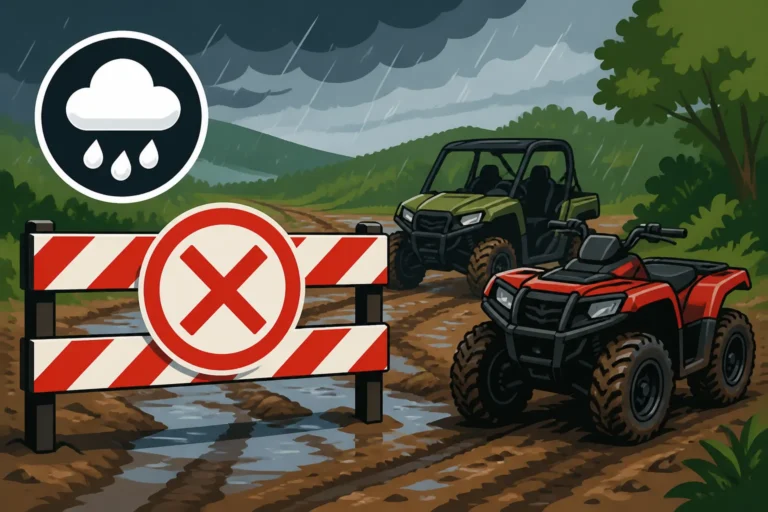
A park’s posted schedule and the condition of its trails are related, but they are not the same thing. The park may have a regular operating schedule while specific routes are affected by rain, maintenance, or other conditions. In eastern Kentucky, a wet spell can make a route feel very different from how it looked on a dry visit. Mud, slick surfaces, and runoff can slow a group down and make a longer ride less comfortable or more demanding.
Check conditions close to your departure, not just when you first start planning. A forecast is helpful, but it may not tell you how the trails themselves are holding up. Pay attention to official park updates and any instructions at check-in. If a route is closed or a section is posted as unsuitable, respect the restriction rather than trying to find a way around it.
Think about your group’s comfort level, too. A confident rider on a familiar machine may be happy to adjust plans, while a beginner or a family with less experience may prefer to postpone. [Kentucky Riding After Heavy Rain] offers more context for thinking through wet conditions. The right choice may be a shorter ride, an easier route, or a different day.
Carry maps and prepare for weak cell coverage
Don’t count on a phone signal throughout a ride. Coverage can vary with terrain, and a route through wooded or hilly areas may leave you with limited service. Save any useful maps or park information before you arrive, and make sure everyone in your group knows the basic plan. A phone map is convenient, but it’s not a substitute for knowing where you are and how to get back to the staging area.
A tool such as onX Offroad can help you prepare by reviewing routes and keeping useful map information available for your ride. Treat it as a planning aid, not as permission to ride any line shown on a screen. Follow Rush’s posted route information and instructions, and don’t enter closed areas just because a digital map appears to show a path.
For a more complete navigation plan, consider [Kentucky Trail Maps Worth Carrying] and [Kentucky Trails With Cell Coverage]. Keep your phone charged, bring a backup power source if appropriate, and tell someone in your group what to do if riders become separated. The goal isn’t to overcomplicate a day ride; it’s to avoid turning a dead battery or missed turn into a bigger problem.
Making the most of the available hours
Match your route to your group
The amount of riding you can comfortably fit into a day depends on more than the opening and closing times. It depends on the route, the pace, the experience of the riders, the machines, and how often the group stops. A long, ambitious loop may sound appealing when you’re planning at home, but a shorter route can be a better choice if anyone is new to off-road riding or unfamiliar with Rush.
Agree on a general plan before leaving the staging area. Decide who will lead, who will ride at the back, and what the group should do if someone needs to stop. If a rider has a problem, the rest of the group should know whether to wait together or return to a safe meeting point. Keep the plan flexible enough to account for fatigue, changing conditions, and the pace of the least experienced rider.
Use maps and park guidance to make a realistic route choice. onX Offroad may help your group review a planned ride in advance, but compare what you see with the information Rush provides. Route names, access rules, and trail conditions can change, so prioritize posted park guidance over assumptions based on an older map or someone else’s recollection.
Leave a buffer for the return and the trailer
The last part of the day is easy to underestimate. Getting back to the staging area is only one step: riders may still need to unload gear, clean or secure equipment, check the machine, and load it onto the trailer. If you’re trying to leave before dark or beat a long drive home, give yourself enough time for these tasks instead of planning to finish at the last possible moment.
Keep an eye on the clock during the ride. A scheduled check-in or meal stop can become longer than expected, and trail speed may vary from one section to the next. Pick a reasonable turnaround point and use it even if the group feels it could squeeze in one more stretch. Having daylight and time to deal with a minor issue is more valuable than finishing a route in a hurry.
If it’s your first visit, plan a conservative day and learn how the park flows before attempting a longer outing. On later visits, you’ll have a better feel for the time your group needs. A repeat rider may be able to estimate a route more confidently, but conditions and group composition still matter.
A practical pre-ride checklist
Confirm, pack, and communicate
Before you leave, verify the schedule for the date you’re visiting, including the trail-access time, check-in availability, and when riders should return. Look for announcements that may affect the day, and ask about any specific process you’ll need to follow when you arrive. If your plan depends on riding at first light, confirm that the opening information applies to your arrival and not just to general park operations.
Pack for the actual ride, not just the drive. Bring appropriate protective gear, water, food, and anything your group may need for a delay. Make sure machines are ready for the terrain and that your trailer is suitable for the trip. Consider how you’ll communicate if riders get separated or a phone loses service. These small preparations matter more when you’re riding somewhere unfamiliar.
Use onX Offroad or another navigation tool to review your plan ahead of time, then save the information you’ll need before entering areas with limited reception. Keep Rush’s own instructions close at hand and follow any posted changes. For more park-specific planning, consult [Rush Off-Road Permit Cost] and [7,000 Acres at Kentucky's Rush Off-Road] alongside the park’s current visitor information.
Keep the day flexible
Even a carefully planned ride can change once you arrive. A route may take longer than expected, a rider may need a break, or conditions may call for a different plan. Avoid filling every available hour with a rigid itinerary. Leave enough room to shorten the ride, return early, or spend extra time handling a practical issue.
If you’re visiting with children or newer riders, make the schedule comfortable for them too. A day that begins early and ends with everyone exhausted can make the trip feel harder than it needed to be. Short breaks, clear expectations, and a route suited to the group can make the experience more enjoyable than simply chasing maximum mileage.
The key is to treat the 6 a.m. trail opening as a starting point for planning, not the only detail that matters. Confirm the schedule for your exact day, distinguish trail access from office service hours, and set a turnaround time that leaves room for the unexpected. That gives you a much better chance of enjoying the ride without watching the clock all day.
Disclaimer
This article is for general informational purposes only and does not constitute professional advice. Laws, prices and regulations vary by location and change over time. Consult a qualified professional for guidance on your specific situation.