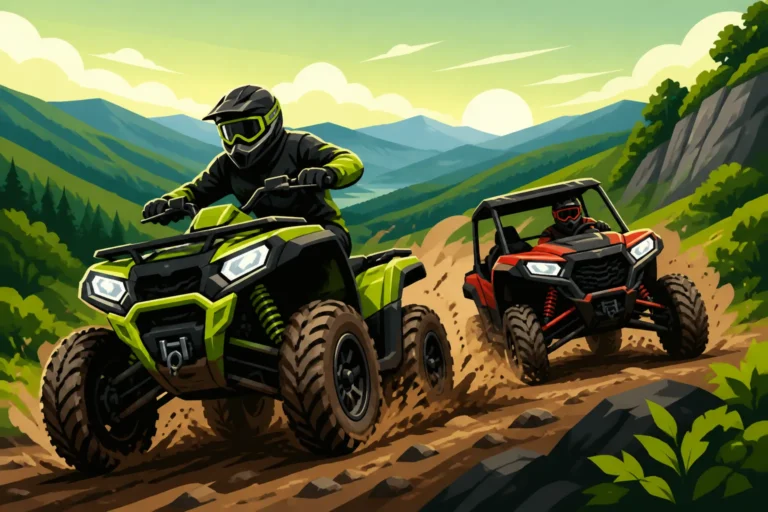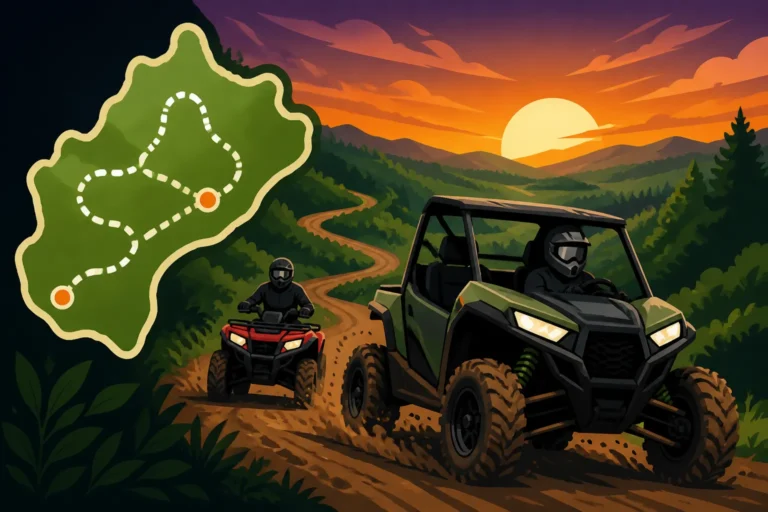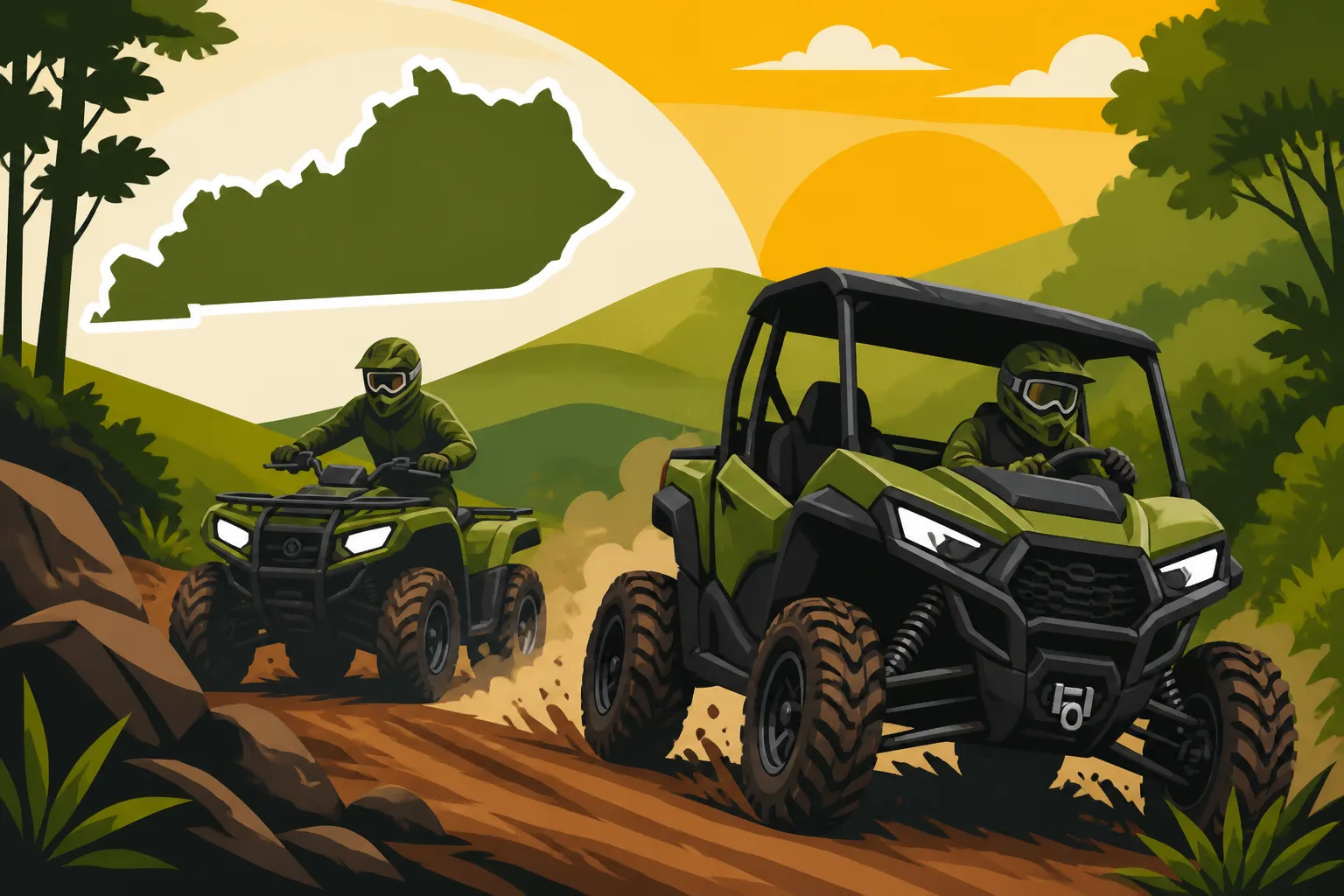
Turkey Bay OHV Area in Western Kentucky
Turkey Bay can look straightforward on a map, but a ride there takes more planning than simply loading the ATV and heading toward Land Between the Lakes. Trail access, permits, weather, machine fit, and where you can legally ride all affect the day. This guide explains how to plan a safer, less stressful visit to Turkey Bay OHV Area in western Kentucky.
What to Know About Turkey Bay OHV Area
Where Turkey Bay Fits Into Land Between the Lakes
Turkey Bay OHV Area is part of Land Between the Lakes National Recreation Area, a large public recreation area in western Kentucky and Tennessee between Kentucky Lake and Lake Barkley. It is a destination for off-highway vehicle riders, but it is not an invitation to ride anywhere across the surrounding forests. The designated OHV area and its rules define where motorized riding is allowed.
That distinction matters when you arrive. A nearby forest road, campground route, or unmarked track may look like a natural continuation of the trail system, but appearance alone does not establish that it is open to OHVs. Stay within marked riding areas and follow signs at trail junctions. If a route is unclear, pause and check a current map or ask staff rather than treating a familiar-looking track as an extension of the trail.
The area’s setting is part of its appeal. Riders come for wooded trails, varied terrain, and a day outdoors away from busy roads and town traffic. Communities such as Cadiz, Grand Rivers, and the Golden Pond area can help orient trip planning, but services are spread out. It is sensible to settle fuel, food, lodging, and last-minute supplies before you are deep into the recreation area.
If you are comparing destinations, start with the practical details rather than mileage alone: the type of riding you want, your machine’s width and capability, whether your group needs a beginner-friendly day, and how much time you have. [Turkey Bay OHV Area in Western Kentucky] belongs in the planning conversation alongside other destinations such as [Black Mountain Off-Road Adventure Area in Kentucky] and [Leatherwood Off-Road Park in Kentucky], but each area has its own terrain, access arrangements, and rules.
What Kind of Riding to Expect
Turkey Bay is best approached as a designated off-road riding area, not a groomed recreational road system. Trail conditions and difficulty can vary. A route that seems comfortable when dry may become slippery, rutted, or more demanding after rain. Roots, uneven ground, slopes, loose soil, and changing visibility can all affect how a ride feels, especially for a person who is new to off-road driving.
That variability is one reason to avoid planning the day around a single rigid route. A group may start with a moderate loop, then choose a shorter way back if the ground is slick or someone is tiring. Another group may find that a route takes longer than expected because of stops, trail traffic, or the pace of the least experienced rider. Leave room in the schedule for those ordinary delays instead of assuming that a mapped distance equals a predictable travel time.
A useful mindset is to treat the trail as a changing outdoor environment. Do not assume every section will be equally easy, and do not let a more experienced rider’s confidence set the pace for everyone else. If a climb or obstacle feels beyond your machine or skill level, stopping to reassess is a better choice than forcing the attempt because other riders are waiting.
For a wider view of trip choices, compare Turkey Bay with [Where to Ride an ATV in Kentucky]. That broader overview can help you decide whether a public OHV area, a private park, or a different type of outing better suits your group. No destination is automatically the right fit just because it is well known; the best match is the one where your riders, machines, and comfort levels align.
Planning Your Visit Before You Haul
Check Access, Notices, and Permit Details
Before leaving home, check the recreation area’s official information for current access, trail conditions, permit requirements, and any closures or restrictions. These details can change with weather, maintenance, staffing, or seasonal operating arrangements. A saved screenshot from a previous trip may be handy for orientation, but it should not replace a current check before you load the trailer.
Confirm exactly what permit or authorization applies to your machine and your planned use. Do not assume that a state ATV title, an out-of-state registration, or a permit from another riding park automatically covers access at Turkey Bay. Public-land riding requirements are tied to the specific area and its rules. The same principle applies if you are visiting from Tennessee, Indiana, or another nearby state: confirm the requirements for the place where you will ride, not just the requirements where your machine is registered.
Call before you haul if the online information leaves a practical question unanswered. Ask whether the riding area is open, whether the kind of machine you plan to bring is allowed, how permits are obtained, and whether a particular access point or facility is available. That call can save a long drive with a trailer only to discover that a closure, restriction, or unsuitable condition changes the plan.
For a deeper look at how requirements can differ from one destination to another, see [How the Turkey Bay OHV Permit Works] and [Kentucky Trail Permits Explained]. Treat any price, operating schedule, or permit procedure as something to confirm directly before your visit rather than something to rely on from an old post or a friend’s memory.
Choose a Day That Matches the Conditions
Weather planning is especially important because rain can change both trail difficulty and access. A stretch of dry weather may leave routes manageable for a wide range of riders, while recent heavy rain can make slopes slick, deepen ruts, and increase the risk of spinning tires or sliding. Even if you are willing to ride in mud, the management team may close routes or limit access to protect the ground.
Check the forecast for the riding area, not only for your home town. A clear morning where you live does not guarantee dry conditions at the destination, and a quick shower can leave shaded woods damp long after open areas dry. If the forecast is unsettled, have a backup plan: a shorter visit, a different activity, or a new date may be more enjoyable than pushing ahead with a group that is not equipped for wet terrain.
Also consider the temperature and daylight. Heat, cold, fog, or an early sunset can make a ride harder than the trail itself. Build in time for check-in, unloading, briefing the group, and returning to the staging area. A plan that leaves no margin can turn a relaxed day into a race to get back before dark.
For broader preparation, [Kentucky Trail Conditions Before You Ride] and [Kentucky Trails Closed After Rain] are useful topics to review. If the ground is saturated or the area has posted a closure, respect it. Riding around a gate or trying to find an unofficial bypass can damage trails, create safety risks, and jeopardize access for everyone.
Selecting a Machine and Setting Up Your Group
Match the Machine to the Route and the Riders
An ATV and a UTV can both be appropriate for off-road recreation, but their size, handling, and passenger arrangements are different. Before choosing what to bring, make sure the machine is permitted in the area and that its dimensions and configuration suit the trails you intend to ride. A large side-by-side may offer seats and a protective structure, but its width can make narrow or uneven routes more challenging. A smaller ATV may fit tighter spaces but requires the rider to operate it actively and maintain balance.
Think about the least experienced person in the group when choosing a route and pace. A rider who has only used an ATV on a flat field may find wooded hills, loose surfaces, and changing sightlines intimidating. A passenger who is comfortable on paved roads may still feel uneasy in a UTV on an uneven trail. Build confidence gradually and do not assume that a person’s comfort with cars or motorcycles transfers directly to off-road riding.
Machine condition matters just as much as machine type. Check tires, brakes, steering, throttle response, lights, belts or chains as appropriate, and any protective equipment specific to the vehicle. A small issue that seems harmless in the driveway can become a major inconvenience far from the staging area. If a machine has been sitting for a while, test it before the trip rather than discovering a weak battery or damaged tire at the trailhead.
If you are renting rather than bringing your own machine, ask the provider where the rental may be ridden and whether the Turkey Bay area is included in the permitted use. Clarify what is included in the booking, what safety equipment is supplied, and what to do if the machine develops a problem. [Renting an ATV in Kentucky] and [Renting a Side-by-Side in Kentucky] can help you think through the questions to ask before committing.
Set Expectations for a Mixed-Ability Group
A group ride is more comfortable when everyone knows the plan before engines start. Agree on a lead rider and a sweep rider, decide how the group will handle junctions, and make sure no one is expected to navigate alone without a way to communicate. At a fork, the lead can wait until the group is together before continuing. That simple habit reduces the chance that a slower rider takes a wrong turn while trying to catch up.
Make the pace fit the least experienced rider, not the most confident one. It is easy for a group to stretch out when someone moves quickly through a familiar section. If that happens, the riders at the back may feel pressured to go faster than they can safely manage. Frequent regrouping points, patient spacing, and clear hand signals or agreed communication methods help everyone relax.
Discuss what happens if the group gets separated or someone has a mechanical problem. Choose a simple procedure, such as stopping in a safe place and waiting for the group rather than continuing to search down different trails. Share the planned riding area and expected return time with someone who is not on the trip. These steps may feel formal for a casual outing, but they reduce confusion when phones lose signal or trail junctions look similar.
For family groups, make the day shorter and more flexible than you think it needs to be. Children and newer riders may need more breaks, and fatigue can arrive faster when they are concentrating on unfamiliar terrain. [Riding With Children at a Kentucky Park] and [Kentucky Rules for Riders Under 16] are worth reviewing when minors are part of the outing. Check the applicable rules and the machine manufacturer’s age guidance before putting a young person on a vehicle.
Navigating Turkey Bay and Staying on Designated Routes
Use Maps as a Planning Aid, Not Permission
A trail map is useful for orientation, but it does not override posted signs or current closures. Trail systems can have junctions that are easy to misread, especially when routes branch through woods or the ground has obscured older tracks. Carry a map you can consult without relying on a continuous mobile connection, and know how to identify your general location before setting off.
Digital tools can make trip planning easier, particularly when you want to review routes, mark a staging area, or keep track of where your group has traveled. onX Offroad can be one option for reviewing off-road mapping information, but use it as a navigation aid rather than as proof that a route is currently open or legally available. Compare what you see on a device with current official maps, signs, and any notices provided at the area.
Before the ride, familiarize yourself with the map’s symbols and the route layout. Mark the staging area or another clear meeting point. If your group plans to explore a branch trail, agree on how far you intend to go and when you will turn back. A quick glance at a map while stopped is more useful than trying to interpret it while moving over uneven ground.
Keep your device protected and usable. A phone can overheat, lose battery, or become difficult to operate with gloves on. Carry a backup navigation option and a power source if appropriate, but do not make the trip depend on a single electronic device. A paper map in a protected case can be a simple backup when signal or battery life becomes an issue.
Ride Considerately Around Other Visitors
Turkey Bay is a shared recreation area, so considerate riding matters. Reduce speed where visibility is limited, at junctions, and wherever another person may be close by. You may encounter riders moving in the opposite direction, people stopped to check a map, or a group trying to regroup. Dust, engine noise, and limited sightlines can make it harder to notice others until they are close.
Leave enough room between machines for the rider ahead to slow down or stop without being crowded. Following closely can be stressful and can reduce reaction time if a branch, rut, or unexpected obstacle appears. On slopes and uneven sections, maintain a spacing that lets each rider choose a safe line without feeling rushed. If someone needs a moment to assess a section, give them that time.
Stay on the designated routes and avoid cutting corners, creating bypasses, or widening a trail to get around mud or an obstacle. Those choices can damage vegetation and soil, create new erosion paths, and make the original route more difficult for everyone. If a marked route appears blocked or damaged, turn back or follow official directions rather than improvising a new track.
Leave the area as you found it. Secure trash, avoid spilling fuel or fluids, and do not assume that a small piece of litter will be picked up by someone else. If you see a hazard or a damaged sign, report it through the appropriate area contact when practical. Responsible riding helps protect access to the kind of public recreation site riders value.
Safety, Equipment, and Trail Readiness
Carry the Essentials for a Day Away From Town
A useful day kit is not complicated, but it should cover the basics. Bring drinking water, weather-appropriate layers, a first-aid kit, a phone, a map, and any personal medication you may need. Pack supplies so they remain secure if the vehicle bounces over rough ground. A loose bag or bottle can shift at the wrong moment, while a phone that is not protected may be damaged by dust, rain, or a fall.
Take basic repair items suited to your machine and your group’s experience. A tire repair kit, a suitable inflator, a tool kit, and a way to contact assistance can be valuable, but only if someone knows how to use them. Check the vehicle’s manual for what is appropriate. Do not attempt a repair on an unstable slope or in a place where other riders cannot see you.
Dress for the possibility of changing conditions. A warm, sunny parking area may not reflect the temperature in a shaded section of woods, and rain can make a comfortable ride feel cold quickly. Gloves, protective eyewear, sturdy footwear, and clothing that covers exposed skin help with comfort and protection. For helmet and protective equipment decisions, follow applicable laws, manufacturer guidance, and the requirements posted for the area.
Before leaving the staging area, tell someone your general plan and when you expect to return. If you change the plan substantially, update that person if you can. This is particularly useful when cell service is unreliable or when a group is riding beyond a simple loop. The point is not to overcomplicate a recreational day; it is to ensure someone knows where to start looking if you do not return as expected.
Know When to Turn Around
A good rider is not someone who takes every obstacle. It is someone who recognizes when conditions, skill, equipment, or fatigue make continuing a poor choice. A route may be technically open but still be unsuitable for your group that day. If a surface is slick, a machine is struggling, or a rider feels anxious, turning around is a reasonable decision.
Watch for signs that fatigue is affecting judgment. Slower reactions, repeated mistakes, difficulty concentrating, and frustration can appear before someone says they are tired. Stop for water and a rest, shorten the route, or return to the staging area. Continuing only because the group planned to complete a certain loop can turn an enjoyable trip into an avoidable incident.
Do not enter water, steep ground, or an obstacle just because another rider has already crossed it. Machines differ, and riders have different levels of experience. Assess the route from a safe position, consider whether there is a clear way back, and avoid putting a person in a situation where they feel pushed to attempt something beyond their comfort level.
If a problem occurs, move the group to a safe location and make a clear plan. Avoid crowding around a disabled machine in a trail corridor. If someone is injured or in immediate danger, contact emergency services using the best available method and provide a clear description of your location. This is another reason to note trail junctions, map markers, or other recognizable landmarks along the way.
Weather, Seasonal Conditions, and Trail Care
Expect the Ground to Change After Rain
Rain affects more than traction. It can deepen ruts, obscure rocks and roots, soften trail edges, and make it harder to stop or steer precisely. A route that felt easy on a dry visit may require slower speeds and more careful line choices after wet weather. If a trail is posted closed, do not ride it even if it looks passable from the staging area.
Saturated ground is especially vulnerable to damage. Spinning tires can cut into the surface and send water along the new rut, gradually making erosion worse. Trying to bypass a muddy section can widen the trail and damage vegetation. These impacts can persist beyond the day’s ride and may contribute to longer closures.
Check the official trail notices before leaving and again if the weather changes while you are in the area. If conditions deteriorate, reassess the plan rather than waiting until the group is committed to a difficult section. A shorter ride on a suitable route is usually more satisfying than pushing into terrain that is no longer appropriate for your machines.
If you want to understand how wet conditions affect riding elsewhere in the state, [Kentucky Riding After Heavy Rain] offers related planning context. The same basic principle applies at Turkey Bay: local conditions and posted directions take priority over assumptions based on the forecast or a prior visit.
Respect Closures and the Reason Behind Them
A closure can be inconvenient, especially after a long drive, but it generally serves a purpose. It may protect the trail surface, address a safety concern, allow maintenance, or reflect another management need. Do not assume that an unstaffed gate or an old-looking sign means the restriction is no longer active.
Avoid asking a friend’s social media post or an old trip report to settle whether a route is open. Conditions and rules can change after the post was written. Use current official information, posted notices, and instructions from the area’s staff. If a route is closed, choose an open alternative or change the day’s plan.
Closures also affect the wider riding community. When riders ignore restrictions, they can increase trail damage and give managers fewer reasons to maintain access. Staying off closed routes is not just a personal safety decision; it is part of protecting future opportunities to ride in the area.
Be patient if a trail is reopened gradually or if access arrangements differ from what you remember. Reopening may depend on the ground drying, repairs being completed, or other conditions being met. A quick check before departure is easier than arriving at a gate and trying to work out what changed.
Building a Smooth Day Trip or Weekend
Plan the Drive, Staging, and Return
A Turkey Bay outing begins before the first trail. Check the route to Land Between the Lakes, your trailer setup, fuel stops, and the location of the access point you intend to use. Since services may be spread out, avoid leaving essential purchases until you are close to the riding area. Confirm that the trailer, tie-downs, and vehicle are ready before the morning you depart.
Allow time for arrival tasks. You may need to confirm access, obtain or display a permit, unload machines, secure equipment, and brief your group. These tasks take longer when everyone is unfamiliar with the site or when several vehicles arrive together. A relaxed start makes it easier to notice a loose strap, missing helmet, or low tire before riding.
Plan the return with a buffer. Give yourself enough time to refuel if needed, load safely, and reach your lodging or the road before fatigue sets in. If the group is riding late into the day, avoid rushing through the last section just to meet an arbitrary dinner reservation. A realistic schedule protects both the ride and the drive home.
If you are combining Turkey Bay with other activities in the region, think about how much riding the group genuinely wants. Trying to fit a full ride, a long drive, a meal, and another attraction into one day can leave everyone tired. For overnight planning, compare lodging and camping options in the broader recreation area and confirm what is available for your travel dates.
Make a Backup Plan That Still Feels Like a Good Trip
A backup plan is particularly helpful when weather, closures, or mechanical problems can affect the day. It might be a shorter ride, a different open trail option, or a non-riding activity nearby. The point is not to expect the trip to go wrong; it is to prevent one changed condition from becoming a day-long argument about what to do next.
Agree on the backup before you arrive. If one person is willing to ride in mud and another is not, settle the decision criteria ahead of time. For example, the group might agree to follow posted closures and turn back if the chosen route feels beyond the least experienced rider. Having shared expectations reduces pressure in the moment.
Keep the overall trip flexible enough to respond to real conditions. A scenic route, a relaxed meal, or a shorter session can still make for a satisfying visit even if the original riding plan changes. Families and mixed-experience groups often enjoy a day more when success is defined as spending time together safely, rather than completing every trail they intended to ride.
For a final preparation check, use the comparison below to match common trip needs with a sensible action.
| Trip concern | What to check before leaving | Practical response |
|---|---|---|
| Access and permits | Current official notices and permit instructions | Confirm requirements directly before hauling |
| Recent rain | Trail conditions, closures, and forecast near the area | Choose a shorter route or reschedule if needed |
| Machine fit | Vehicle type, condition, and group ability | Bring a machine suited to the riders and open routes |
| Navigation | Current map, device battery, and meeting point | Carry a backup and follow posted signs |
| Group safety | Lead and sweep riders, communication, and return plan | Agree on pace and regrouping before starting |
| Fuel and supplies | Distance to services and required equipment | Arrive prepared rather than relying on nearby stops |
| Young riders | Applicable rules and manufacturer age guidance | Match the machine and supervision to the child |
| Changing plans | Backup activity or alternate ride plan | Decide in advance how the group will respond |
Frequently Asked Questions About Turkey Bay
Is Turkey Bay Suitable for First-Time ATV Riders?
It can be a destination for newer riders, but beginners should not assume every route will be comfortable. The difficulty of a trail depends on conditions, the machine, the rider’s experience, and the group’s pace. A beginner should start conservatively, learn the machine in an appropriate setting, and ride with experienced people who are willing to stop and help.
Before visiting, check current maps, posted difficulty information if available, and any operating guidance from the area. Choose a route that leaves an easy way to turn back. Avoid following a fast group simply because they appear confident; their machine and experience may be very different from yours.
It can also help to take a first ride closer to home on a suitable legal area before planning a more involved trip. Familiarity with braking, steering, throttle control, and safe spacing reduces the number of new things a first-timer must manage at once. If renting, ask the provider for an honest explanation of the machine and where a novice should begin.
Can I Ride a UTV at Turkey Bay?
Do not assume that every vehicle described as an ATV, UTV, side-by-side, or off-highway vehicle has identical access. Confirm that the specific type and dimensions of your machine are allowed and suitable for the routes you plan to use. Rules and conditions at a designated OHV area may distinguish between vehicle types or impose practical limits.
A UTV’s extra width, passenger seating, and weight can affect which routes are comfortable. Even if a vehicle is allowed, a narrow, uneven, or muddy trail may be a poor match for it. Check the current map and site information, then consider whether the machine can maneuver safely without forcing other users off the route or damaging the trail edges.
If you are bringing a rental, confirm both permission and coverage in advance. A rental contract may restrict where the machine can be driven, and the fact that a route appears on a digital map does not necessarily mean the rental company authorizes access there. Ask specific questions rather than relying on a general statement that the machine is “for off-roading.”
What Should I Check the Morning of the Ride?
Check the official access and closure information, the weather near the area, and any permit or entry instructions. Then inspect your machine and gear. Confirm that tires are sound, controls operate properly, protective equipment fits, and you have water, navigation, a first-aid kit, and a way to contact someone if the plan changes.
Review your route and agree on a return time with the group. Make sure everyone knows where to meet if separated and who is leading. If you are carrying a paper map and a phone-based map, confirm that both cover the area you intend to visit. Download or prepare information before you lose reliable reception.
Finally, be willing to change the plan. If the trails are closed, the ground is too wet, or a rider does not feel ready, do not treat that as a failure. A safe, flexible trip is better than a forced ride that leaves someone frightened, stranded, or dealing with a damaged machine.
Does a Permit From Another Kentucky Park Work at Turkey Bay?
Do not count on it. Permits and access rules are generally specific to the place that issues them, so a permit for one riding area should not be assumed to authorize riding at another. Check Turkey Bay’s own current requirements and follow the instructions for obtaining or displaying the appropriate authorization.
The same caution applies to state paperwork. A title or registration can help establish ownership or satisfy requirements that apply to the machine, but it is not automatically a trail-access permit. These are separate questions: what documentation your vehicle needs and what permission the recreation area requires for riding.
If you are visiting from outside Kentucky or planning to ride several parks on one trip, make a separate checklist for each destination. Keep the relevant permits and instructions easy to find, and do not assume that a pass, sticker, or registration transfers across state or park boundaries. [Why One Park's Permit Does Not Travel] explains the broader issue of park-specific access requirements.
Turkey Bay can make for a memorable western Kentucky ride when the trip is planned around the actual conditions rather than assumptions. Check current access information, choose a machine and route that suit your group, stay on designated trails, and give yourself room to change plans. Those habits help keep the day safer for your riders and the riding area in better shape for the next visit.
Disclaimer
This article is for general informational purposes only and does not constitute professional advice. Laws, prices and regulations vary by location and change over time. Consult a qualified professional for guidance on your specific situation.