Why a Kentucky City Must Opt In
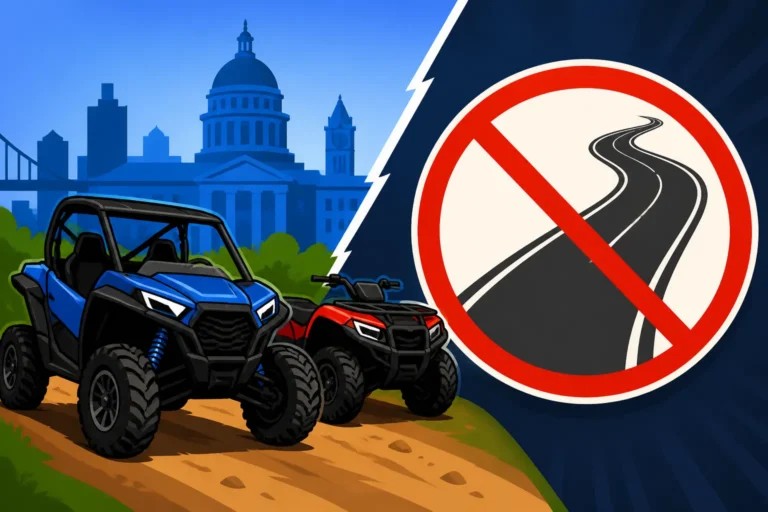
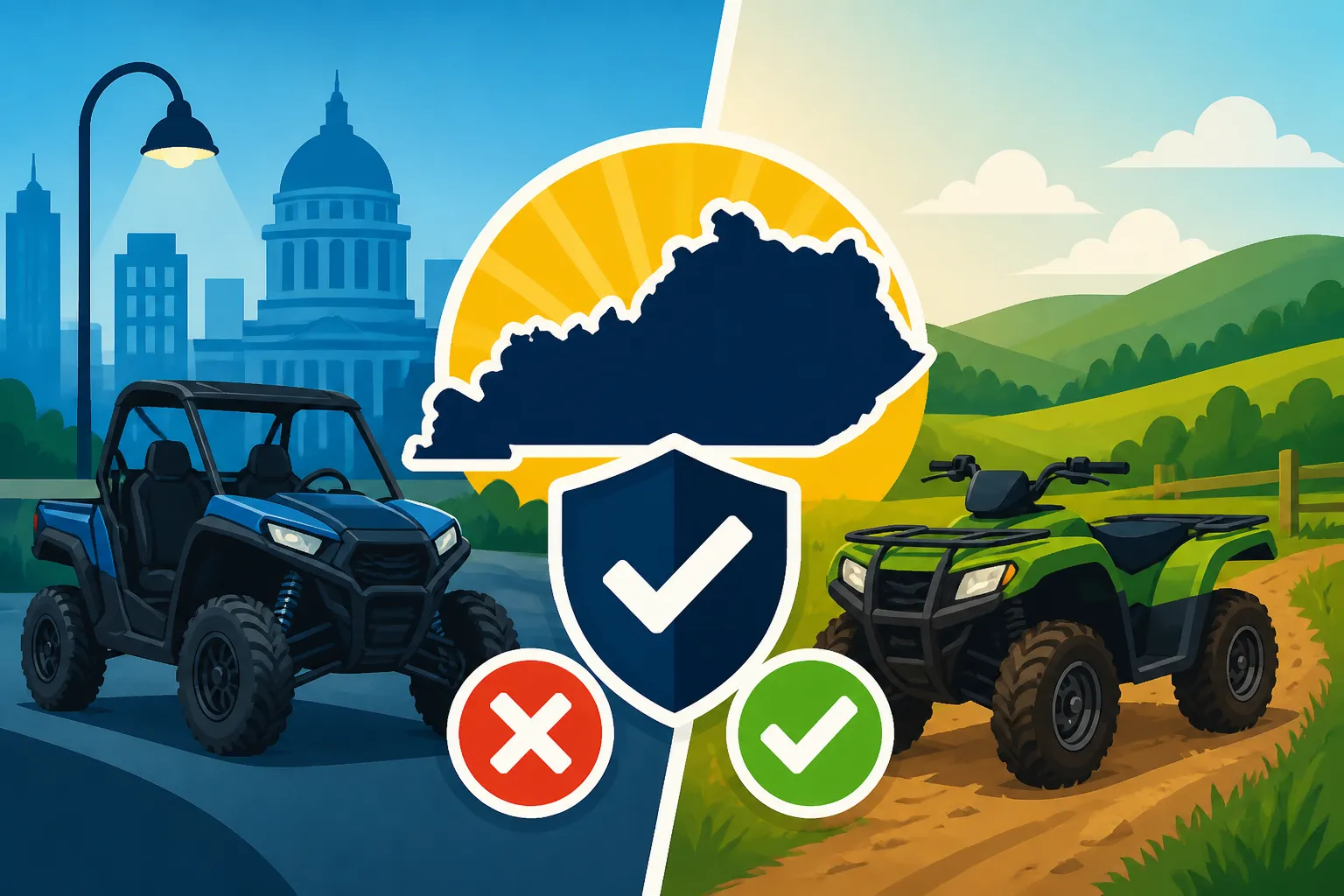
It's incredibly frustrating when you see what looks like a perfectly good stretch of pavement, maybe just to get from your driveway to the next trail, or to connect two parts of your favorite riding area, and you just can't use it on your ATV or UTV. Many Kentucky riders find themselves in this exact situation, scratching their heads about why their machine, which seems capable enough, isn't allowed on city streets. The short answer for city roads boils down to a fundamental concept: a Kentucky city must actively "opt in" to allow these machines, and this guide is going to walk you through exactly what that means for you and your ride.
The Default Position: Kentucky Roads Are Closed to ATVs and UTVs
When you first get into the world of off-roading in Kentucky, one of the quickest lessons you learn, often the hard way, is that public roads are generally off-limits. It doesn't matter how shiny your new machine is or how many bells and whistles you've added; the default stance of Kentucky law is pretty clear: ATVs and UTVs belong off the pavement. This can feel incredibly restrictive, especially if you live in a rural area where "the road" is often the most direct path between two points.
Why the Default is "No Entry"
From a legislative standpoint, ATVs and UTVs have historically been classified as recreational off-highway vehicles. They're designed for tearing up dirt, climbing rocky hills, and splashing through mud, not for navigating traffic alongside cars and trucks. Think about it: they generally lack the typical safety features you'd expect on a road-going vehicle—like turn signals, proper headlights, brake lights, and side mirrors (though many owners add these, which is a good idea for any potential street use). The perception from lawmakers and the general public has often been that these machines are simply too different, too exposed, and too fast for the shared tarmac.
Imagine you've just invested in a brand-new side-by-side, maybe a powerful Can-Am or a sturdy Polaris, and you're envisioning epic rides. You pull it off the trailer, eager to take it for a spin, only to realize you can't even legally ride it down the street to your neighbor's house, let alone to the local gas station. This initial restriction is designed to protect both the riders and other motorists, based on the inherent differences in vehicle design and intended use. The state is thinking about higher speeds, the difference in braking, and how exposed a rider is compared to someone in a sedan.
The State's Stance on Pavement Use
It's critical to understand that the initial "no entry" rule comes directly from Kentucky state law. While counties and cities have some leeway, their authority generally stems from or is limited by state statutes. The state government decided that for the vast majority of its roadways, ATVs and UTVs simply aren't appropriate vehicles. This isn't just about safety; it's also about infrastructure, traffic flow, and liability. The state doesn't want to create a free-for-all where every type of vehicle is mixed without proper regulation.
This foundational state rule is why you can't just hop on your quad and cruise down a state highway or even many county roads without specific exceptions. These exceptions are few and far between, often limited to very short crossings, agricultural use, or emergency situations. For a deeper dive into these limitations, you might find [Kentucky Rules for ATVs on Public Roads] and [Why Kentucky Roads Are Closed by Default] to be incredibly insightful. These resources really break down the historical and legal reasoning behind these restrictions, helping you understand that it's not arbitrary, even if it feels inconvenient at times.
Understanding Kentucky's Special Purpose Vehicle (SPV) Law
Recognizing the growing popularity of ATVs and UTVs, and the desire among riders for more utility and flexibility from their machines, Kentucky lawmakers eventually introduced legislation for what they termed "Special Purpose Vehicles" or SPVs. This was a significant step, as it created a legal category for certain off-highway vehicles to be operated on some public roads, under very specific conditions. However, this wasn't a blanket permission slip for every machine to hit every road. It was a carefully constructed pathway with a crucial gatekeeper: local city governments.
The Legislative Attempt to Create a Pathway
The SPV law was, in essence, an acknowledgement that modern side-by-sides, particularly, had evolved. Many UTVs, for instance, are much larger and more stable than traditional ATVs, and owners were already equipping them with many road-worthy accessories like windshields, turn signals, and mirrors. The legislature saw an opportunity to provide a legal framework for these machines, allowing them to bridge gaps between trails or access local services, rather than simply having them trailered everywhere. It was an effort to legitimize a practice that was already happening, albeit illegally in many cases, and to bring some order and safety to it.
The intent was to provide a mechanism for responsible use on public roads, but it wasn't a mandate for every town to open its streets. Instead, it set the groundwork, laying out requirements for the vehicles themselves—such as lights, brakes, and sometimes even specific tire tread depth—and for the operators, like needing a driver's license. The state said, "Here's how an ATV or UTV could be allowed on a road," but left it up to local jurisdictions to decide if they would allow it. This means that even if your machine meets all the state's SPV equipment requirements, like those detailed in [Kentucky SPV Equipment List], you still can't ride it on city streets unless that specific city has passed an ordinance allowing it.
The "Pilot Program" and Its Limitations
When the SPV law first came into effect, it was often framed as a "pilot program." This designation implied a trial period, a way for the state to observe the impact of these vehicles on public roads before potentially expanding or refining the regulations. Pilot programs, by their very nature, usually come with limitations, and often, sunset clauses. This means they're designed to expire after a certain period unless renewed or made permanent.
Such was the case with Kentucky's initial foray into street-legal SPVs. While it allowed some areas to start permitting their use, the program eventually sunsetted, meaning the original provisions ceased to be active. This left a void and considerable confusion for riders who had perhaps started to rely on these newly opened roads. The good news is that new legislation has often followed, creating refined frameworks, but the underlying principle of local control has remained. You can read more about the evolution of this law and its challenges in articles like [Kentucky's 2025 Special Purpose Vehicle Law] and [Why Kentucky's Pilot Program Sunset in 2024].
It's also worth noting that even with these state-level legislative attempts, the aftermarket industry quickly responded. Companies like SuperATV began offering extensive kits designed to convert off-road machines into street-legal vehicles, adding everything from turn signals to horns and mirrors. However, even with all these modifications, a rider in Kentucky quickly realizes that a SuperATV street-legal kit, while making the machine compliant with state equipment rules, doesn't automatically grant permission to ride on local roads. The local opt-in remains the critical missing piece of the puzzle. Without that local ordinance, all those upgrades might be for naught on city streets.
The Crucial Role of Local Opt-In
This brings us to the core of the matter: the "opt-in" requirement. Even with state laws defining what an SPV is and what equipment it needs, no city in Kentucky is automatically obligated to open its streets to these machines. The power rests firmly with the local city council or governing body to make that decision for their specific jurisdiction. This decentralization of power is by design, allowing each community to decide what's best for its residents and unique traffic patterns.
Why Local Control is Paramount
Local control isn't just a bureaucratic hurdle; it's a reflection of how our communities are structured. City officials, unlike state legislators, are intimately familiar with the specific characteristics of their town. They know the narrow residential streets where children play, the busy main thoroughfares, the school zones, and the areas prone to heavy pedestrian traffic. They can weigh the potential benefits of allowing SPVs (like connecting to trailheads, supporting local businesses, or providing recreational opportunities) against potential drawbacks such as increased noise, safety concerns, and wear and tear on roads.
Consider a quiet subdivision in a town like Berea or Midway. Residents might fiercely oppose loud off-road vehicles frequently traversing their streets, citing concerns about noise pollution, dust, and the safety of children playing. On the other hand, a city closer to a major trail system, like Evarts near Black Mountain Off-Road Adventure Area, might see the economic benefit of allowing riders to access gas stations, restaurants, and lodging directly from the trails. For these towns, opening certain roads might be a boon for local businesses and tourism. Each city's context is unique, and local control allows for tailored solutions rather than a one-size-fits-all state mandate.
The Mechanics of a City Opting In
So, how does a city actually "opt in"? It's not a casual decision. Typically, the process involves several steps, often initiated by requests from local residents, businesses, or riding clubs. It usually starts with discussions at city council meetings, potentially leading to the drafting of a proposed ordinance. This draft then undergoes a public review process, which almost always includes public hearings. During these hearings, residents have the opportunity to voice their support or opposition, sharing their concerns and insights with their elected officials.
After taking public comments into consideration, the city council will vote on the ordinance. If it passes, the city then has its own specific rules governing SPV use within its limits. These local ordinances can be incredibly detailed, specifying which roads are open, what hours they can be used, and even additional equipment requirements beyond what the state mandates. It’s a thorough, often lengthy, process designed to ensure community input and careful consideration. Understanding [How a Kentucky City Opens Its Roads] is key to appreciating this intricate process. Sometimes, a city will only open certain roads and impose speed limits, as explored in [Why a Kentucky City May Cap Roads at 45], to mitigate concerns.
Specific Examples of Opt-In Requirements
Once a city decides to opt in, they often don't just throw open all their roads. Instead, they typically implement very specific rules tailored to their community. For instance, some cities might only allow SPVs on roads with a speed limit below a certain threshold, say 35 mph. Others might designate specific "corridor" roads that connect residential areas to trailheads or to commercial zones where riders can get fuel and food. You might find restrictions on certain roads near schools or hospitals, or even limitations on nighttime operation.
A prime example of a municipality enacting its own rules is Louisville Metro. Their Section 74.08, for example, outlines particular requirements and restrictions for SPV use within its jurisdiction. This isn't just about whether your machine has the basic lights; it can delve into things like insurance requirements, the display of specific decals, and even rules about passengers. So, even if you have a top-of-the-line side-by-side with all the bells and whistles from SuperATV, you still need to know the local rules. The intricacies of these local ordinances, like the one discussed in [Louisville Metro Section 74.08], highlight the importance of doing your homework before you ever put a tire on city pavement. It's a patchwork quilt of regulations across the Commonwealth, and knowing your specific square is crucial.
What Happens When a City Doesn't Opt In?
The flip side of the "opt-in" coin is what happens when a city chooses not to create an ordinance allowing SPVs on its streets. In these cases, the default state law, which generally prohibits ATVs and UTVs from public roads, remains firmly in effect. This means that attempting to ride your machine on city streets without an explicit local ordinance allowing it can lead to some pretty unwelcome consequences.
The Status Quo: Illegal Road Use and Its Consequences
If a city hasn't opted in, or if you're riding on a road not designated in their ordinance, you are, quite simply, breaking the law. It's not a gray area; it's a clear violation. The consequences can range from a simple warning (if you're very lucky and the officer is feeling lenient) to a significant fine, points on your driver's license, or even the impoundment of your machine. Imagine the frustration and expense of having your ATV towed and stored, all because you weren't aware of a local ordinance. These are not minor infractions; law enforcement takes road safety seriously, and an unauthorized off-road vehicle on city streets can be seen as a significant hazard.
Many riders, especially those new to the sport or visiting from out of state, assume that if their machine has headlights and turn signals, it must be okay. This assumption can quickly land them in hot water. "I didn't know" is rarely a valid excuse when it comes to traffic laws. Enforcement can be particularly stringent in areas where residents have complained about noise or safety, prompting local police to be extra vigilant. For a sobering look at the financial penalties, check out [Kentucky Fines for Illegal ATV Road Use]. It's a good reminder that prevention is always better than cure when it comes to legal trouble.
The Frustration of Patchwork Laws
One of the biggest frustrations for Kentucky riders is the "patchwork" nature of these laws. You might be able to ride your SPV perfectly legally on certain county roads or in an adjacent town, only to cross an invisible municipal line into a city that hasn't opted in, or has a different set of rules. This can be incredibly confusing and can lead to accidental violations. It's not uncommon for a rider to be cruising along, confident they're within the law, only to find themselves pulled over because the rules changed a block ago.
This situation makes planning rides challenging. You can't just look at a map and assume connectivity; you have to investigate the specific ordinances of every single municipality you plan to traverse. Even a simple journey to a nearby restaurant or gas station might involve navigating a complex web of permissions. While your SuperATV accessories might make your machine look the part of a street-legal vehicle, if the local law says "no," then it's still a "no." This constant vigilance can detract from the joy of riding, forcing riders to be legal scholars instead of just enjoying the open air. This highlights why thorough research is paramount before embarking on any ride that involves public roads, no matter how short.
Navigating the Opt-In Landscape as a Rider
Given this complex landscape of state laws and local opt-in requirements, what's a responsible rider to do? The key is proactive education and, for those inclined, active engagement with local government. You don't want to rely on hearsay or assumptions when it comes to operating your ATV or UTV on public roads. Taking the time to understand the rules will save you a lot of headache, and potentially a lot of money, in the long run.
How to Research Local Ordinances
The absolute best defense against accidental violations is to do your homework before you ride. This means actively seeking out the specific ordinances for any city or town you plan to operate your SPV in. Don't just assume; verify.
Here's a step-by-step approach:
- Check the City's Official Website: Many cities post their municipal codes and ordinances online. Look for sections related to "vehicles," "traffic," "motorized vehicles," or "off-road vehicles."
- Contact the City Clerk's Office: The City Clerk is typically the custodian of all official city records, including ordinances. They can direct you to the relevant documents or provide copies. This is often the most reliable source of up-to-date information.
- Inquire with Local Law Enforcement (Non-Emergency Line): While they enforce the laws, they can also often provide information about common local ordinances pertaining to ATVs and UTVs. Use their non-emergency line; don't call 911 for this!
- Consult Local Riding Clubs or Associations: Experienced local riders often have a good grasp of the specific rules in their area. While not official legal advice, it can be a good starting point for your own research.
Remember, laws change, and what was true last year might not be true today. Always verify the current status. To help you structure your inquiry, here's a table of questions you might want to ask your local city clerk:
| Question | Why It's Important |
|---|---|
| Has the city opted into the state's SPV law? | This is the foundational question. If no, then city roads are generally off-limits. |
| Which specific roads are open to SPVs? | Many cities only open designated roads, not all. |
| Are there any time-of-day restrictions? | Some cities limit use to daylight hours or specific times. |
| What are the speed limits for SPVs? | Local ordinances might impose lower speed limits than general traffic laws for SPVs. |
| Are there any local equipment requirements? | Beyond state law, a city might require specific additional items (e.g., specific flags). |
| What kind of driver's license is required? | Confirming operator requirements (e.g., regular driver's license, age restrictions). |
| Are there any specific insurance mandates? | Some cities may require a certain level of insurance coverage for SPV use. |
| Where can I find a copy of the ordinance? | Essential for reading the exact language and understanding all details. |
Advocating for Change in Your Community
If your local city hasn't opted in, or if their current ordinance is too restrictive, you have the power to advocate for change. This isn't about being confrontational; it's about being an informed and responsible citizen. Local governments are often responsive to their constituents, especially when presented with well-reasoned arguments and clear benefits.
Here's how to approach advocacy:
- Form a Group: There's strength in numbers. Connect with other local riders, form an informal group or join an existing one. A unified voice is more impactful than individual complaints.
- Be Informed: Before you even talk to officials, thoroughly understand the current laws (both state and local). Research how other towns or states have successfully implemented SPV ordinances. Be prepared to discuss safety, economic benefits, and responsible rider behavior.
- Highlight Economic Benefits: If your town is near a trail system, allowing SPVs on certain roads could drive tourism, bringing riders who will spend money at local gas stations, restaurants, and shops. Present this data to your city council.
- Emphasize Responsible Riding: Stress that your group is committed to safe and respectful riding. Offer to host safety clinics or participate in community clean-up efforts. Demonstrate that riders are responsible members of the community, not just a nuisance.
- Attend City Council Meetings: Show up, speak during public comment periods, and engage respectfully with your elected officials. Be persistent, but always polite and constructive.
- Offer Solutions, Not Just Complaints: Instead of just saying "we want to ride," suggest specific roads that could be opened, propose reasonable speed limits, or offer to help educate other riders on the new rules.
Engaging in this process can be lengthy, but it's often the most effective way to influence local policy. Remember, [Kentucky Rules for Riding a City Street] are determined at the local level, and your voice can make a difference in shaping those rules for the future. By being a proactive and responsible advocate, you can help open up more riding opportunities for everyone in your area.
Disclaimer
This article is for general informational purposes only and does not constitute professional advice. Laws, prices and regulations vary by location and change over time. Consult a qualified professional for guidance on your specific situation.