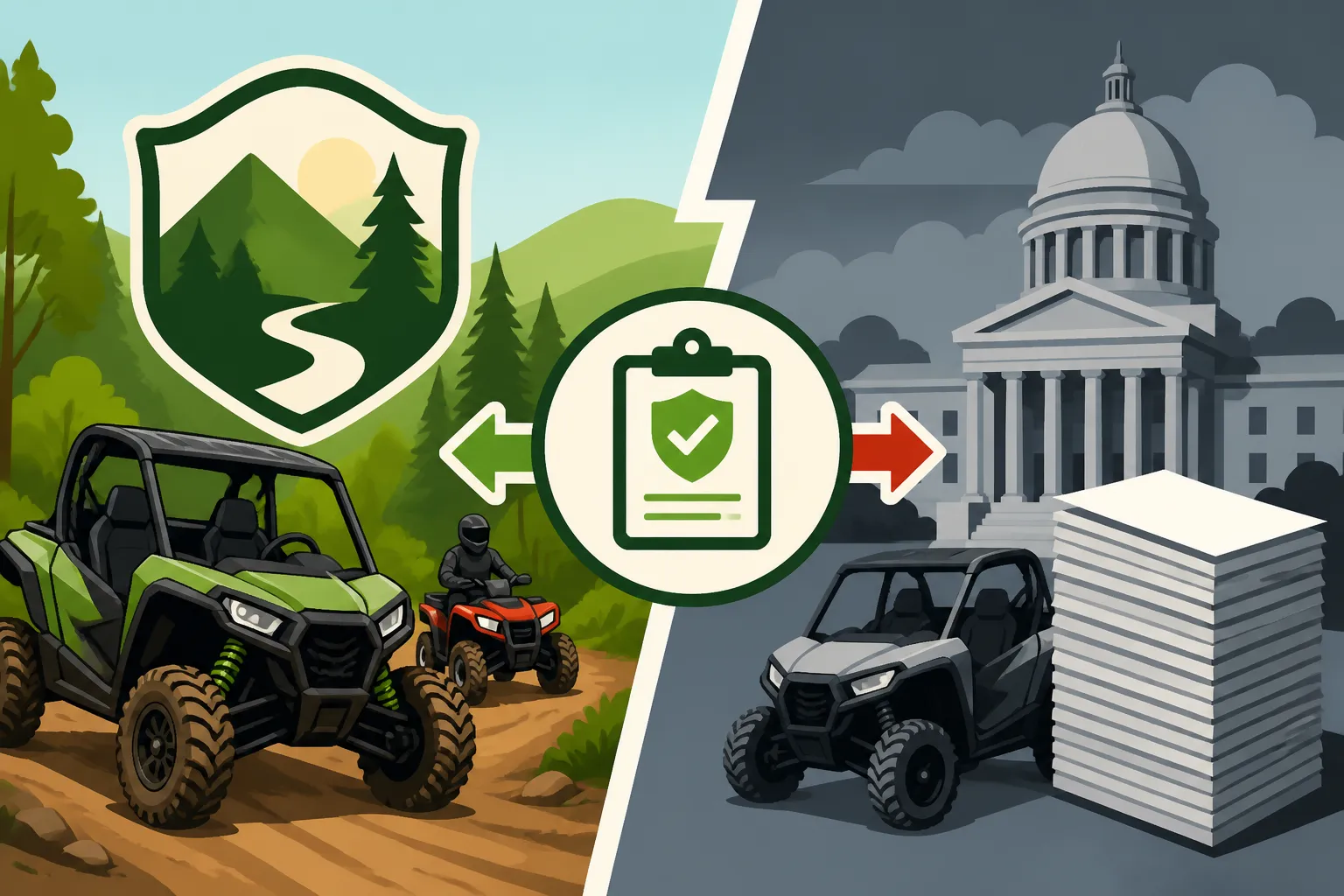
Why Trail Permits Come From Parks, Not the State
It's a common misunderstanding: you’ve bought your ATV, you’ve got it titled, and now you’re ready to hit the trails, expecting to buy some kind of statewide sticker or registration, much like you would for a car. But when it comes to riding off-road in Kentucky, things work a little differently. You quickly find out that there’s no single state office waiting to take your money for a universal trail pass. Instead, you're faced with a patchwork of individual permits from various parks, and it can be downright confusing. This guide is here to untangle that knot, explaining exactly why your trail permits will come directly from the parks themselves, not from the state of Kentucky.
The Decentralized Reality of Kentucky ATV Trails
Kentucky's approach to off-road recreation is quite unique, especially when compared to many other states that might have a centralized registration or permit system for their OHV users. Here, the landscape of ATV and UTV riding is largely defined by localized efforts and private initiatives, which directly influences how trail access is managed and paid for.
No Statewide Registration or Decal
One of the foundational reasons that you won't find a state-issued trail permit is because Kentucky doesn't actually register ATVs at a state level. While you absolutely need a title for your ATV if it was purchased after July 2010 – and that’s a whole process in itself at your local county clerk’s office – this titling process is primarily for ownership identification and sales tax purposes. It doesn’t come with an annual renewal or a snazzy decal to slap on your fender that signifies you’re “registered” to ride anywhere in the state. This means there’s no central database tracking active ATV riders, and consequently, no mechanism for the state to issue a universal trail permit.
Think about it: when you buy a car, you register it with the state, get a license plate, and often pay an annual fee that contributes to road maintenance, among other things. With an ATV in Kentucky, that connection to state infrastructure funds simply isn't there. There's no equivalent "ATV fund" collected through a statewide registration fee that would then be distributed to maintain trails. So, without a state-level registration, the idea of a state-issued trail decal or permit just doesn't fit into Kentucky's current framework. If you're wondering more about this, it might be helpful to look into [Why Kentucky Does Not Register ATVs]. For a more detailed understanding, you might also find answers in [Why Kentucky Has No Decal to Display].
Land Ownership and Management
The vast majority of the significant, expansive ATV and UTV trail systems in Kentucky are not state-owned or state-managed public lands. Instead, they fall under a variety of different ownership models. You'll find a mix of privately owned adventure parks, vast tracts of land leased from coal companies, and some federal lands managed by agencies like the U.S. Forest Service. Each of these entities has its own goals, its own operational costs, and its own way of handling public access.
Consider places like Black Mountain Off-Road Adventure Area in Harlan County, which is run by the Harlan County Recreation Authority, or Leatherwood Off-Road Park, which operates on massive leased coal lands. Then there's Turkey Bay OHV Area, managed by the Tennessee Valley Authority (TVA) within the Land Between the Lakes National Recreation Area, or the trails within the Daniel Boone National Forest, which are overseen by the U.S. Forest Service. Each of these operates as its own distinct entity, with its own budget, its own staff, and its own set of challenges. They aren’t all drawing from a single state pot of money to keep the trails open and safe. Because these parks and trail systems are independently owned or managed, they need independent funding streams to operate. This decentralized ownership structure is the primary driver behind why each location must generate its own revenue, typically through the sale of permits, to sustain itself.
Why Individual Parks Issue Their Own Permits
Since there's no statewide registration or funding mechanism dedicated to ATV trails, each park has to be self-sufficient. This self-sufficiency directly translates into the requirement for individual park permits. These permits aren't just a gate pass; they're the lifeblood of the trail system you're riding.
Funding and Maintenance
The permit fees you pay directly support the trails you ride. It’s that simple. When you hand over money for a permit at Black Mountain, for example, that money goes towards paying the staff who grade the trails, install new signage, ensure safety patrols are running, and manage the overall facilities. Without these fees, the trails would quickly fall into disrepair, becoming unsafe or even impassable. This covers everything from operating heavy machinery to clear fallen trees, to maintaining restrooms and staging areas, and even providing emergency response capabilities.
Contrast this with the roads you drive on every day. Your vehicle registration fees, fuel taxes, and other state-level taxes contribute to a large state highway fund that maintains public roads across Kentucky. There's no such equivalent for private or federally managed ATV trails. Therefore, the parks themselves must generate the income to cover their significant operational expenses. It's a user-pay system, ensuring that those who benefit from the trails contribute directly to their upkeep. This system is what keeps places like Rush Off-Road and Hollerwood Off-Road Park running smoothly and offering top-notch riding experiences.
Local Control and Specific Rules
Beyond just funding, issuing their own permits grants each park crucial local control over its operations and specific rules. Every trail system is unique, with different terrain, environmental considerations, and community impacts. A permit system allows the managing authority to tailor rules to their specific environment and enforce them effectively. For instance, some parks might have strict noise ordinances, while others might have specific requirements for machine modifications, such as spark arrestors, to prevent wildfires.
You’ll find variations in everything from helmet requirements – which might be stricter in certain parks than the general [Kentucky Helmet Law for ATV Riders] – to designated riding areas for youth, or even specific times when certain trails are open. For example, Turkey Bay OHV Area might have different seasonal closures due to wet ground than a park built on rocky coal benches. These individual rules are often designed not only for rider safety but also for environmental protection and to manage the park’s liability. A well-drafted legal document, perhaps from a resource like LawDepot, could provide a template for these park-specific rules, ensuring they are clear and legally sound for visitors. This local control is essential for managing the diverse risks and responsibilities associated with operating a large off-road recreation facility.
What a Park Permit Typically Covers (and Doesn't)
Understanding what your permit actually gets you is crucial for planning your ride and avoiding any unexpected surprises or fines. A park permit is a very specific type of access pass, and it's important not to confuse it with a universal riding license.
Access to Specific Trails and Amenities
When you purchase a permit, you're buying access to the specific trail system and associated amenities of that single park. This means your Black Mountain permit is valid only within the boundaries of Black Mountain Off-Road Adventure Area. It will not grant you access to Leatherwood Off-Road Park, nor will a Daniel Boone National Forest OHV pass get you onto private park lands. Each permit is a distinct agreement between you and the operating entity of that particular park.
Beyond just the trails, your permit often includes access to designated staging areas, parking lots, and sometimes basic facilities like restrooms, wash stations, or even primitive camping spots. For example, a permit at Turkey Bay might also offer access to their campground facilities, but you’d need to check the specifics. It's really like buying a ticket to an amusement park; it gets you into that park and allows you to use its attractions, but it doesn't get you into the one down the road. Always check the park's website or call ahead to understand exactly what your permit covers, including any time limits (daily, multi-day, annual) and if it covers all riders in your group or just the machine operator.
No Reciprocity with Other Parks or States
This is a point that often trips up new riders, especially those coming from states with a more unified trail system. In Kentucky, there is absolutely no reciprocity between different trail parks, nor is there any recognition of out-of-state trail permits. If you plan to ride at Black Mountain on Saturday and then head over to Rush Off-Road on Sunday, you will need to purchase separate permits for each location. Your annual pass for an Ohio trail system or a general OHV registration from Tennessee will not grant you legal access to any of Kentucky's trail parks.
This lack of reciprocity reinforces the idea that each park is an independent business or entity responsible for its own upkeep and management. They have no financial or operational ties that would facilitate honoring another park’s permit. It's essential to plan your trips accordingly and budget for multiple permits if you intend to visit different trail systems during your stay in Kentucky. Don't show up at a gate expecting your permit from another park to be valid; you'll likely be turned away or asked to purchase a new permit on the spot.
Beyond the Permit: Other Necessities
While a park permit is your ticket to ride, it's not the only thing you'll need. Riding safely and legally on Kentucky's trails requires a bit more preparation. First and foremost, safety gear is non-negotiable. Most parks, and indeed Kentucky law for riders under 16, require helmets, and it's always wise to wear eye protection, sturdy footwear, long pants, and long sleeves. You might want to consider [Kentucky Helmet Rules for Riders Under 16] for specific guidance on minors.
Beyond personal gear, ensure your machine is in good working order and meets any specific park requirements, such as spark arrestors or width restrictions for certain trails. Many parks will also require you to sign a liability waiver before you ride. These waivers are legally binding documents, and it's crucial to read them carefully to understand what you're agreeing to. Standardized waiver templates, possibly found through legal resources like LawDepot, often form the basis of these park documents. Additionally, always carry essential items like water, a first-aid kit, and a basic tool kit for minor repairs. Having a map, even a downloaded one on your phone, is also a smart move, as cell service can be spotty in some of Kentucky’s more remote mountain areas.
Navigating the Permit Process for Kentucky's Trail Systems
The process of getting your trail permit doesn't have to be complicated, but it does require a little bit of foresight and planning. Showing up unprepared can lead to delays or, worse, being unable to ride.
Researching Your Destination
The first and most critical step is to thoroughly research the specific park you plan to visit before you even load your machine onto the trailer. Park websites are your best friend here. They will typically list operating hours, specific permit costs (daily, multi-day, annual), any age or machine restrictions, required safety gear, and often, maps of the trail system. You'll want to check for any special notices, such as temporary trail closures due to weather, maintenance, or events. This research can save you a lot of headache and ensure your trip goes smoothly.
For example, Turkey Bay OHV Area has specific gate hours and sometimes closes trails due to saturated ground, so calling ahead or checking their social media is a good idea. Similarly, parks like Black Mountain might have different pricing tiers for local residents versus out-of-state visitors. Don't rely on old blog posts or outdated tourism brochures; always go directly to the park's official source for the most current information. Checking [Kentucky Trail Closures to Check] is a vital step before heading out.
Purchasing Your Permit
Once you've done your research, you'll know how and where to purchase your permit. Most major trail parks in Kentucky offer permits for sale on-site at a welcome center or gatehouse. This often involves showing a photo ID, filling out some paperwork, and making a payment. Some parks may also offer the convenience of purchasing permits online in advance, which can save you time at the gate, especially on busy weekends.
Payment methods typically include cash or credit/debit cards, but it's always wise to have a backup, just in case. Be prepared to provide information about yourself and your machine. If you're buying a family permit or a permit for multiple machines, understand the park's specific rules on how many individuals or machines are covered. For an idea of what to expect, you can look into [Where to Buy a Black Mountain Permit] or [Turkey Bay Permit Cost]. The documentation for such a purchase, like a user agreement, could benefit from being professionally prepared, similar to services offered by LawDepot.
Understanding Park Rules and Waivers
Before you head out onto the trails, you'll almost certainly be required to sign a liability waiver. This is a standard practice for recreational facilities that involve inherent risks, and ATV parks are no exception. Take the time to read through the waiver carefully, even if it feels tedious. It outlines your responsibilities as a rider and the park's limitations of liability. If you have any questions, don't hesitate to ask a park official.
In addition to the waiver, you will usually be given a copy of the park's specific rules or directed to where they are posted. These rules are there for your safety, the safety of other riders, and the preservation of the trails. They might cover speed limits, right-of-way rules, restrictions on alcohol, or environmental guidelines. Adhering to these rules isn't just about avoiding a fine; it's about being a responsible rider and ensuring everyone has a safe and enjoyable experience. Ignoring them can lead to being asked to leave the park, or in serious cases, permanent bans.
Kentucky Trail Park Permit Comparison
To help illustrate the diverse nature of Kentucky's off-road permits, here's a general comparison of a few popular trail systems. Please remember that costs and specific offerings can change, so always check the official park websites for the most current information before you plan your trip.
| Park Name | Location | Typical Permit Options | What It Covers | Key Features | Notes |
|---|---|---|---|---|---|
| Black Mountain Off-Road Adventure Area | Harlan County | Daily, Multi-day, Annual, Family | Access to 150+ miles of trails, staging areas | Diverse terrain, multiple trailheads, camping nearby, rental options | Largest system, local discounts may apply, permits often bought in person |
| Leatherwood Off-Road Park | Perry County | Daily, Multi-day, Per-person | Access to 250+ miles of trails, staging areas | Expansive network, deep hollers, ridge climbs, leased coal land | Permitting is per person, regardless of machine |
| Turkey Bay OHV Area | Land Between the Lakes | Daily, 3-day, Annual, Camping | Access to 100+ miles of trails, campground, amenities | Federal land, well-maintained, scenic views, closes for saturated ground | Specific gate hours, call ahead for closures, separate camping fee |
| Rush Off-Road | Boyd County | Daily, Annual | Access to 7,000+ acres of trails, amenities | Varied trails, family-friendly, dedicated youth areas, events | Can be very popular, check for event closures |
| Hollerwood Off-Road Park | Stanton | Daily, Annual | Access to 3,000+ acres near Red River Gorge | Scenic area, challenging trails, unique rock features | Close to tourism amenities, rentals often available nearby |
This table provides a snapshot, but each park has its own nuances, from specific machine width limits to rules about night riding. Always double-check their official resources to ensure you have the most accurate and up-to-date information for your adventure.
Disclaimer
This article is for general informational purposes only and does not constitute professional advice. Laws, prices and regulations vary by location and change over time. Consult a qualified professional for guidance on your specific situation.