Titling a Quad That Sat Behind a Barn
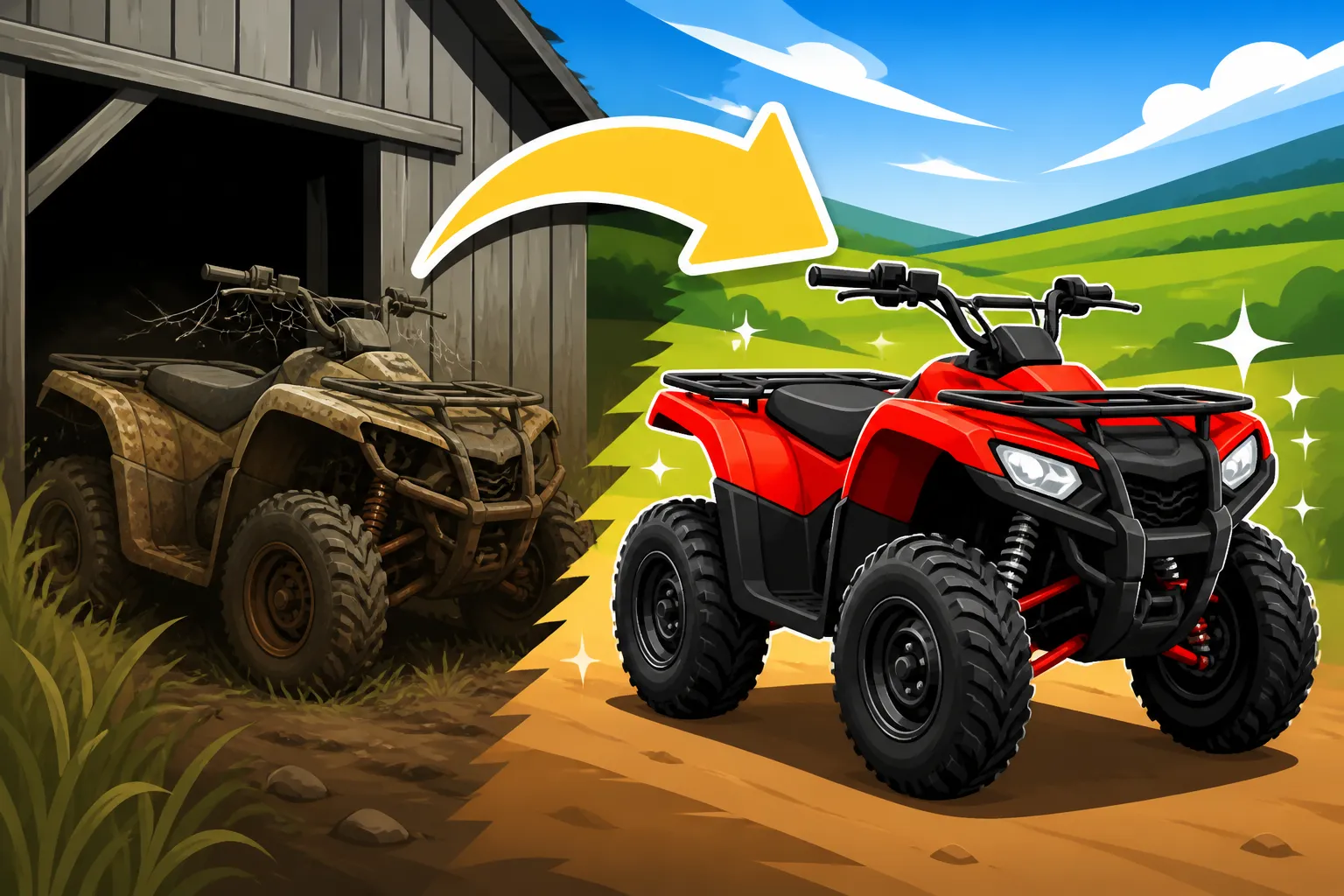
You've just dragged that old ATV out from behind the barn, maybe it's been sitting there for years, collecting dust and cobwebs. It might run like a champ, or perhaps it needs some elbow grease, but either way, you're now facing a common Kentucky conundrum: how in the world do you get a title for a machine that seems to have no official paperwork? This guide is going to walk you through the often frustrating, but ultimately achievable, process of titling an ATV in Kentucky when its past is as murky as a forgotten creek bed.
The Mystery Machine: Why Your Barn Find ATV Needs a Kentucky Title
It's a familiar scene across Kentucky: you stumble upon an old quad, perhaps it was a family heirloom gathering dust, or you picked it up at a yard sale for a song. The machine itself is a marvel of resilience, but the paperwork? Non-existent. This lack of a clear title can feel like a major roadblock, but understanding why these machines often lack documentation and why you need one is the first step toward getting that ATV legally on the trail or farm.
Why Older Machines Often Lack Titles
For many years, off-road machines like ATVs and side-by-sides in Kentucky didn't require titles. This wasn't unique to our state; it was a common practice in many places. Folks would buy a quad for farm work, hunting, or just tearing around their property, and a piece of paper from the state wasn't even on their radar. As long as it wasn't going on public roads, it was considered more like farm equipment or recreational gear than a vehicle needing official documentation.
This changed significantly in Kentucky for machines bought after July 15, 2010. If you look at the law, [Why Kentucky Titles Machines Bought After July 2010] explains this shift. But for anything older than that, a title was optional, or simply not issued by the manufacturer or dealer in a way that the state recognized for titling purposes. So, when you unearth a machine from 2005, for example, it’s not unusual for it to have never had a title in the first place, or for any original ownership documents to have long since disappeared. This doesn't necessarily mean the machine is stolen or that there's anything nefarious about it; it's often just a relic of a different era of ATV ownership.
Common Hurdles You'll Face
Bringing an untitled barn find into the modern titling system comes with its own set of challenges. One of the biggest is the simple absence of clear ownership history. You might have inherited the machine from a grandparent who passed away years ago, and no one ever thought about a title. Or perhaps you bought it from a friend of a friend, and they just handed you the keys and took your cash, with no formal bill of sale ever exchanged.
Then there's the issue of missing documentation. The Kentucky Transportation Cabinet and your local county clerk's office want a clear paper trail, and for a machine that's been neglected for years, that trail can be awfully faint. This includes things like the original manufacturer's certificate of origin (MCO), a previous title, or even a simple, signed bill of sale. Without these, you're essentially starting from scratch, trying to prove to the state that this machine is rightfully yours. It's a bit like being asked to prove you own your grandmother's antique rocking chair with a notarized document—it just wasn't how things were done back then.
Finally, there's the possibility that the original seller, or even previous owners, are deceased or simply untraceable. If you bought the machine privately years ago and never followed up on a title, and now the person who sold it to you has moved away without a forwarding address, or worse, passed on, getting their signature on a new bill of sale becomes impossible. This kind of situation can feel incredibly frustrating, making you wonder if it's even worth the effort. But don't despair; Kentucky has pathways, albeit sometimes winding ones, to help you establish ownership.
Unearthing the Paperwork: Step-by-Step for Titling a Kentucky Barn Find
Getting a title for an ATV that's been tucked away and forgotten requires a systematic approach. It's not always straightforward, but by meticulously gathering information and following the process, you can often get that neglected machine legally recognized. The key is to demonstrate clear ownership to the Kentucky County Clerk, even if that ownership isn't backed by a traditional title document.
Gathering What You Have Even If It's Not Much
The first step in titling your barn find ATV is to gather everything you have related to the machine, no matter how insignificant it might seem. This could be old registration cards (even if Kentucky doesn't register ATVs now, an old out-of-state registration might count as proof of prior ownership), expired insurance policies, repair receipts with the VIN listed, or even canceled checks from the original purchase. Each piece of paper acts like a tiny clue in a detective story, helping to build a case for your ownership. Think of it as creating a historical record for your ATV.
Even if you only have a handshake deal and cash exchanged, you need to create a Bill of Sale. This is critical. You can draft one yourself or find templates online. A service like LawDepot offers customizable bill of sale forms that you can tailor to your specific situation, even if you're documenting a sale that happened years ago. Make sure it includes the date of sale, the full names and addresses of both buyer and seller (if you can get the seller's information), the ATV's make, model, year, and most importantly, the Vehicle Identification Number (VIN). Even if the seller is a distant memory, create one with your details and as much information as you recall. A [Kentucky Bill of Sale for an ATV] is an essential document, even if it's a retroactive one.
Proving Ownership When There's No Title
This is where the rubber meets the road. If you don't have a signed-over title, Kentucky relies heavily on Form TC 96-182, the "Affidavit of Ownership." This form is your official declaration to the state that you are the rightful owner. It allows you to explain how you came to possess the ATV, why there's no title, and to swear under penalty of perjury that all your statements are true. You'll want to fill this form out completely and accurately. [Kentucky Form TC 96-182 Explained] goes into detail about each section.
Along with TC 96-182, you might need supporting affidavits from other individuals. For example, if you bought the ATV from someone who inherited it, and they don't have a title but can attest to the chain of ownership, their sworn statement can be incredibly valuable. Again, resources like LawDepot can provide affidavit templates that you can customize and have notarized. These additional affidavits strengthen your claim by showing a continuous, albeit informal, line of possession.
Crucially, the ATV must have a verifiable 17-character VIN. Kentucky law is strict about this; [Kentucky's Seventeen-Character VIN Rule] is non-negotiable for newer machines. While older machines might have shorter VINs or even just a motor number, the county clerk will be looking for a standard VIN. Make sure you locate it on the frame of the ATV and write it down accurately on all your forms. A clerk may reject your application if the VIN is missing or doesn't meet the requirements. It’s a good idea to [Checking a VIN Before a Kentucky Purchase] if you haven't already, just to make sure it's intact and legible.
Navigating the County Clerk's Office
Once you have all your documents in order—your completed TC 96-182, your bill of sale, any supporting affidavits, and your photo ID—it's time to visit your local [Titling at a Kentucky County Clerk] office. This step can feel daunting, as county clerks are the gatekeepers of vehicle titles, and they deal with a vast array of situations, some more straightforward than others. Be prepared for questions about your ownership history, the ATV itself, and why you don't have a traditional title.
Bring every piece of paper you have, even if you think it's redundant. It's better to have too much documentation than not enough. The clerk will review your application and documents to determine if you've provided sufficient proof of ownership. They might ask for additional information or clarification. Sometimes, they might even suggest alternative routes or forms you hadn't considered. Patience and politeness are your best assets here. Understand that they are simply following state guidelines, and your case might be a bit out of the ordinary for them. Don't be surprised if you need to make more than one trip; this is a complex issue, and sometimes it takes a few attempts to get everything exactly right. Remember to bring [A Kentucky Photo ID at the Clerk's Counter] as it's always required for any official transaction.
Overcoming Obstacles: Special Considerations for Difficult Kentucky ATV Title Cases
Even with all your best efforts, some barn find ATV titling situations present unique challenges. It's important to anticipate these hurdles and understand the specific pathways Kentucky offers to navigate them. From deceased sellers to machines with absolutely no paper trail, there are strategies to pursue, though they often require more persistence and a deeper dive into available legal tools.
When the Seller is Deceased or Untraceable
One of the trickiest scenarios arises when the person who sold you the ATV, or from whom you inherited it, is no longer around or cannot be found. If the seller is deceased, the process often involves dealing with their estate. You might need to contact the executor of their will or the administrator of their estate to obtain the necessary documents, such as a formal bill of sale or an affidavit confirming the transfer of ownership to you. Sometimes, you might even need to present a copy of the death certificate along with your own sworn affidavit (Form TC 96-182) to the county clerk, explaining the situation and how the ATV was passed to you. For an inherited machine, specific rules apply, and it's essential to follow the correct procedure for [Titling an Inherited Machine in Kentucky]. This typically means presenting probate documents or a will that clearly indicates your right to the ATV.
If the seller is simply untraceable, this presents an even greater challenge, as you cannot get their signature on any new paperwork. In these cases, your completed Form TC 96-182 becomes your primary document for asserting ownership. You will need to provide a detailed explanation of how you came to possess the ATV, including any dates, locations, and circumstances of the transaction. You might also want to include any evidence of attempts you made to contact the previous owner. While it's certainly more difficult without a direct signature from the last known owner, the clerk's office does have procedures for these "found property" or "long-lost ownership" situations, relying heavily on your sworn statement and any corroborating evidence you can muster.
Dealing with No Prior Paperwork Whatsoever
Imagine this: you've found an ATV practically swallowed by weeds and rust behind an old outbuilding. There are no receipts, no old insurance cards, no previous owner to track down. You literally have nothing but the machine itself. This is the ultimate "barn find" challenge. In such extreme cases, your primary path will be through a very robust and detailed submission of Form TC 96-182. You will need to explain in excruciating detail how the ATV came into your possession, including the exact location, the date you acquired it, and why there is absolutely no supporting documentation.
It’s crucial to show good faith. This means you should still complete a bill of sale, even if you are both the "seller" (from the past, conceptually) and the buyer. Use a template from a service like LawDepot, filling in as much detail as you possibly can, stating that you are documenting the transfer of an undocumented machine into your possession. You'll sign it as both parties, noting the circumstances. The county clerk will carefully scrutinize these applications for any signs of fraud, so honesty and thoroughness are paramount. They will likely also check the VIN against stolen vehicle databases, which is a standard procedure when [Checking a VIN Before a Kentucky Purchase]. If the machine is legitimate, even without any prior papers, Kentucky allows for a path to title, albeit one that demands significant patience and a compelling, sworn narrative.
The Financial Side: Fees and Taxes
Beyond the paperwork, there are financial considerations when titling a barn find ATV in Kentucky. While Kentucky generally does not charge an annual registration fee for ATVs (because they don't typically register them), you will encounter a titling fee. This fee is relatively modest but is a mandatory part of the process.
More significantly, you will likely owe Kentucky sales tax on the declared value of the ATV. When you present your bill of sale or your affidavit of ownership, the county clerk will assess a sales tax based on the purchase price you state or, if no price is available, on a fair market value determined by the clerk's office. If you bought the machine for a nominal sum or inherited it, be prepared to explain the valuation. It's not uncommon for the clerk to reference industry guides or their own internal valuation tools if they believe the declared value is unrealistically low. This sales tax is collected at the time of titling. It's important to factor this into your budget, as it can sometimes be the most substantial cost of getting your barn find legally documented. Understanding [Kentucky ATV Sales Tax at Titling] is key to avoiding surprises.
| Document Type | Typically Required | Potential Substitute/Alternative for Barn Find |
|---|---|---|
| Previous Title | Yes, signed over | Form TC 96-182 (Affidavit of Ownership) |
| Bill of Sale | Yes, from seller to buyer | Self-generated Bill of Sale (if previous seller untraceable) |
| Manufacturer's Cert. of Origin (MCO) | Yes, for new machines | Form TC 96-182 (for older machines never titled) |
| Photo ID | Yes | Standard Kentucky Driver's License or State ID |
| Proof of Sales Tax Paid | Yes (or pay at titling) | Payment of sales tax on declared or assessed value at county clerk's office |
| Supporting Affidavits | No, but highly recommended | Sworn statements from individuals familiar with the ATV's ownership history |
| VIN Inspection | Sometimes (if VIN is unclear or application raises flags) | Visual inspection by clerk; sometimes requires law enforcement verification |
Disclaimer
This article is for general informational purposes only and does not constitute professional advice. Laws, prices and regulations vary by location and change over time. Consult a qualified professional for guidance on your specific situation.