Checking a Frame Number at a Clerk’s Window
You've found what seems like the perfect ATV or UTV – maybe a killer deal from a private seller, or a promising machine at a local auction. But then you look closer at the paperwork, or the numbers on the frame, and a cold dread creeps in: what if something isn't right? This guide is all about tackling that critical moment, showing you exactly why and how to check a machine's frame number at a Kentucky County Clerk's window before you hand over your hard-earned cash, saving you from potential headaches, legal woes, and a worthless piece of metal.
Why Checking the Frame Number is Absolutely Crucial Before You Buy
When you're looking at buying an ATV or UTV, especially one that's been loved (and ridden hard) by a previous owner, the frame number – also known as the Vehicle Identification Number or VIN – isn't just a formality. It's the unique DNA of that machine, and checking it before you commit to a purchase is one of the most important steps you can take to protect yourself. Skipping this step can lead to a whole host of problems down the line, some of which are incredibly difficult, if not impossible, to resolve.
The Nightmare of a Non-Matching VIN
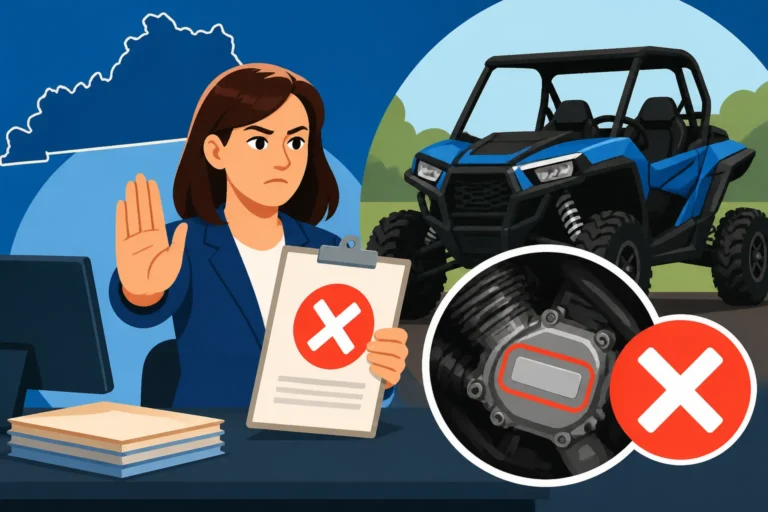
Imagine this scenario: you've just bought a fantastic side-by-side, thinking you got a steal. You've got a bill of sale, and the seller seemed legitimate. You head to the county clerk's office, eager to get your new machine titled and hit the trails. But then the clerk looks at your paperwork, compares it to the VIN on the machine, and tells you they don't match. Or worse, the VIN on the frame is for a different year, make, or model than what you bought, or it comes up as stolen. Suddenly, your "steal" is a major problem.
A non-matching VIN isn't just an inconvenience; it can indicate serious issues like fraud, a stolen machine, or a previous attempt to hide the machine's true identity. If the VIN you present doesn't align with the machine's actual history or the numbers stamped on its frame, you simply won't be able to title it in Kentucky. Without a title, you can't legally prove ownership, can't sell it, and certainly can't ride it on any public lands or roads that require a title for identification. You're stuck with a very expensive paperweight, and the seller might be long gone, leaving you with little recourse.
The financial risk is obvious – you've spent money on something you can't use or sell legally. The legal risks are even scarier. If that machine turns out to be stolen, you could find yourself in legal trouble, losing the machine without compensation, and possibly facing questions from law enforcement. It's a risk that no one wants to take, and it's entirely avoidable with a simple, proactive check.
Kentucky's Strict VIN Rules and What They Mean for You
Kentucky takes its VIN rules seriously, especially since July 2010, when the state began requiring titles for ATVs and UTVs. This means that machines bought after that date absolutely need proper documentation that includes a verifiable VIN. Kentucky generally looks for a seventeen-character VIN, which is the standardized format for most modern vehicles. This is crucial because if you present a machine with a VIN that doesn't meet this standard, or one that looks tampered with, the county clerk will have significant hurdles in processing your title application. You can learn more about this by reading [Kentucky's Seventeen-Character VIN Rule].
For older machines, there might be some exceptions, but generally, the clerk needs a clear, untampered VIN to establish a chain of ownership and ensure the machine isn't stolen or otherwise problematic. Many folks often confuse engine numbers with frame numbers, but the clerk specifically needs the VIN stamped on the frame. If you only provide an engine number, the clerk will likely reject it as insufficient for titling purposes, as explained in [Why a Kentucky Clerk Rejects an Engine Number].
What this all means for you, the potential buyer, is that you need to be incredibly vigilant. If you're looking at a machine and the VIN on the seller's documentation (if they even have any beyond a simple bill of sale) doesn't match the physical VIN on the machine, or if the physical VIN itself looks suspicious, that's a massive red flag. The county clerk's office is your primary gatekeeper against buying a machine that will forever remain in legal limbo.
How to Physically Inspect the Frame Number Before You Head to the Clerk
Before you even think about showing up at the county clerk's office, you need to do your own detective work on the ATV or UTV itself. Getting a clear, accurate reading of the frame number is your first and most important step. Don't rely solely on what the seller tells you or what's written on a piece of paper; trust your own eyes and a flashlight.
Locating and Documenting the VIN on the Machine Itself
Most ATVs and UTVs have their VIN stamped in a few common places. The most typical locations are on the frame, often near the steering neck (where the handlebars connect to the frame), or on a crossmember of the frame, perhaps under the seat or near a wheel well. For side-by-sides, it might be on the frame near the driver's side front wheel, or even under the hood if it has one. It's usually a raised or stamped series of numbers and letters, not a sticker that can be easily removed.
Once you think you've found it, you might need to do a little cleaning. These machines are made for dirt and mud, and that often means the VIN can be obscured by years of grime, rust, or even layers of paint. Grab a wire brush, some degreaser, or even just a rag and some elbow grease, and carefully clean the area until the numbers and letters are clearly visible. Be gentle, as you don't want to damage the VIN itself. Take multiple clear photos of the VIN from different angles. These photos will serve as your primary reference and evidence when you visit the clerk. Sometimes, a buyer might find a promising machine after a long trail ride, only to realize the VIN is hidden under caked-on mud. Cleaning it on the spot is essential for an accurate reading.
It’s important to remember that while an engine might have a serial number, Kentucky law is primarily concerned with the VIN stamped on the frame for titling purposes. The frame is the core of the vehicle, and its unique identifier is what the state tracks. Focusing solely on an engine number will lead to problems at the clerk's counter.
What to Look For: Signs of Tampering or Alteration
As you're cleaning and inspecting the VIN, keep a keen eye out for any signs of tampering. This is where your detective skills really come into play. Look for:
- Grinding marks or rough patches: These might indicate someone tried to remove or alter the original VIN. The area around the VIN should generally match the texture and finish of the rest of the frame.
- Misaligned or inconsistent characters: Are some numbers or letters stamped higher or lower than others? Do they look like they were made with different tools? A genuine VIN will typically have uniform, evenly spaced characters.
- Welding marks: Any signs of welding around the VIN area could mean that a section of the frame with a VIN was cut out and replaced, or a new VIN plate was clumsily attached.
- Stickers or plates over engravings: While some manufacturers might have a secondary VIN sticker, the primary VIN should always be directly stamped or engraved into the frame itself. If there's a sticker covering what looks like an original engraving, be highly suspicious.
- Missing characters or extra spacing: A standard VIN has seventeen characters (for machines made after 1981). If it's shorter and the machine isn't exceptionally old, or if there are odd gaps, it's a red flag. [Imported Machines With Fewer Than 17 VIN Characters] might be an exception, but it's something to investigate.
Any of these signs should give you serious pause. A tampered VIN is a strong indicator that the machine might be stolen, rebuilt from multiple machines (a "chop shop" scenario), or involved in some other illegal activity. Walking away from such a deal is almost always the smartest move. It's far better to miss out on a seemingly good deal than to inherit a legal nightmare. You can find more advice on this in [Checking a VIN Before a Kentucky Purchase]. Imagine discovering a VIN plate that looks like it's been sloppily reattached with non-factory welds; that machine should be a hard pass.
The Process: Checking the Frame Number at a Kentucky County Clerk's Window
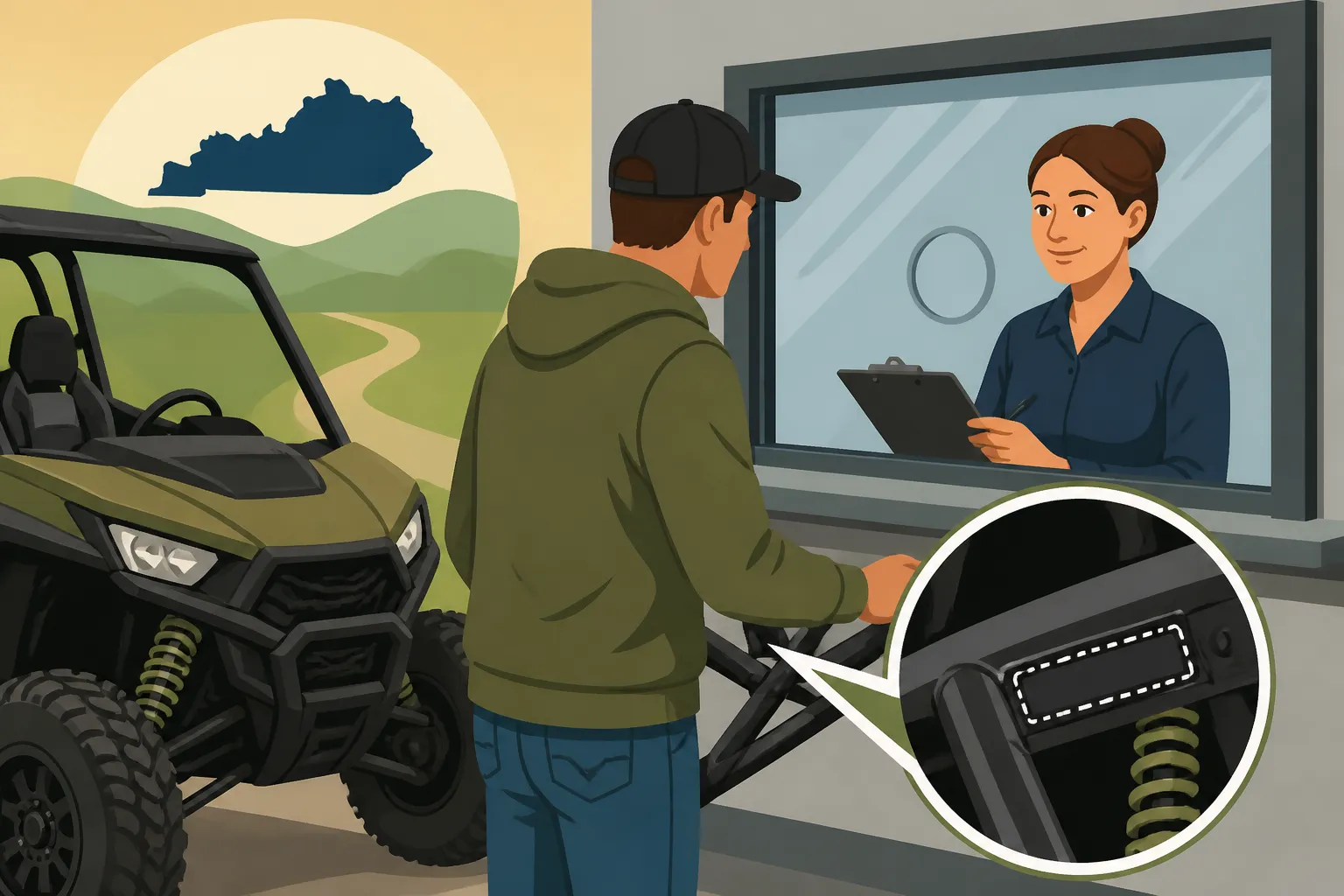
So, you've done your preliminary inspection, you've got the VIN clearly documented with photos, and you're ready for the official check. Your next stop is your local Kentucky County Clerk's office. This visit isn't about titling the machine just yet; it's purely for verification, a crucial step in your due diligence before you commit to the purchase.
Preparing for Your Visit to the Clerk
Before you head out, gather everything you'll need. First and foremost, bring your personal identification, typically a valid Kentucky photo ID, as the clerk will need to verify who you are. This is standard procedure for any interaction at the counter. You can read more about this requirement in [A Kentucky Photo ID at the Clerk's Counter]. Next, bring the photos you took of the machine's VIN. Having clear, well-lit images can be incredibly helpful if the machine isn't present with you. If you have a bill of sale, even an informal one, bring that along too, as it can sometimes provide additional context for the clerk. Even if it's not the official document for titling, it shows your intent to purchase.
The purpose of this visit is simple: you want the clerk to run the VIN through their system. You're asking them to check for any flags, such as the machine being reported stolen, having multiple titles associated with it, or any other discrepancies that would prevent a legal title transfer. Make sure you clearly state that you are considering purchasing an ATV/UTV and want to verify the VIN before completing the transaction. This clarifies your intent and helps the clerk understand your request. If you're looking for a good starting point for proper documentation, even for personal reference, services like LawDepot offer templates for bills of sale that can help you understand the necessary information, even if it's not the final titling document.
Keep in mind that while you can't bring the actual ATV or UTV into the clerk's office, you might be able to park it nearby if you transported it, so the clerk could potentially step out to view it if absolutely necessary, though photos are usually sufficient.
What to Expect and How to Present Your Request
When you approach the counter, be polite and clear about your objective. Clerks at the county offices are generally familiar with requests to verify VINs, as it's a common concern for people buying used vehicles of all types. Explain that you're looking at purchasing a specific ATV/UTV and want to ensure its VIN is clean before you finalize the deal. Provide your ID and the photos of the VIN you took.
The clerk will take the VIN and input it into their state database. This system cross-references the VIN against records for stolen vehicles, existing titles, and any other pertinent information that might be associated with that specific machine. They'll be looking for anything that would raise a red flag or prevent a smooth title transfer. This process usually doesn't take long, but it's important to be patient.
They might ask you a few questions about where you found the machine, or if you have any existing paperwork. Answer honestly and provide all the information you have. Their role is to ensure the integrity of the titling process, and they are an invaluable resource for navigating Kentucky's regulations. It's not uncommon for a clerk to advise a potential buyer against purchasing a machine if the VIN comes back with clear red flags, such as being reported stolen in another county or state. This guidance can save you from a huge financial loss and legal headache.
Understanding the Clerk's Feedback and Your Next Steps
Once the clerk has run the VIN, they'll give you feedback. This feedback will fall into a few general categories:
- "Clean" VIN: This is the best-case scenario. It means the VIN doesn't come up as stolen, doesn't have any outstanding liens that aren't properly recorded (though you should always verify liens separately), and doesn't show any other obvious issues that would prevent titling. A clean VIN means you can likely proceed with confidence, focusing on the rest of the purchase process, including obtaining a proper bill of sale and applying for the title. You can then move forward with [Titling at a Kentucky County Clerk].
- "Flagged" or "Problematic" VIN: This is where you need to exercise extreme caution. A flagged VIN could mean the machine is reported stolen, has a salvage title history you weren't aware of, has an unreleased lien, or has some other legal encumbrance. If the clerk tells you the VIN is problematic, your immediate next step should be to walk away from the deal. Do not proceed. Trying to purchase and title a machine with a flagged VIN is an invitation to legal trouble and a guaranteed inability to get a clear title. In some cases, if the machine is reported stolen, the clerk might even advise you to contact law enforcement, especially if you have the seller's information.
- No Record Found: For very old machines, especially those acquired before July 2010 when Kentucky began titling ATVs, there might genuinely be no electronic record. In such cases, the clerk will advise you on the specific process for [Titling a Machine With No Papers], which usually involves providing sufficient proof of ownership, such as a sworn affidavit, multiple bills of sale, or other documentation. However, even for older machines, a missing record combined with a suspicious-looking VIN should still be a cause for concern.
Understanding this feedback is critical. The clerk is providing you with invaluable insight into the machine's legal standing. This due diligence is a non-negotiable step in buying any used ATV or UTV. Remember that [Why a County Clerk and Not a State Office] handles these matters is due to the decentralized nature of vehicle record-keeping in Kentucky, making the local office your go-to.
Common Scenarios and How the Frame Number Check Helps
The frame number check is your best friend in a variety of situations, particularly when dealing with the unpredictable world of used ATV and UTV sales. It provides a layer of security and verification that can save you from significant headaches and financial loss.
Dealing with No Prior Title or Incomplete Paperwork
One of the most common dilemmas for buyers in Kentucky, especially with older machines, is finding an ATV or UTV that simply doesn't have a title. Perhaps the original owner lost it, or the machine predates Kentucky's titling requirements. This situation often leads buyers to ask [Should You Buy a Quad Advertised With No Title?]. In such cases, a clean VIN is your absolute best starting point for [Titling a Machine With No Papers].
Even without a previous title, if the VIN comes back clean – meaning it's not reported stolen and doesn't have any other legal issues – you have a much stronger foundation for proving ownership. You'll still need to provide other forms of documentation, such as a detailed bill of sale signed by the seller (and notarized if possible), and potentially a sworn affidavit. However, if that VIN is flagged, even the most meticulously prepared bill of sale won't help you. The VIN check confirms that the physical machine isn't "hot" or legally encumbered, making your efforts to establish ownership legitimate. You can find more information about how to establish ownership without a title in [Proving Kentucky ATV Ownership]. When preparing any kind of ownership documentation, using a reliable template from a service like LawDepot can help ensure you include all the necessary details.
The Used Market: Private Sellers and Auction Buys
The used ATV and UTV market, whether through private sales or at auctions, can be a minefield. Sellers might not always be upfront about a machine's history, or they might simply be unaware of past issues. Many machines are sold "as-is," with little to no recourse after the sale. This is precisely why the VIN check is so vital. It's your independent verification, cutting through any potential misrepresentations or unknowns.
Consider this all-too-common scenario: you find an ATV advertised at a fantastic price from a private seller who claims "the papers got lost in a move." Without a VIN check, you might be tempted to jump on the deal. However, a quick visit to the county clerk with photos of the VIN could reveal that the machine was reported stolen years ago. This simple step transforms a potentially disastrous purchase into a dodged bullet. Similarly, at an auction, especially in [Buying at a Coal Country Auction], where machines might move quickly and with minimal backstory, checking the VIN before you bid can save you from inadvertently buying a machine with a problematic history. In essence, the VIN check empowers you, the buyer, to make an informed decision and protect your investment. [Buying a Used ATV in Kentucky] emphasizes the importance of these checks.
Here's a quick look at common VIN issues and their implications:
| VIN Status | Description | Implications | Recommended Action |
|---|---|---|---|
| Clean | VIN matches records, no flags. | Good to proceed with purchase and titling. | Verify lien status, complete sale, apply for title. |
| Stolen | VIN reported as stolen. | Legal nightmare, you will lose the machine, potential legal issues. | DO NOT BUY. Report to local law enforcement immediately. |
| Tampered | Physical VIN shows signs of alteration (grinding, misalignment, re-stamping). | High likelihood of illegal activity, stolen vehicle, or chop shop machine. | DO NOT BUY. Avoid at all costs. |
| Multiple Titles | VIN associated with more than one active title. | Ownership dispute, potential fraud, difficult or impossible to title. | DO NOT BUY. Seller likely does not have clear ownership. |
| Salvage | Machine previously declared a total loss. | May require special inspection/rebuild title, resale value affected. | Proceed with extreme caution, understand requirements. |
| No Record (Older Machine) | No electronic record, pre-titling era. | May be legitimate, but requires extra steps for [Proving Kentucky ATV Ownership]. | Gather extensive proof of ownership, consult clerk. |
Disclaimer
This article is for general informational purposes only and does not constitute professional advice. Laws, prices and regulations vary by location and change over time. Consult a qualified professional for guidance on your specific situation.