Kentucky ATV Title Help
The process of getting an ATV title in Kentucky can often feel like navigating a winding mountain trail in the fog – confusing, frustrating, and full of potential wrong turns. Many folks find themselves scratching their heads over paperwork, deadlines, and specific rules that seem to shift with the wind. This guide is designed to cut through that confusion, offering clear, step-by-step insights into securing your Kentucky ATV title with confidence.
Navigating Kentucky's ATV Titling Laws: What You Absolutely Need to Know
Kentucky's approach to ATV titling isn't always straightforward, and it certainly isn't the same as titling a car or truck. Many riders assume that because an ATV isn't driven on public roads, it doesn't need a title, or that the rules are uniform for all machines. This simply isn't the case. Understanding the core legal framework is your first step to a smooth titling experience, saving you potential headaches down the line.
The Critical July 2010 Cutoff
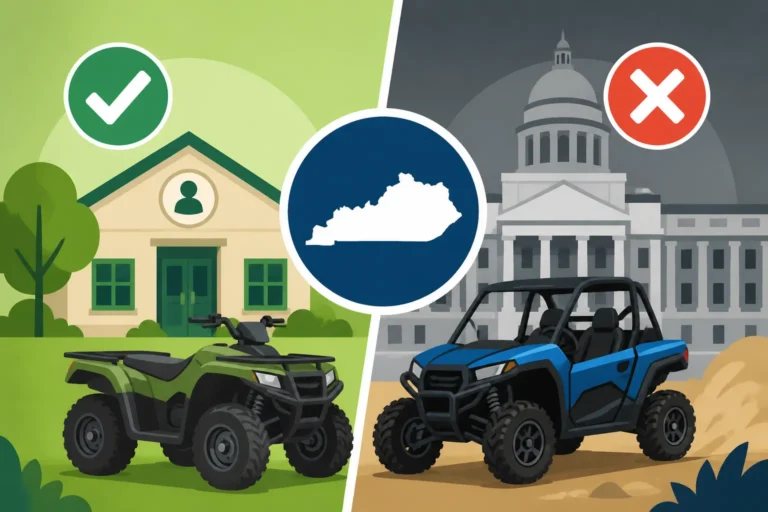
One of the most significant pieces of information you need to know about Kentucky ATV titling revolves around a specific date: July 15, 2010. This date is not arbitrary; it marks a change in state law that mandated titling for all-terrain vehicles. If your ATV was manufactured or purchased after this date, it absolutely requires a Kentucky title. This is a non-negotiable rule, and without a title, you'll find it nearly impossible to legally sell the machine, transfer ownership, or even prove that it belongs to you if it's ever stolen.
Imagine you're buying a relatively new ATV from a private seller in a neighboring county. You might be excited about the deal and eager to hit the trails. However, if that machine was manufactured after July 15, 2010, and the seller doesn't have a title for it, you should be extremely cautious. Kentucky law expects a title to accompany such a sale. Without it, you could end up with a machine you can't legally prove you own, which could lead to significant problems if you ever wanted to resell it or if there was a dispute over ownership. Always ask for the title upfront for machines falling into this timeframe. You can delve deeper into this specific rule by reading [Why Kentucky Titles Machines Bought After July 2010].
When an Older Machine Has No Title (and What to Do)
On the flip side, what about those beloved older ATVs that predate the July 2010 cutoff? For machines manufactured or purchased before July 15, 2010, Kentucky law generally did not require a title. This means it's perfectly common, and entirely legal, for these older ATVs to exist without a formal state-issued title. Many long-time Kentuckians have an old three-wheeler or early 2000s quad passed down through the family that simply never had one, and that's usually fine for personal use.
However, "no title required" doesn't mean "no proof of ownership needed." If you own an older ATV without a title, you'll still need a way to demonstrate that it's yours. This often comes down to a clear chain of custody, typically involving a bill of sale. Even if the state didn't issue a title, a well-documented bill of sale from the previous owner (or owners) detailing the transaction, the machine's VIN, and the date can serve as crucial proof. For inherited machines, a copy of the will or probate documents might be necessary. Some owners of older machines may still opt to get a title if they can, especially if they plan to sell it to someone who wants clear documentation.
Consider a scenario where you've inherited your grandfather's trusty 1998 Honda FourTrax that he bought new. He never had a title for it, as it wasn't required at the time. Now you want to sell it to a friend. You can't just hand over the keys and call it a day. You'll need to provide your friend with some form of documentation. A signed bill of sale, perhaps generated using a template from a service like LawDepot, outlining the machine's details, the transfer of ownership from your grandfather's estate to you, and then from you to your friend, would be essential. While the state didn't mandate a title then, solid ownership records protect both you and the buyer.
Assembling Your Kentucky ATV Title Paperwork Without the Headache
The sheer volume and variety of forms and documents required for titling anything can be intimidating. For ATVs in Kentucky, while not as complex as some vehicle types, there are specific forms and proofs of ownership you absolutely must get right. Missing a signature, omitting a detail, or bringing the wrong document can send you right back home, costing you time and a trip to the county clerk's office.
Demystifying Kentucky Form TC 96-182
At the heart of the Kentucky ATV titling process is Form TC 96-182, officially titled "Application for Kentucky Certificate of Title/Registration." Despite its generic name, this form is your golden ticket for ATV titling. You'll need to complete this form accurately and thoroughly. It asks for detailed information about your ATV, including its Vehicle Identification Number (VIN), make, model, year, and purchase information. It also requires your personal information as the owner, including your name, address, and signature.
Don't rush through this form or assume anything. Every blank field is there for a reason. If you're unsure about a specific section, it's always better to leave it blank and ask the county clerk for clarification rather than guessing and potentially invalidating the entire application. You can usually find this form online on the Kentucky Transportation Cabinet's website, or pick one up directly at your local county clerk's office. For a detailed walkthrough of this form, check out [Kentucky Form TC 96-182 Explained] and [Filling Out TC 96-182 in Kentucky]. Getting it right the first time will save you immense frustration.
For example, let's say you just bought a 2015 Polaris RZR from a dealer. When you sit down to fill out the TC 96-182, you'll need the exact VIN, which is a 17-character sequence usually stamped on the frame. You'll also need the purchase date and the sale price. Be meticulous about entering this information. If you transpose a number in the VIN, for instance, the clerk will reject the application, as the VIN on the form must perfectly match the VIN on the machine and any accompanying sales documents. Don't forget to include the sales tax information if applicable, as Kentucky typically collects sales tax at the time of titling.
Proving Your Ownership: Beyond Just a Handshake
Beyond the TC 96-182 form, the most critical element is concrete proof that you are the rightful owner of the ATV. What Kentucky accepts for this proof can vary slightly depending on where and how you acquired the machine. For a new ATV bought from a Kentucky dealer, you'll typically receive a manufacturer's certificate of origin (MCO), which is the primary document proving its initial ownership. For a used ATV, a properly signed-over title from the previous Kentucky owner is paramount.
If you're buying a used machine from another state, the rules can get a bit more nuanced. Some states don't title ATVs, in which case a bill of sale or even an out-of-state registration might be accepted. A well-crafted bill of sale is crucial in these scenarios. You can find reliable templates online, for example, through services like LawDepot, to ensure all necessary details like the VIN, purchase price, date, and signatures of both buyer and seller are included. [A Signed-Over Title for a Kentucky Purchase] covers the most common scenario for used machines, while [Using a Bill of Sale From a Non-Titling State] and [An Out-of-State Registration as Kentucky Proof] address out-of-state purchases.
Imagine you found a fantastic deal on a used ATV advertised online, and the seller lives just across the state line in Tennessee. You drive over, inspect the machine, and decide to buy it. The seller tells you Tennessee doesn't issue ATV titles. In this situation, a robust bill of sale is your best friend. Make sure it explicitly states the full VIN, the purchase price, the date of sale, and the full names and addresses of both you and the seller. Both parties should sign and date it. This document, combined with your completed TC 96-182, will be what you present at the Kentucky County Clerk's office to prove your ownership.
Your Trip to the County Clerk: Making Sure It's One and Done
Visiting the county clerk's office can sometimes feel like a test of patience, especially if you arrive unprepared. To avoid multiple trips and ensure your titling process is as smooth as possible, careful preparation of all necessary documents and understanding of their requirements is key. Remember, the clerks are there to enforce state law, and they can't make exceptions for missing paperwork.
Essential Items for a Smooth Clerk Visit
When you walk through the doors of your Kentucky County Clerk's office, you want to be armed with everything they'll need to process your ATV title application. First and foremost, you'll need your completed Form TC 96-182. Make sure it's filled out entirely, legibly, and accurately. Next, you'll need your proof of ownership, which could be the MCO, a signed-over Kentucky title, a bill of sale from a non-titling state, or other acceptable documentation. A [Kentucky Photo ID at the Clerk's Counter], such as your driver's license, is also mandatory to verify your identity.
Beyond the paperwork, don't forget the financial aspect. There are fees associated with titling an ATV in Kentucky, including the title fee itself and typically Kentucky sales tax on the purchase price. While specific amounts can fluctuate, it's wise to have multiple payment methods ready (cash, check, or card, depending on what your local clerk's office accepts) to cover these costs. It's always a good idea to call your local county clerk's office ahead of time to confirm their current fees and accepted payment methods. You can find more details about the process at [Titling at a Kentucky County Clerk].
Let's consider a practical example: you're ready to title that 2015 Polaris RZR. You've completed your TC 96-182 form, you have the signed-over Kentucky title from the previous owner (or the MCO if new), and your Kentucky driver's license is in your wallet. You've also checked the county clerk's website or called them to confirm the exact title fee and the sales tax rate, and you've brought your checkbook. This level of preparedness significantly increases your chances of a successful, single visit, letting you get back to planning your next ride instead of making another trip to the courthouse.
Common Hiccups and How to Side-Step Them
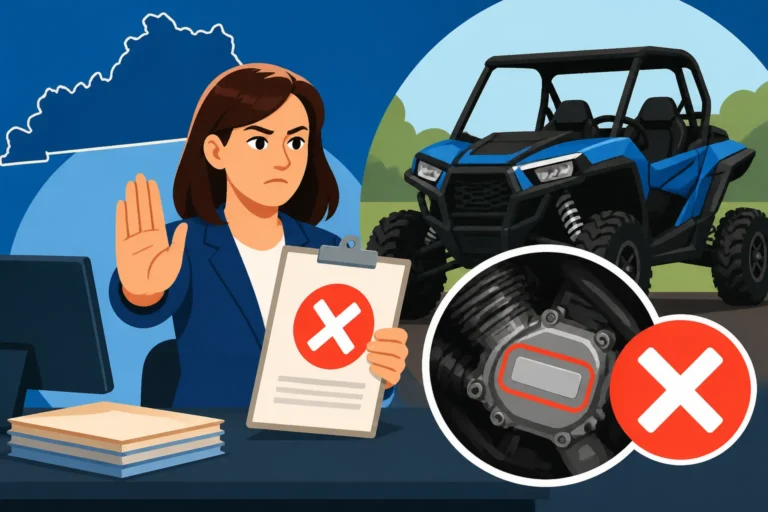
Even with meticulous preparation, sometimes unforeseen issues can arise. One of the most common reasons an ATV title application gets rejected at the clerk's counter is an issue with the VIN. Kentucky law, like most states, requires a clear, complete 17-character VIN for titling machines manufactured after 1981. If the VIN on your paperwork doesn't match the actual VIN on the ATV's frame, or if it's incomplete, your application will be denied. This can happen with older machines where the VIN might be difficult to read or if a non-standard number (like an engine number) is mistakenly used. Kentucky is strict about this, as outlined in [Kentucky's Seventeen-Character VIN Rule] and [Why a Kentucky Clerk Rejects an Engine Number].
Another frequent problem is incomplete or incorrect information on the TC 96-182 form or the proof of ownership. A missing signature from a seller, an incorrect purchase price, or a discrepancy between names on different documents can all lead to delays. Similarly, if you purchased an ATV from an individual and only have a basic, handwritten bill of sale, the clerk might deem it insufficient if it lacks crucial details like the full VIN or contact information for the seller. This is why using a comprehensive bill of sale, perhaps from a reputable template provider like LawDepot, is so beneficial.
To avoid these pitfalls, double-check everything before you leave your house. Visually inspect the VIN on your ATV and compare it to every document you have. Ensure all signatures are present and correctly dated. If you're buying a used machine, ask the seller for clear identification and make sure their name on the title (if applicable) matches their ID. If you have any doubts, consider asking the seller to accompany you to the county clerk's office. This way, any minor issues can be resolved on the spot, rather than requiring you to track them down later.
Tackling Trickier Titling Situations in Kentucky
While many ATV titling scenarios are straightforward, life often throws curveballs. You might lose your title, buy a machine from a state with different rules, or acquire one that still has a lien against it. These situations require a bit more legwork but are certainly not insurmountable. Knowing the specific steps for these trickier circumstances can save you a world of stress.
When Your Kentucky ATV Title Goes Missing
It happens more often than you think: you bought an ATV years ago, got the title, put it in a "safe place," and now you can't for the life of you find it. Whether it's lost, stolen, or damaged, a missing title can be a major headache, especially if you need to sell your ATV or if you're involved in an accident. The good news is that Kentucky has a process for replacing a lost or damaged title. You'll need to apply for a duplicate title.
To get a duplicate, you'll generally need to visit your local county clerk's office in person. You'll fill out a specific application for a duplicate title (often a section on the same TC 96-182 form, or a separate form depending on the county), provide your photo ID, and pay a fee. It's crucial that you are the registered owner on record for the clerk to issue a duplicate. If you're trying to get a duplicate for a machine you bought but never titled in your name, you'll need to go through the original titling process first, using your proof of ownership from the purchase. [Replacing a Lost Kentucky ATV Title] provides a full breakdown, and you'll be glad to know [Kentucky's $10 Duplicate Title] makes this a relatively affordable process.
For instance, you've decided to upgrade your ATV, but when you go to gather your paperwork for the sale, your original title for your current machine is nowhere to be found. You know you're the registered owner. You'd head to the county clerk, fill out the necessary section of the TC 96-182 indicating you're requesting a duplicate, pay the fee, and provide your ID. The clerk will then process the request, and you'll typically receive your new duplicate title in the mail within a few weeks. This new title will allow you to proceed with the sale or any other transaction requiring proof of ownership.
Bringing an Out-of-State Machine Home to Kentucky
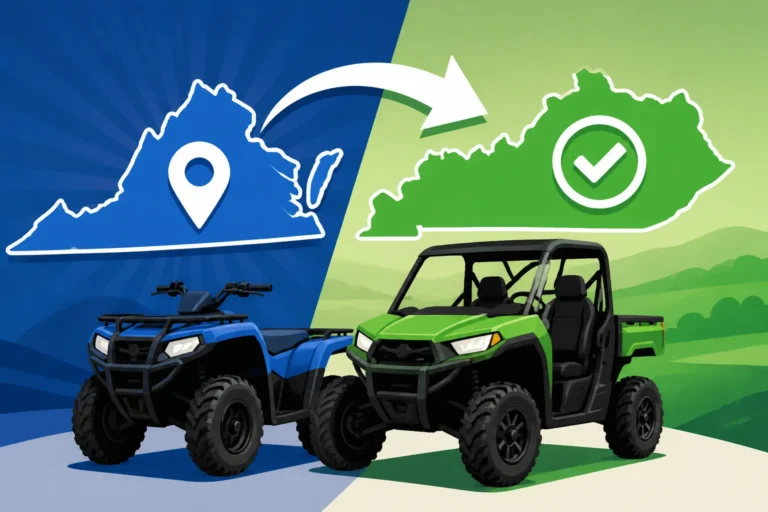
Purchasing an ATV from a seller in another state can introduce unique challenges because titling laws vary so much from one state to another. Some neighboring states, like Indiana or Ohio, might have similar titling requirements, while others, like Tennessee, historically haven't titled ATVs at all. When you bring an out-of-state machine into Kentucky, the primary goal is to establish clear ownership according to Kentucky's standards.
If the machine came from a titling state, you'll need the properly signed-over title from that state. This is often the easiest scenario, as the title itself serves as strong proof of ownership. However, if the machine came from a non-titling state, you'll typically need a comprehensive bill of sale. This bill of sale must include all the essential details we discussed earlier: the VIN, make, model, year, purchase price, date of sale, and the full names and addresses of both the buyer and seller. Sometimes, an out-of-state registration document, combined with a bill of sale, can also help establish a chain of ownership. [Buying an Out-of-State Machine for Kentucky] offers more specific guidance on these cross-border purchases.
Let's say you've found an incredible deal on a used side-by-side in West Virginia, a state that may or may not title ATVs depending on its own laws. Before you even drive to pick it up, confirm with the seller what documentation they have. If they have a signed West Virginia title, great! If not, insist on a detailed bill of sale. You might even use a template from LawDepot to send to the seller in advance, ensuring it contains all the information Kentucky will require. When you get back to Kentucky, you'll present this document (title or bill of sale) along with your completed TC 96-182 and ID at your county clerk's office to get your Kentucky title.
Clearing Liens and Other Encumbrances
Sometimes, an ATV you're looking to buy, or even one you already own, might have a lien against it. A lien means that a financial institution (like a bank or credit union) has a legal claim to the ATV as collateral for a loan. You absolutely cannot get a clear title in your name if there's an outstanding lien against the machine. The lienholder's interest must be satisfied and formally released before a clear title can be issued.
If you're buying an ATV with an existing lien, the seller needs to satisfy that loan first. This typically involves the seller paying off the balance of their loan, at which point the lienholder will issue a lien release document. This document is crucial. Without it, even if the seller gives you a signed title, the county clerk will see the lien recorded and will not transfer the title into your name. If the lien is on a Kentucky title, it will often be explicitly printed on the title document itself. For more information, see [Titling a Machine With a Lien in Kentucky] and [Releasing a Lien on a Kentucky Title].
Consider a scenario where you've agreed to buy an ATV, and when you inspect the title, you notice a bank listed as a lienholder. You'll need to instruct the seller that they must obtain a lien release from that bank. This usually means they pay off their loan, and the bank then sends a document (often a stamped title or a separate form) stating that the lien has been satisfied. The seller must provide you with this official lien release document, which you will then present to the county clerk along with the signed-over title when you go to transfer ownership into your name. Without that release, the title transfer won't happen.
Here’s a summary of the common documents you'll need:
| Scenario | Primary Proof of Ownership | Supporting Documents |
|---|---|---|
| New ATV from KY Dealer | Manufacturer's Certificate of Origin (MCO) | Completed TC 96-182, KY Photo ID, Payment |
| Used ATV from KY Seller | Signed-over Kentucky Title | Completed TC 96-182, KY Photo ID, Payment |
| Used ATV from Non-Titling State | Detailed Bill of Sale (e.g., LawDepot template) | Completed TC 96-182, KY Photo ID, Payment, Out-of-State Reg (if avail) |
| Used ATV from Titling State | Signed-over Out-of-State Title | Completed TC 96-182, KY Photo ID, Payment, Bill of Sale (optional) |
| Duplicate Title Request | Proof of Prior Ownership (if necessary) | Completed TC 96-182 (duplicate section), KY Photo ID, Payment |
| ATV with Existing Lien | Signed-over Title (KY or Out-of-State) | Lien Release from Lender, Completed TC 96-182, KY Photo ID, Payment |
Navigating Kentucky's ATV titling process can seem daunting, but with the right information and preparation, it's a manageable task. Understanding the specific requirements, gathering your documents meticulously, and knowing how to handle common issues will ensure you spend less time at the county clerk's office and more time out on the trails.
Disclaimer
This article is for general informational purposes only and does not constitute professional advice. Laws, prices and regulations vary by location and change over time. Consult a qualified professional for guidance on your specific situation.