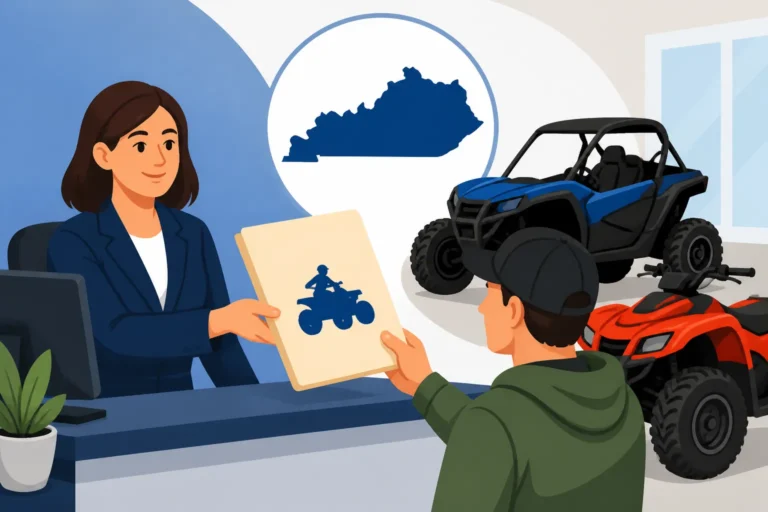
Titling a Machine Bought Privately in Kentucky
Buying an ATV or UTV from a private seller in Kentucky can feel like navigating a dense thicket of regulations, leaving many riders unsure of how to actually get that machine legally in their name. This comprehensive guide will walk you through every step of titling a privately purchased off-road machine in the Commonwealth, from gathering the crucial paperwork to understanding what to do if the seller doesn't have a title, ensuring your new ride is properly yours.
Understanding Kentucky's ATV/UTV Titling Landscape
Let's be honest, Kentucky's laws around ATVs and UTVs can sometimes feel a bit like a winding mountain trail—full of twists and turns, and not always clearly marked. When you buy a machine from a private individual, it adds another layer of complexity compared to purchasing from a dealership. You're essentially stepping into the shoes of the previous owner, and all the responsibilities that come with it.
First and foremost, it's vital to understand that Kentucky generally requires all ATVs and UTVs bought after July 1, 2010, to be titled. This isn't just a suggestion; it's the law. Many folks wonder, [Do You Need a Title for an ATV in Kentucky?], and the answer for most machines post-2010 is a resounding yes. This requirement was put in place to help track ownership, reduce theft, and provide a clear chain of custody for these valuable machines. If the ATV or UTV you're looking at was manufactured or purchased new after that date, it absolutely needs a title. Trying to bypass this can lead to headaches down the road, from legal issues to difficulty selling the machine yourself later on.
Now, what if the machine was purchased before July 2010? This is where it gets a little nuanced. Generally, older machines didn't require a title. However, there are exceptions. If an older machine had a lien on it (meaning a bank or lender held an interest), it likely received a title anyway. But for the most part, if you're looking at an older quad, it might genuinely not have a title. Don't panic just yet if this is the case; we'll discuss strategies for handling this scenario a bit later. The key takeaway here is to know the general rule, and then be prepared for the exceptions, because private sales often involve older machines.
Why Titling Matters Even for Private Land Use
You might be thinking, "Hey, I only ride on my own property or private trails in Harlan County, so why do I need a title?" That's a fair question, and it's one we hear often. The truth is, a title isn't just about legality for public land use; it's your definitive proof of ownership. Imagine this: you buy a machine with a handshake and a bill of sale, but no title. A few months down the line, the machine gets stolen. Without a title in your name, proving to the police or your insurance company that it was actually your machine becomes incredibly difficult.
A title also protects you from unknowingly buying a stolen machine. When you go to title the ATV or UTV, the Kentucky Transportation Cabinet checks the Vehicle Identification Number (VIN) against national databases. If it comes up stolen, you'll find out before you invest time, money, and emotional attachment into a machine that legally belongs to someone else. This due diligence is critical. Furthermore, if you ever decide to sell the machine, having a clear, properly transferred title will make the process infinitely smoother and more attractive to potential buyers. Nobody wants to buy a riddle wrapped in an enigma.
Consequences of Not Titling Your Machine
Ignoring the titling requirement for a privately purchased ATV or UTV in Kentucky can lead to several unpleasant situations. First, you won't be able to legally register the machine for any street-legal purposes, should Kentucky's laws ever evolve to allow more widespread street use for off-road vehicles. More immediately, if you're ever stopped while trailering the machine or riding it in a permissible area, and you don't have proper documentation, you could face questions, delays, or even fines. While Kentucky doesn't register ATVs in the same way it does cars, the title is still paramount.
Consider the scenario where you get into an accident, even on private property. If there's an insurance claim, the lack of a proper title could complicate or even invalidate your claim, leaving you financially vulnerable. And as mentioned, without a title, reselling the machine is going to be a tough uphill battle. Most informed buyers will insist on a clear title, and rightly so. They don't want to inherit your titling headaches. It truly is worth the effort to get this right from the beginning, saving yourself potential grief, hassle, and expense in the long run.
Essential Paperwork from a Private Seller
When you're buying an ATV or UTV from a private party in Kentucky, the burden of ensuring all the paperwork is in order largely falls on you, the buyer. Unlike a dealership that handles all the transfers for you, you're the one who needs to be diligent. Getting the right documents from the seller before you hand over any money is absolutely critical. This isn't just about being thorough; it's about protecting your investment and ensuring a smooth titling process.
The Signed-Over Title: Your Golden Ticket
The single most important piece of paper you can get from a private seller for a post-2010 machine is the original Certificate of Title, properly signed over to you. In Kentucky, this means the seller needs to complete the "Assignment of Title" section on the back of the title certificate. They'll need to sign their name exactly as it appears on the front of the title, print their name, and fill in the sale date and the purchase price.
You, as the buyer, will also need to sign and print your name in the designated "Application for Title" section. Make sure there are no erasures, white-out, or alterations on the title itself. Any discrepancies can cause the county clerk's office to reject your application outright, sending you back to the seller to correct it—which can be a nightmare if the seller has already moved on or is uncooperative. Always double-check that the VIN on the title matches the VIN on the machine itself. This might seem obvious, but it's an easy oversight when you're excited about a new purchase. For more detailed guidance, check out [A Signed-Over Title for a Kentucky Purchase].
The Importance of a Bill of Sale
Even with a perfectly signed-over title, a comprehensive bill of sale is highly recommended, and in some cases, absolutely necessary. While a title transfer typically includes the sale price, a separate bill of sale offers a more robust record of the transaction. This document should include:
- The full names and addresses of both the buyer and the seller.
- The date of the sale.
- A detailed description of the ATV/UTV, including make, model, year, and crucially, the full seventeen-character VIN.
- The agreed-upon purchase price.
- A statement that the machine is sold "as is" (if that's the agreement).
- Signatures of both the buyer and the seller.
A well-drafted bill of sale, perhaps even one prepared using a service like LawDepot, can serve as invaluable proof of purchase, especially if there are any questions about the sale price (for sales tax purposes) or if the title itself has any minor issues that need clarification. It's an extra layer of protection for both parties. For situations where you might be buying from a state that doesn't issue titles, a bill of sale becomes even more critical, often serving as your primary proof of ownership when trying to title it in Kentucky. In such cases, reading up on [Using a Bill of Sale From a Non-Titling State] would be incredibly helpful.
Kentucky Form TC 96-182: Application for Title
This form is the official application for a Kentucky Certificate of Title, and it's something you'll fill out when you go to the county clerk's office. However, it's worth familiarizing yourself with it beforehand. This form gathers all the necessary information about the buyer, the seller (if applicable), the vehicle, and the sales tax calculation. While the clerk's office will provide you with one and guide you through it, knowing what to expect can speed up the process.
You'll need to accurately record details like the ATV's make, model, year, and VIN, along with the date of sale and the purchase price. This information is typically pulled directly from the signed-over title and the bill of sale. Don't worry about having to fill this out perfectly at home; the clerk's staff are usually very helpful in ensuring it's completed correctly at the counter. Still, it helps to have all your other documents organized and ready. A deeper dive into [Kentucky Form TC 96-182 Explained] can give you even more confidence before your visit.
Your Photo ID and Proof of Residency
Last but not least, don't forget your own identification. When you visit the county clerk's office, you'll need to present a valid photo ID, such as a Kentucky driver's license. This confirms your identity as the person applying for the title. Sometimes, they may also ask for proof of your Kentucky residency, like a utility bill, though often your driver's license will suffice for both. It's a simple step, but easily overlooked in the excitement of a new purchase. Always confirm these small details before you head out the door to avoid a wasted trip.
The Titling Process at the County Clerk's Office
So, you've found the perfect ATV or UTV, you've shaken hands with the seller, and you've got all your painstakingly gathered paperwork in hand. What's next? The final step in getting that machine legally in your name is a visit to your local Kentucky County Clerk's office. This is where the rubber meets the road, or rather, where your paperwork meets the official seal.
Where to Go and What to Bring
You'll need to visit the County Clerk's office in the county where you reside. This is a common point of confusion, as some might think you go to the seller's county. Nope, it's all about your home county. Each county in Kentucky has its own clerk's office, and they handle vehicle titling. They are typically open during standard business hours, but it's always a good idea to check their specific hours and any special requirements (like needing an appointment) before you go.
Here's a checklist of what you absolutely must bring with you:
- The original, signed-over Certificate of Title: This is the big one. Make sure the seller's section is fully and correctly completed, and you've signed your part.
- Your completed (or ready to be completed) Kentucky Form TC 96-182: The Application for Kentucky Certificate of Title.
- A Bill of Sale: Especially important if the purchase price isn't explicitly on the title or if the seller is from a non-titling state.
- Your valid Kentucky Photo ID: Driver's license or state ID.
- Method of payment for fees and sales tax: This usually includes a titling fee and Kentucky sales tax on the purchase price. Exact amounts can vary over time, so be prepared for these costs.
Bringing along a copy of the original advertisement or any communication with the seller can also be helpful, just in case there are any questions, but it's not typically required. Being organized will not only make the process smoother for you but also for the busy clerk. You can find more information about the specific location for your county clerk through a quick online search, or by asking a friend who has recently titled a vehicle. For a general overview, consider [Titling at a Kentucky County Clerk].
Fees and Sales Tax: What to Expect
Let's talk about the money side of things, because that's often where surprises can pop up if you're not prepared. When you title a privately purchased ATV or UTV in Kentucky, you'll typically encounter a few fees:
- Titling Fee: This is a relatively minor fee for the processing of your new title.
- Usage Tax (Sales Tax): This is usually the larger expense. Kentucky levies a usage tax on the purchase price of vehicles, including ATVs and UTVs, unless an exemption applies. The tax is typically a percentage of the purchase price. This is another reason why a clear bill of sale stating the actual purchase price is so important, as the clerk will use this figure to calculate the tax. If the purchase price seems unusually low, or if the clerk suspects it's been understated, they may refer to an independent valuation guide to determine a fair market value for taxation purposes. So, be honest about the sale price!
- Lien Filing Fee (if applicable): If you financed your purchase and there's a lien on the title, there will be an additional small fee to record that lien.
It's wise to call your specific County Clerk's office beforehand or check their website for current fee schedules. They can give you an estimate based on your purchase price, so you're not caught off guard. Remember, these fees are typically due at the time of titling. It's a good idea to have several payment options available, like a debit card, check, or cash, though many offices have moved towards card or check as preferred methods. Understanding [Kentucky ATV Sales Tax at Titling] is crucial for budgeting your purchase.
The VIN Inspection and Your Responsibility
Before your title can be issued, in many cases, the county clerk's office (or a certified inspector) will need to verify the Vehicle Identification Number (VIN) on the machine. This is a crucial step to ensure the VIN on the paperwork matches the machine you are titling. While you might not need to bring the entire ATV into the office, some clerks might require a pencil tracing or a photo of the VIN plate. Others might have a designated inspection area, or even require you to visit a law enforcement agency for an inspection if the circumstances are unusual (e.g., if there's no title history).
It's your responsibility to ensure the VIN on the machine is clearly visible, legible, and matches all your paperwork. This seventeen-character VIN is the machine's unique identifier. If there's any discrepancy or if the VIN appears tampered with, your application will be denied, and you'll have a much larger problem on your hands, possibly requiring an investigation. Always perform a [Checking a VIN Before a Kentucky Purchase] before you even buy the machine to avoid these headaches. This simple check can save you from buying a stolen or problematic machine.
Once all the paperwork is submitted, fees paid, and VIN verified, the clerk will process your application. You'll typically receive a temporary registration or a receipt, and your official Kentucky Certificate of Title will usually be mailed to you within a few weeks. Make sure your mailing address on the application is correct! This marks the point where your privately purchased machine is officially and legally yours. Congratulations!
Common Roadblocks and Troubleshooting Tips
Buying a used ATV or UTV from a private seller can sometimes feel like an archaeological dig – you never know what you'll unearth. There are a few common issues that can derail the titling process, especially with privately bought machines. But don't despair! Many of these have solutions, or at least clear paths forward, if you know what to expect.
When the Seller Doesn't Have a Title (Older Machines)
This is perhaps the most frequent head-scratcher when dealing with private sales in Kentucky. As we discussed, machines purchased new before July 1, 2010, were generally not required to be titled. So, if you're looking at a vintage Honda FourTrax or an early Polaris, it's quite possible the seller genuinely doesn't have a title.
In this scenario, you'll need to demonstrate proof of ownership through other means. A robust bill of sale, ideally created with a service like LawDepot, becomes your best friend. It should be as detailed as possible, proving the transaction between you and the previous owner. You might also need to provide any old registrations, sales receipts from previous owners, or even affidavits from witnesses to the sale. The goal is to establish a clear chain of ownership to the satisfaction of the County Clerk.
Be prepared for the clerk's office to exercise some discretion here. They may require additional documentation or even a more thorough VIN inspection to ensure the machine isn't stolen. Sometimes, they might even want a certified statement from the seller explaining why no title exists and confirming their ownership. While it's more work, it's certainly not an impossible situation for these genuinely older machines. Remember, the key is showing a clear, undisputed history of ownership. For specific guidance, you might find [Why an Older Machine May Have No Title] useful.
Lost or Missing Titles
What if the machine should have a title (it's a post-2010 model), but the seller simply can't find it? This is a common occurrence. A lost title is typically the seller's responsibility to replace before the sale. They can apply for a duplicate title at their local County Clerk's office. Once they receive the duplicate title, they can then sign it over to you.
As a buyer, you should insist that the seller obtains a duplicate title first. Do not proceed with the sale if they don't have a title for a machine that requires one. Trying to title a machine with a missing title when one should exist is a bureaucratic maze you don't want to enter. It opens you up to potential fraud or unknowingly buying a stolen machine. If a seller is hesitant to get a duplicate title, it's a major red flag, and you should seriously reconsider the purchase. It's often easier and safer to walk away and find another machine.
VIN Discrepancies or Illegible VINs
The Vehicle Identification Number (VIN) is paramount for titling. It's how the state identifies your specific machine. If the VIN on the paperwork doesn't match the VIN physically stamped on the ATV/UTV frame, or if the VIN on the machine is damaged, unreadable, or appears to have been altered, you will run into a brick wall at the County Clerk's office.
What to do:
- Before purchase: Always verify the VIN on the title or bill of sale matches the VIN on the machine itself. Take a photo of the VIN on the machine.
- If a discrepancy is found: If you've already purchased it and find a mismatch, you'll need to go back to the seller. It could be a simple clerical error on an old document, or it could be a sign of something more serious.
- Illegible VIN: If the VIN is simply worn or rusted to the point of being unreadable, the clerk may require a law enforcement inspection. They might be able to find a secondary VIN stamping or provide an official verification.
Never try to "fix" an illegible VIN yourself; tampering with a VIN is illegal. For those encountering issues, understanding [Kentucky's Seventeen-Character VIN Rule] and [Why a Kentucky Clerk Rejects an Engine Number] can provide crucial context, as clerks are specifically trained to look for proper frame VINs, not engine numbers.
The Fifteen-Day Deadline
Once you purchase an ATV or UTV in Kentucky, you generally have a [Kentucky's Fifteen-Day Titling Deadline] to transfer the title into your name. This deadline is important because delaying it can sometimes lead to penalties, especially if sales tax isn't paid on time. While life happens and sometimes delays are unavoidable, it's best to prioritize getting to the County Clerk's office as soon as possible after your purchase. Think of it as crossing the finish line of your purchase. The sooner you get it done, the sooner you can truly relax and enjoy your new ride, knowing all the paperwork is squared away.
| Document Type | Required for Titling (Private Sale) | Notes & Best Practices |
|---|---|---|
| Original Title | Yes (if machine is post-2010) | Seller must sign over correctly. VINs must match. No alterations. |
| Bill of Sale | Highly Recommended (Essential if no title) | Detailed, includes VIN, purchase price, buyer/seller info, signatures. Useful for sales tax verification. |
| Form TC 96-182 | Yes | Application for Kentucky Certificate of Title. Available at clerk's office. Fill out accurately. |
| Photo ID | Yes | Valid Kentucky Driver's License or State ID. |
| Proof of Residency | Sometimes | Utility bill or other official mail if ID doesn't clearly establish Kentucky residency. |
| Payment for Fees | Yes | Titling fee, usage tax (sales tax), lien fee (if applicable). Check current rates with your clerk. |
This article is for general informational purposes only and does not constitute professional advice. Laws, prices and regulations vary by location and change over time. Consult a qualified professional for guidance on your specific situation.