Kentucky ATV Title Paperwork
It’s easy to feel like you’re staring at a mountain of paperwork when it comes to getting your ATV or UTV titled in Kentucky. The truth is, while it might seem a bit daunting with all the specific forms and rules, understanding exactly what you need to bring to the county clerk can save you a world of frustration and repeat trips. This guide is here to walk you through all the essential documents, explain why each one matters, and help you gather everything you need for a smooth titling experience.
Navigating the Primary Kentucky ATV Title Application Form
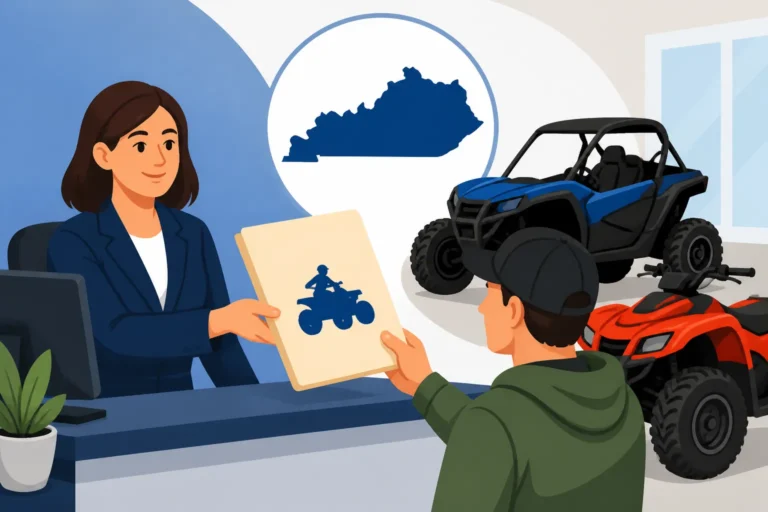
When you step into your local Kentucky County Clerk's office to title an ATV or UTV, one document is absolutely central to the entire process: Kentucky Form TC 96-182, the Application for Kentucky Certificate of Title/Registration. This isn't just a suggestion; it's the foundational piece of paperwork that gets the ball rolling. Without it, you really can't even begin the titling process.
The Importance of Form TC 96-182
This form serves as your official declaration to the state that you intend to claim ownership and title a specific off-road vehicle. Think of it as the central nervous system of your titling application. It gathers all the critical information about you, the buyer, and the ATV itself, compiling it into one standardized document. You might be accustomed to simpler processes in other states, or perhaps you've owned machines for years without ever needing such a thing, but Kentucky’s laws, especially for machines bought after July 2010, make this form indispensable. The clerk uses the details on this form to create your official title certificate and to ensure all the necessary taxes and fees are correctly applied. If anything on it is incorrect or missing, it’s an immediate red flag that can halt your application right in its tracks.
Filling it out thoroughly and accurately before you even leave your house can drastically cut down on wait times and potential headaches at the clerk’s window. It’s always best to download the most current version from the Kentucky Transportation Cabinet website or pick up a fresh copy from your local clerk’s office. This ensures you’re not working with an outdated form that might have changed requirements. You’ll find a detailed walkthrough of its sections in [Kentucky Form TC 96-182 Explained].
Key Sections You Need to Complete
Form TC 96-182 might look intimidating at first glance, but it breaks down into several logical sections, each requiring specific information. You'll need to provide your full legal name, current address, and a reliable contact number. If there’s more than one owner, all owners' information needs to be included. Accuracy here is paramount, as this is how the state identifies you as the legal owner.
Next comes the vehicle information. This is where you’ll enter the year, make, model, and crucially, the Vehicle Identification Number (VIN) of your ATV or UTV. The VIN must be accurate, usually a seventeen-character sequence, and match any other supporting documents you provide. You should always double-check the VIN directly from the machine's frame against what you write on the form to avoid any discrepancies. Then, you'll indicate how you acquired the machine—whether by purchase, gift, or inheritance—and the date of acquisition. If you’re paying sales tax, the purchase price will also need to be clearly stated. Finally, your signature, and often a notary's signature, will be required to certify the truthfulness of the information. Don't sign it until you're at the clerk's office, or in front of a notary if required, as some sections require verification.
Essential Supporting Documents for ATV Titling
Beyond the application form itself, you'll need several other pieces of paperwork to prove ownership, verify your identity, and satisfy Kentucky's specific requirements. These documents work together to build a complete picture for the county clerk, ensuring that the machine is legitimately yours and that all legal obligations are met. Without the correct supporting documentation, even a perfectly filled out application form won't be enough.
Proof of Ownership: The Backbone of Your Claim
This is arguably the most critical supporting document. How you prove ownership depends heavily on where and when you acquired your ATV. For a brand-new machine bought from a dealer, you’ll typically present the Manufacturer’s Statement of Origin (MSO) or Manufacturer’s Certificate of Origin (MCO). This is essentially the birth certificate of your ATV, showing its initial transfer from the manufacturer.
If you bought a used ATV that was already titled in Kentucky, the previous owner’s signed-over title is your key document. This needs to be the original title certificate, not a copy, and must have the seller’s signature (and any co-owners' signatures) in the designated transfer section. Make sure the seller has properly filled out all the buyer's information and purchase date before you take possession. Check out [A Signed-Over Title for a Kentucky Purchase] for more on this.
What if the machine came from a state that doesn't issue titles for ATVs? This is a common scenario and can be a bit more complex. In such cases, you might need a bill of sale, and sometimes even an old registration or other proof of ownership from the previous state. A robust bill of sale, outlining the buyer, seller, VIN, purchase price, and date, becomes incredibly important. Resources like LawDepot can offer templates for a comprehensive bill of sale, ensuring you don't miss any critical details that Kentucky might look for. You can find more specific guidance on this in [Using a Bill of Sale From a Non-Titling State].
Your Photo ID and Payment
When you visit the county clerk’s office, you’ll need to prove you are who you say you are. A valid, government-issued photo identification, such as a Kentucky driver's license or state ID card, is required. This helps prevent fraud and ensures that the title is issued to the correct individual. If you have any questions about acceptable forms of ID, it’s always wise to call your local county clerk’s office ahead of time. See [A Kentucky Photo ID at the Clerk's Counter] for more details.
Regarding payment, there are several fees involved in titling an ATV in Kentucky. This usually includes the title fee, potential sales tax (if applicable, based on the purchase price or NADA value), and possibly a lien filing fee if you financed your purchase. The clerk's office typically accepts various forms of payment, but it’s always best to confirm their preferred methods (e.g., cash, check, debit/credit card) before your visit. While I can't provide specific dollar amounts, these fees are typically posted or can be inquired about directly. Knowing what [What a Kentucky ATV Title Costs] will help you prepare your funds.
Bill of Sale: Even When You Have a Title
Even if you have a signed-over title from a Kentucky seller, a separate bill of sale is still a highly recommended, and sometimes required, document, especially for private party transactions. While the title handles the official transfer of ownership, a bill of sale can provide more granular detail about the sale itself. It should clearly state the purchase price, which is vital for calculating sales tax. It also provides an extra layer of protection for both buyer and seller, detailing the date of sale, the condition of the vehicle (often "as-is"), and affirming that the seller has the right to sell the machine.
For machines bought from a private seller, a detailed bill of sale prevents disputes and clarifies the transaction. It's particularly useful if there’s any question about the sales tax calculation or if the selling price seems unusually low. If you're creating your own, ensure it includes the full names and addresses of both parties, the VIN, the purchase price, and the date of sale. Both buyer and seller should sign it. Using a reputable template, perhaps from a service like LawDepot, can ensure all necessary elements are included and recognized. For a deeper dive into this, check out [A Kentucky Bill of Sale for an ATV].
Addressing Special Titling Scenarios
The world of ATV ownership isn't always a straightforward "buy new, get title" process. Sometimes you inherit a machine, or you're dealing with a vehicle that doesn't have the typical paperwork. Kentucky's titling system, while structured, does have provisions for these less common, but equally important, situations. Understanding what extra paperwork or steps these scenarios demand can prevent significant delays and frustration.
Titling an Inherited or Gifted Machine
Receiving an ATV as a gift or through inheritance can be a wonderful thing, but the titling process is a bit different from a standard purchase. For an inherited machine, you’ll likely need copies of the death certificate, the will (if one exists and specifies the ATV), and/or probate court documents showing that you are the legal heir entitled to the property. The exact documents can vary depending on the complexity of the estate and whether it went through probate. In some cases, an affidavit of heirship might be required. The goal is to legally establish your right to ownership without a direct purchase transaction. For detailed instructions, refer to [Titling an Inherited Machine in Kentucky].
For a gifted machine, you’ll need a Bill of Sale with a stated "gift" or a zero dollar value, clearly indicating it was a transfer without monetary exchange. Both the giver and receiver should sign this document, and it should include the ATV’s VIN, make, and model. While no sales tax would typically be due on a gift, the clerk still needs documentation to establish the transfer of ownership. A well-drafted gift affidavit or bill of sale is crucial here to prevent any confusion about whether it was a sale or a gift.
Titling an Out-of-State Machine
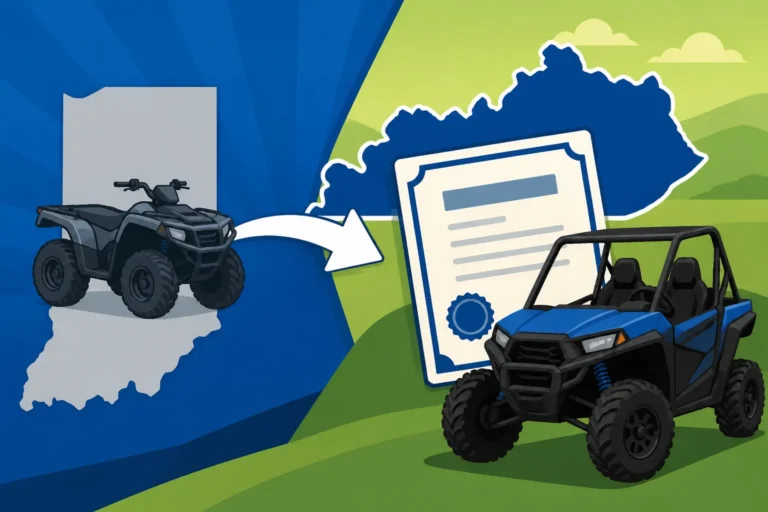
Bringing an ATV into Kentucky from another state requires careful attention to the documentation. If the machine was titled in its previous state, you'll need the original out-of-state title, properly signed over to you by the seller. This is a common and usually straightforward scenario. The challenge often arises when the machine comes from a state that does not title ATVs.
In these instances, you’ll need alternative proof of ownership. This could include a detailed bill of sale, old registration documents from the previous state, or even past insurance cards. The key is to provide a clear paper trail demonstrating continuous ownership up to you. Sometimes, the clerk might require a VIN inspection to verify the machine's identity, especially if the paperwork seems incomplete or if there's any doubt about its origin. It’s always a good idea to bring as much historical paperwork as you can for machines purchased out-of-state. For a comprehensive look at this process, see [Buying an Out-of-State Machine for Kentucky].
When a Lien is Involved
If you financed your ATV purchase, a lien will be placed on the title, meaning the lender has a security interest in your machine until the loan is paid off. When applying for your title, you’ll need to provide the lender's information on Form TC 96-182. The Kentucky Transportation Cabinet will then send the physical title directly to the lienholder. You won't receive the physical title until the loan is satisfied and the lien is released.
When the loan is paid in full, your lender will send you a lien release document. It’s absolutely crucial to keep this document safe. To get your clear title, you'll then take this lien release to the county clerk's office, along with your photo ID and potentially a small fee, to have the lien removed from the state's records. Only then will a clean title be issued in your name. You can explore this further in [Titling a Machine With a Lien in Kentucky] and [Releasing a Lien on a Kentucky Title].
Final Preparations Before Your County Clerk Visit
You’ve gathered your forms, you understand the nuances of your specific situation, and you're almost ready to head to the county clerk's office. Before you go, a few final checks can make all the difference between a quick, successful visit and a frustrating, wasted trip. Think of this as your pre-flight checklist for Kentucky ATV titling.
Checking VIN Requirements
One of the most common reasons an ATV titling application gets rejected is an issue with the Vehicle Identification Number (VIN). Kentucky law requires a valid, seventeen-character VIN for most machines to be titled. This rule applies to vehicles manufactured after a certain point (typically around 1981, though the ATV titling law specifically refers to machines bought after July 2010). If your machine has a shorter VIN, or if the VIN on your paperwork doesn't match the actual frame, you're going to hit a roadblock.
Before you go, physically locate the VIN on your ATV and compare it character by character to every document you have—the MSO, the old title, and especially Form TC 96-182. They must match perfectly. If you have an older machine that might not have a seventeen-character VIN, or if the VIN is somehow damaged or unreadable, you'll need to discuss this directly with the county clerk. There might be a process for obtaining a state-assigned VIN, but it's a much more involved procedure. For details on what the state looks for, check [Kentucky's Seventeen-Character VIN Rule].
Sales Tax Considerations
Kentucky law requires sales tax to be paid on the transfer of ownership of ATVs, unless a specific exemption applies (like a legitimate gift with no monetary exchange). This tax is typically collected by the county clerk at the time of titling. The tax amount is usually calculated based on the purchase price you declare on your bill of sale or Form TC 96-182.
However, if the declared purchase price seems unusually low, the clerk has the discretion to use the vehicle’s current value, often determined by a recognized valuation guide like NADA (National Automobile Dealers Association), to calculate the sales tax. This is to prevent individuals from under-reporting the sale price to avoid taxes. So, be prepared to honestly declare the actual purchase price. If you purchased your ATV out-of-state and paid sales tax there, you might be eligible for a credit against Kentucky sales tax, but you’ll need to provide proof of that payment. Ensure you understand all aspects of [Kentucky ATV Sales Tax at Titling] before your visit.
The Fifteen-Day Deadline
Kentucky imposes a deadline for titling your newly acquired ATV. You generally have fifteen calendar days from the date of purchase or transfer to complete the titling process. This isn't just a recommendation; it's a legal requirement. If you fail to title your machine within this fifteen-day window, you could be subject to penalties, which typically involve a late fee added to your titling costs.
Life happens, and sometimes it's hard to get to the clerk's office immediately. However, it's crucial to prioritize this. The clock starts ticking the moment you take ownership. Planning your visit to the county clerk’s office within this timeframe can save you from unnecessary extra costs. Always aim to get your paperwork sorted as quickly as possible after acquisition. You can find more about this rule in [Kentucky's Fifteen-Day Titling Deadline] and [Fifteen Days From the Day You Buy].
Disclaimer
This article is for general informational purposes only and does not constitute professional advice. Laws, prices and regulations vary by location and change over time. Consult a qualified professional for guidance on your specific situation.