Releasing a Lien on a Kentucky Title
Buying an ATV or UTV in Kentucky, whether new or used, often means dealing with a loan or some form of financial arrangement, and that means a lien is placed on your title. It can be a real headache when you've finally paid off that last penny, or you're trying to sell a machine that still has old paperwork hanging over it, only to find the lien isn't officially cleared. This guide is here to walk you through the essential steps and common pitfalls of releasing a lien on a Kentucky ATV or UTV title, ensuring you can move forward with peace of mind.
Understanding Liens on Kentucky ATV Titles
When you hear "lien" in the context of your ATV or UTV, it essentially means someone else has a financial claim to your machine. Think of it as a legal placeholder on your title, indicating that the vehicle is collateral for a debt you owe. For most folks, this debt comes in the form of a loan from a bank, credit union, or even the dealership itself. Until that debt is satisfied, the lienholder has a right to the ATV, even if you possess the physical title.
What a Lien Represents
A lien is, at its core, a security interest. It’s how a lender protects their investment when they give you money to buy a vehicle. They want assurance that if you stop making payments, they have the legal right to repossess the ATV to recover their losses. This is why you typically don't get a clean title directly from the seller or even the state if there's an outstanding loan. The lienholder's name will be clearly visible on the Kentucky ATV title itself, often in a designated section for "Lienholder" or "Security Interest."
It’s not just banks, though. Sometimes, a mechanic's shop might place a lien on your ATV if you had extensive repairs done and failed to pay the bill. Or perhaps a private seller extended you credit, and they've placed a lien to protect their investment. These situations are less common for ATVs than for cars, but they can still happen. The most common scenario by far, however, is simply financing your purchase.
Common Scenarios for Liens
Let’s break down the typical ways an ATV or UTV might end up with a lien on its Kentucky title.
First, and most often, you bought a brand-new machine from a dealership, or even a used one, and financed it through a bank. The bank pays the dealer, and in return, they become the lienholder on your title. You then make monthly payments to the bank until the loan is paid off. This is the simplest and most straightforward lien scenario. The bank ensures their name is on the title when it's initially processed, often at the county clerk's office when you apply for your [Titling an ATV in Kentucky].
Second, you might have bought a used ATV from a private seller who still owed money on their loan. If the seller didn’t clear the lien before selling it to you, that lien can transfer with the title, leaving you in a tricky situation. This is why it’s absolutely critical to [Checking a VIN Before a Kentucky Purchase] and carefully scrutinize the title for any existing liens before you hand over any money. If you buy a machine with an active lien, you could potentially lose it to the original lienholder if the seller defaults on their loan.
Finally, less common but still possible, are situations like a court judgment or mechanics' liens. If you owe a significant debt and a court rules against you, they could place a lien on your assets, including your ATV. Similarly, if you left your ATV at a shop for repairs and didn't pay, the shop might have the right to place a lien on it to recover their costs. These are often more complex to resolve and might require legal intervention.
The Importance of a Lien Release
Getting that lien officially released isn't just a formality; it's a critical step that impacts your ownership, your ability to sell, and your overall peace of mind. Without a proper lien release recorded with the Kentucky County Clerk, that ATV or UTV isn't truly 100% yours, at least not in the eyes of the law.
Why You Need a Clear Title
Imagine you've just made that final payment on your ATV. You're feeling great, picturing all the trails you'll conquer with your now completely owned machine. But if you don't follow through with the lien release process, that old lienholder's name will still be printed on your title. This means that, technically, they still have a claim.
The most immediate and obvious reason for needing a clear title is when you decide to sell your ATV. A prospective buyer, especially one who is savvy, will always ask to see the title. If they see a lienholder listed, they'll likely hesitate, or even back out of the deal entirely. No one wants to buy a machine that could potentially be repossessed due to someone else's outstanding debt. Even if you explain it's paid off, without the official release, it's just your word against the official document. It adds a layer of uncertainty and complexity that most buyers want to avoid.
Furthermore, a clear title is crucial for [Proving Kentucky ATV Ownership]. While possessing the title document itself is good, a title without a lien is definitive proof that you are the sole owner, free and clear of any encumbrances. This can be important for insurance claims, estate planning, or even if your ATV is stolen and recovered. Law enforcement and insurance companies will look at the title to establish true ownership.
Avoiding Future Headaches and Complications
Failing to secure a lien release can create a tangled mess down the road. Let’s say you pay off your loan, but you never bothered to get the official lien release from the bank or process it with the county clerk. Years later, you decide to sell the ATV, but the bank has merged with another, or the original loan officer has long since retired. Now you’re trying to track down someone, anyone, who can verify that old loan was paid off. It can be a bureaucratic nightmare.
Another scenario: you gift the ATV to a family member. They then go to title it in their name, only to be told by the clerk that there’s an outstanding lien. Now they have to deal with your old paperwork, which is a burden you could have easily prevented. This is especially true when dealing with things like [Titling an Inherited Machine in Kentucky], where heirs already have enough paperwork to sort through without old liens popping up.
Having a clean title simplifies everything. It makes future sales smooth, ensures your ownership is unquestionable, and saves you (and potentially your loved ones) from hours of frustrating phone calls and paperwork tracking. It's a small administrative step that yields significant long-term benefits.
Steps to Obtain a Lien Release from Your Lender
So, you’ve finally made that last payment on your ATV loan. Congratulations! That’s a huge milestone. Now, let’s talk about how to get that lien officially removed from your Kentucky title. The process usually starts with your lender, and while it might seem intimidating, it's generally quite straightforward if you know what to expect.
Contacting Your Lender After Payoff
The very first thing you should do after making your final loan payment is to contact your lender. Don't assume they'll automatically send you the release documentation without a nudge. While some larger institutions are very efficient, smaller lenders or credit unions might require you to explicitly request the lien release.
When you call, have your loan account number, your ATV’s VIN, and your personal identification ready. You'll want to confirm that the loan balance is indeed zero and ask them about their specific process for releasing the lien. Inquire about:
- What document they will provide: Most will issue a "Lien Release" form, a "Satisfaction of Lien," or a similar document on their official letterhead.
- How they will send it: Will it be mailed to you? Or sent directly to the county clerk? Find out the expected timeframe.
- Any associated fees: While rare for the release itself, sometimes there are small administrative fees, though this is not common in Kentucky for a simple lien release.
It's a good idea to keep a record of this communication, including the date, time, and the name of the representative you spoke with. This can be invaluable if there are any delays or issues down the line.
Receiving the Lien Release Document
Once you've contacted your lender, they should process your request and send you the lien release document. This document is absolutely critical. It’s the official proof from the lienholder that they no longer have a claim on your ATV.
What does it look like? It's typically an official letter or form, printed on the lender's letterhead, clearly stating that the loan for your specific ATV (identified by its VIN) has been paid in full and the lien is released. It will usually be signed by an authorized representative of the lender, and sometimes notarized. Ensure it contains:
- Your full name as the borrower.
- The lienholder's full name.
- The full 17-character Vehicle Identification Number (VIN) of your ATV.
- A clear statement that the lien is satisfied or released.
- An authorized signature from the lienholder.
If the lienholder was listed on a physical Kentucky title certificate, they might also mail you the original title with their signature in the lien release section on the back. This is common if you held the original paper title while the lien was active. If the title was held electronically, they will simply send the release document.
Verifying the Release Details and Taking it to the Clerk
Once you receive the lien release document, do not put it in a drawer and forget about it. This is where many people make a mistake. The document itself is proof, but it doesn’t automatically update the state's records. You need to take this document to your local Kentucky County Clerk's office. This is where the official record of your ATV’s title is kept, and they are the ones who will formally update it. You can find out more about where to take these documents in [Titling at a Kentucky County Clerk].
Before you go, carefully review all the details on the lien release form:
- Does your name match the name on the title?
- Is the VIN correct? Make sure every character is accurate.
- Is the lienholder's name correctly identified?
- Is it clearly signed by an authorized party?
Any discrepancies can cause delays at the clerk's office. Once you’ve verified everything, gather the original lien release document, your current Kentucky ATV title (if you have it), and a valid photo ID. Head to the county clerk's office in the county where you reside or where the ATV was titled. They will process the release, mark the lien as satisfied in their system, and often issue you a new, clean title certificate that no longer shows the lienholder. There might be a small processing fee for this service, so be prepared.
Dealing with Lost or Missing Lien Release Documents
It's a frustrating but all-too-common scenario: you paid off your ATV years ago, and now you want to sell it, but you can't find that crucial lien release document. Maybe it got lost in a move, or perhaps the lender never sent it in the first place. Don't panic; there are steps you can take, though it might require a bit more legwork.
Reaching Out to the Original Lender (Again)
Your first line of defense is always to go back to the source: the original lender. Even if it's been years, most financial institutions keep detailed records. Contact their customer service or loan department and explain your situation. Provide them with your full name, the loan account number (if you still have it), the VIN of your ATV, and the approximate date the loan was paid off.
Be persistent but polite. You might need to speak to a supervisor or someone in their archives department. They should be able to look up your account, confirm the payoff, and re-issue a lien release document. There might be a small administrative fee for this service, but it's usually well worth it to get the proper documentation.
What if the lender has merged with another bank or gone out of business? This complicates things, but it's not insurmountable. If they merged, the new entity usually assumes the records of the old one. Research which institution absorbed your original lender and contact them. If the lender is completely defunct, you might need to proceed to the next step.
What to Do If the Lender is Unresponsive or Non-Existent
This is where things can get a bit more challenging. If you've tried repeatedly to contact the original lender with no success, or if they genuinely no longer exist and no successor institution holds their records, you'll need to prepare an affidavit.
An affidavit is a sworn statement, made under oath, confirming that the loan was paid in full and that you have made diligent efforts to obtain a lien release from the lienholder. This document essentially asks the Kentucky County Clerk to remove the lien based on your sworn testimony and supporting evidence.
To prepare an affidavit, you'll want to include:
- Your full legal name and current address.
- The VIN of your ATV.
- The name of the lienholder.
- The approximate date the loan was paid off.
- A detailed account of your attempts to contact the lienholder (dates, names, methods).
- Any supporting documentation you might have (old loan statements showing a zero balance, bank records of the final payment, etc.).
You will need to sign this affidavit in front of a notary public. Websites like LawDepot offer templates and guidance for creating legal documents, including affidavits, which can be a helpful starting point if you're trying to draft one yourself. While they can provide the framework, remember that the specifics must accurately reflect your situation and Kentucky law.
Once notarized, take the affidavit, along with your ATV title and any supporting documentation, to your local Kentucky County Clerk's office. They will review your case. This process can take longer than a standard lien release, as the clerk will need to ensure all procedures are followed correctly to protect against fraud. Be prepared for questions and potentially a waiting period as they confirm your efforts and the validity of your claim.
The Role of the County Clerk in Kentucky Lien Releases
In Kentucky, your local County Clerk's office is the central hub for all things related to ATV and UTV titles, including processing lien releases. They are the official record keepers and the authority responsible for updating your title to reflect that the lien has been satisfied.
Submitting Your Lien Release Documentation
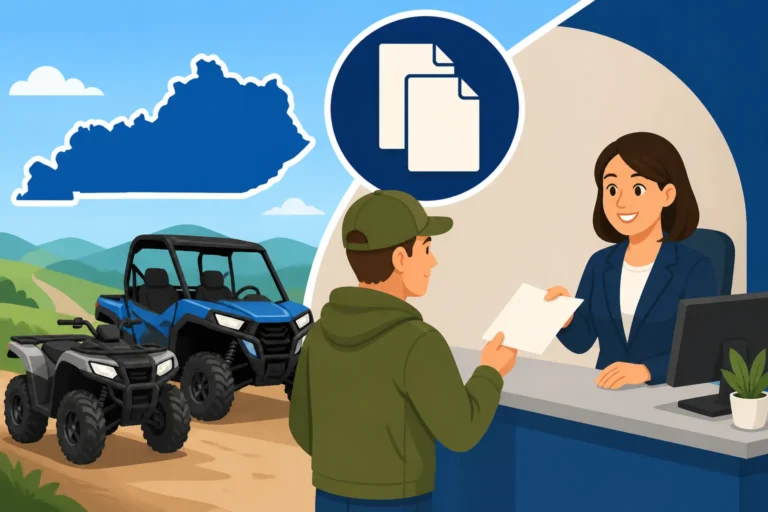
Once you have your official lien release document from your lender, or your notarized affidavit if the lender is unresponsive, your next stop is the Kentucky County Clerk's office. It's crucial that you go to the clerk in the county where the ATV was originally titled or where you currently reside.
When you visit the clerk, make sure you bring:
- The original lien release document from your lender, or your original, notarized affidavit. Make sure it's the original; photocopies usually won't be accepted.
- Your current Kentucky ATV title certificate. If you held the paper title during the loan, it will have the lienholder's name printed on it.
- A valid photo ID. This is to confirm you are the owner of record.
- Payment for any processing fees. These are typically very modest.
The clerk's staff will review your documents. They will verify the VIN, the lienholder's information, and the validity of the release. They will then update the state's electronic title system to show that the lien has been satisfied. In most cases, they will then issue you a brand new title certificate, completely free of any lienholder information. This new title is your definitive proof that the ATV is entirely yours. This entire process usually takes place at the clerk's counter and can often be completed in a single visit, provided your paperwork is in order.
Why a County Clerk and Not a State Office
It's common for people to wonder why they go to a county office for this, rather than a state-level department like the Kentucky Transportation Cabinet. The answer lies in how Kentucky structures its vehicle titling system. While the Kentucky Transportation Cabinet sets the statewide rules and provides the forms, the day-to-day administration and record-keeping of titles are decentralized to the county level.
Each of Kentucky's 120 counties has its own County Clerk's office, and these offices are responsible for processing title applications, transfers, and lien releases for all vehicles registered within their jurisdiction. This local approach means you're dealing with an office that is closer to your community and, theoretically, more accessible. It also ensures that local tax revenues from titling fees stay within the county. This is why you will always deal directly with your county clerk for these matters, whether it's [Titling a Side-by-Side in Kentucky] or simply clearing an old lien.
The county clerk acts as the primary interface between vehicle owners and the state's titling records. They enter the data into the statewide system, issue the physical title certificates, and ensure compliance with Kentucky titling laws. So, while the rules come from the state, the action happens at your local clerk's counter.
Comparing Lien Release Documentation
Navigating the paperwork for a lien release can sometimes feel like deciphering an ancient scroll. To make it clearer, here’s a quick overview of what you might encounter and what each document means for your Kentucky ATV title.
| Document Type | Description | Key Action Needed |
|---|---|---|
| Lien Release Letter | An official letter on the lender's letterhead, explicitly stating the loan is paid off and the lien on your ATV (by VIN) is released. Usually signed by an authorized representative. | Present the original letter to your County Clerk with your title for official update. |
| Satisfied Title | Your original physical title certificate with the lienholder's signature and date in the "Lien Release" section on the back, indicating they have released their interest. | Submit this original title to your County Clerk. A new, clean title will be issued. |
| Form TC 96-187 | Kentucky-specific form, "Affidavit of Non-Dealer Transfer of Ownership" (often used in various transfer/ownership scenarios, though a specific lien release form for the clerk might vary). Note: The primary lien release comes from the lender directly. | This form is used for transferring ownership. The lien release is a prerequisite for clear transfer. |
| Notarized Affidavit | A sworn statement by you, signed before a notary, attesting that the lien has been satisfied and you've been unable to obtain a release from the lienholder after diligent effort. | Present the original notarized affidavit to the County Clerk. They will review for validity before updating. |
| Electronic Title Release | For vehicles with electronic titles, the lienholder electronically notifies the Kentucky AVIS system directly that the lien has been satisfied. You may not receive a physical paper from them. | Contact your County Clerk to confirm the electronic release and request a new physical, clean title certificate. |
Special Scenarios in Lien Releases
While the process of getting a lien released from your Kentucky ATV title is usually straightforward, life has a way of throwing curveballs. Sometimes, the lienholder isn't a readily available bank, or circumstances are just more complicated. Let's look at a few special situations.
Deceased Lienholders or Estate Issues
What if the person or entity that held the lien is no longer around? This is most common with private party loans. For instance, you might have borrowed money from a friend or family member who then passed away before you officially cleared the lien.
In this situation, the lien becomes part of the deceased's estate. You'll need to work with the executor or administrator of that estate. Provide them with proof that you paid off the loan (bank statements, cancelled checks, receipts, etc.). The executor, acting on behalf of the estate, can then sign a lien release form, similar to how a bank would. This release will typically need to be notarized to confirm their authority. If the estate is complex or there's no clear executor, you might need to involve legal counsel to navigate the process, possibly requiring a court order to compel the release. Websites like LawDepot can also provide forms for affidavits or other legal documents often required in estate matters, which could potentially be adapted with legal advice to your specific situation.
Bankruptcies or Out-of-Business Lenders
If the lender, especially a smaller finance company, goes out of business or declares bankruptcy, obtaining a lien release can become a significant challenge. If they merged with another company, as discussed before, you'd contact the successor. But what if they simply ceased to exist?
In these cases, you will likely need to rely on the affidavit process. Gather all the evidence you have that the loan was paid off – bank statements, cancelled checks, your original loan agreement, etc. Detail your attempts to contact the defunct company. You'll then present this notarized affidavit and supporting evidence to the Kentucky County Clerk, explaining the situation. The clerk will evaluate your submission and may require additional information or time to verify your claim before removing the lien. This can be a lengthy process, so patience is key.
Very Old Liens on a Title
Sometimes you might unearth an old title for an ATV you've owned for ages, only to discover a lien from decades ago. Perhaps it was a loan from a small-town bank that no longer exists in its original form, or a private loan from someone you can no longer locate.
For very old liens, the process is similar to dealing with a non-existent or unresponsive lender – you'll likely need to use an affidavit. The passage of time itself can sometimes strengthen your case for an affidavit, as it becomes less likely the original lienholder would still have an active claim. However, you'll still need to demonstrate a good-faith effort to locate the lienholder.
If you can prove to the county clerk that the debt is clearly satisfied (even if you don't have a formal release) and that the lienholder is impossible to contact after diligent effort, they may, at their discretion, process the lien release based on your affidavit. It's always best to have as much documentation as possible, even if it's decades old, to support your claim. Remember, the goal is to convince the clerk that the lien is truly satisfied and poses no ongoing legal claim. This is also why having good documentation for [Machines Bought Before July 2010 in Kentucky] or very old titles is so critical.
Disclaimer
This article is for general informational purposes only and does not constitute professional advice. Laws, prices and regulations vary by location and change over time. Consult a qualified professional for guidance on your specific situation.