When a Security Interest Forced an Older Kentucky Title
It can be incredibly confusing when you're trying to figure out the paperwork for an ATV or UTV in Kentucky, especially if you're dealing with an older machine. Many folks assume that if a quad was purchased before a certain date, it might not need a title at all. And while that's often true for machines bought before July 2010, there's a significant exception that has tripped up many a buyer and seller: the security interest. This guide will walk you through exactly why and how a loan could have forced an older Kentucky ATV to have a title, clearing up a common point of frustration for riders across the Bluegrass State.
Kentucky's Titling Mandate: The July 2010 Line in the Sand
Before we dive into the nitty-gritty of security interests, let's set the stage. Kentucky law underwent a pretty big change concerning ATV and UTV titles. For years, many of these machines simply didn't require a title for private ownership. You'd buy it, get a bill of sale, and that was often the extent of the official paperwork. It felt a bit like the Wild West of powersports, which was fine until you ran into issues proving ownership or dealing with theft.
Why July 2010 is Such a Critical Date
The game-changer arrived in July 2010. From that point forward, all newly purchased ATVs and UTVs in Kentucky were required to be titled. This meant that if you bought a brand-new quad from a dealership, or even a used one, as long as the purchase date was on or after July 15, 2010, you were legally obligated to get a title for it. This was a welcome change for many, bringing a layer of consumer protection and clarity to ownership that had been sorely missing. It helped curb some of the challenges associated with stolen machines and made private sales a little less ambiguous. You can learn more about this by reading [Why Kentucky Titles Machines Bought After July 2010].
However, this new law didn't retroactively apply to every single machine already out there. So, if your buddy had bought his ATV in 2008, he generally wouldn't need a title for it unless he decided to sell it after the 2010 cutoff, in which case the new owner would need to title it. But that's where the security interest exception comes into play, creating a distinct path for some older machines to have titles.
The General Rule for Older Machines
For many ATVs and UTVs purchased before the July 2010 mandate, the standard was that they simply didn't require a title. Ownership was typically proven with a bill of sale, often supplemented by maintenance records, insurance documents, or simply the long-standing understanding within a community. This often led to scenarios where someone inherited a machine or bought one from a neighbor, and the only paperwork they had was a handwritten note or nothing at all. While this could be problematic if you ever needed to officially prove ownership, it was the reality for countless riders in Kentucky. This general rule is important context for understanding why the security interest was such a unique factor. If you're dealing with such a machine, you might find guidance in [Machines Bought Before July 2010 in Kentucky].
The Role of a Security Interest in Titling
So, what exactly is a security interest, and why would it force a title on an ATV that otherwise wouldn't need one? Simply put, a security interest is a legal right granted by a debtor (the person borrowing money) to a creditor (the lender) over the debtor's property. In the context of an ATV, it's essentially a lien or a loan. When you finance the purchase of an ATV, the lender wants assurance that they can recover their money if you stop making payments. That assurance comes in the form of a lien on the title.
Understanding the Lienholder's Claim
Imagine you walked into a dealership back in, say, 2007, and bought a brand-new quad. Instead of paying cash upfront, you decided to finance it through the dealership's financing arm or a bank. That bank or lender wants to ensure that they have a claim on that ATV until you pay off the loan in full. The most effective way to secure that claim, even before Kentucky had a universal titling law for ATVs, was to put their name as a lienholder on an official certificate of title.
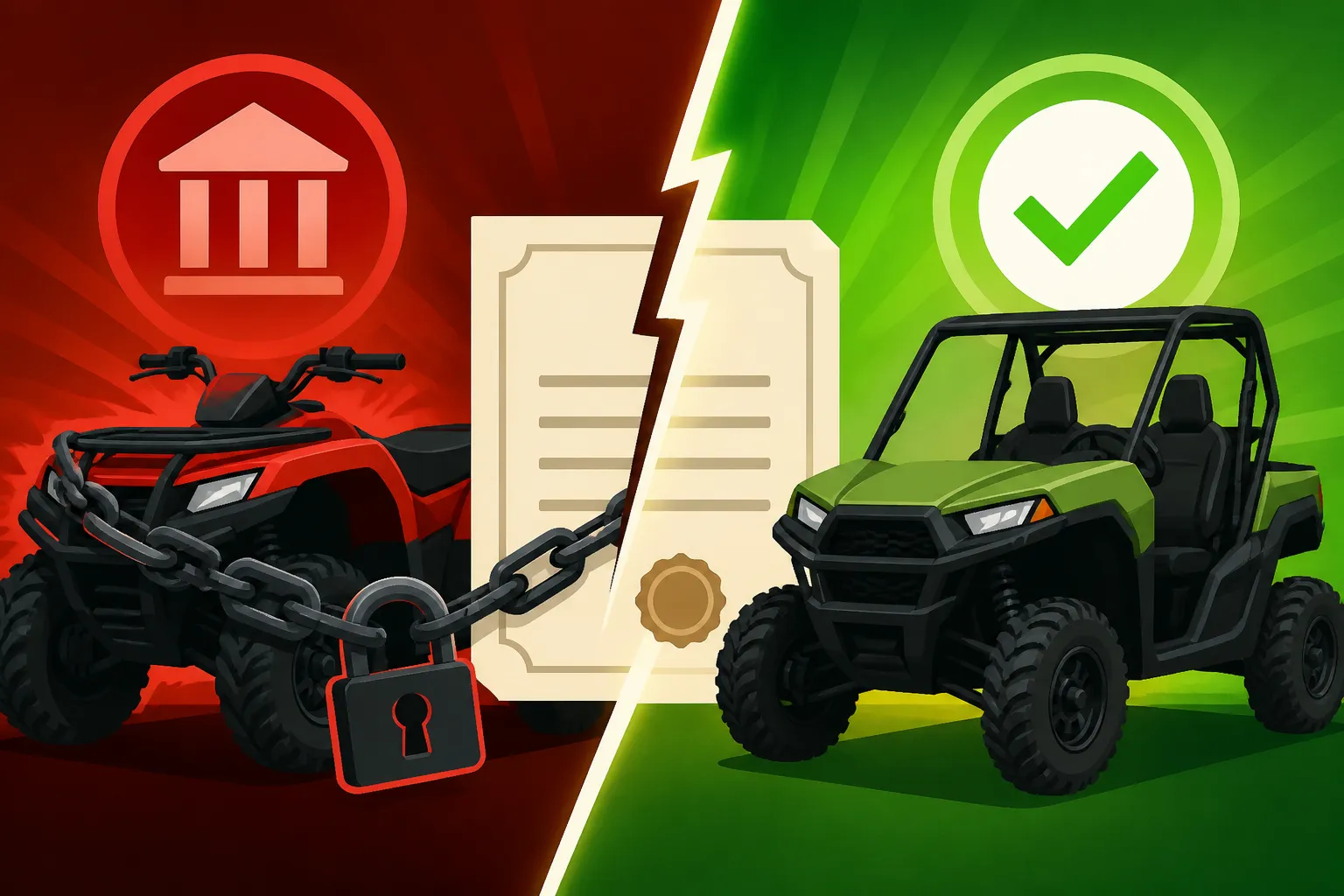
Even if the state didn't require you, the owner, to get a title for that particular type of vehicle at that time, the lender certainly did. They would insist on a title being issued so that their security interest could be officially recorded on it. This made it a legal document proving not only who owned the machine but also who had a financial claim against it. Without that title, the lender would have little recourse if the borrower defaulted or tried to sell the ATV without their knowledge. This is the crux of When a Security Interest Forced an Older Kentucky Title.
How a Lien Forces a Title
The process worked like this: when you financed the ATV, the lender would arrange for a title application to be submitted to the Kentucky County Clerk's office. On this application, they would be listed as the lienholder. Once the title was issued, it would show your name as the owner, but also prominently display the name of the bank or finance company as the entity holding the security interest. This title would typically be sent directly to the lienholder, who would hold onto it until the loan was fully paid off.
From your perspective as the owner, you wouldn't necessarily "have" the title, but one would exist for your machine, solely because the lender required it. This often comes as a surprise to people who buy these older machines later on, only to find that there's a title out there, and sometimes, an active lien that needs to be addressed. It’s a crucial distinction that often gets missed in conversations about older ATV titling.
How a Lender Gets Their Name on a Title
The mechanics of how a lender secures their interest on an ATV title, even for machines predating the 2010 mandate, are fairly straightforward once you understand the underlying legal necessity. It's all about minimizing risk for the financial institution.
The Initial Purchase and Financing Process
When you purchase an ATV, whether it's from a dealership or even some private sellers who offer financing options, and you choose to finance a significant portion of the cost, the lender immediately becomes part of the equation. They are essentially investing in your purchase, and like any investor, they want protection. During the sales process, typically at the dealership's finance office, you'll sign numerous documents. Among these will be loan agreements and applications for a certificate of title.
These forms clearly state that the vehicle is being used as collateral for the loan. The dealership, or the lender directly, would then handle the submission of the title application to the appropriate county clerk's office. This ensures that the lender's name, as the lienholder, is recorded on the official document right from the start. Without this, the lender would likely refuse to issue the loan, seeing it as too great a risk.
Submitting the Title Application to the County Clerk
Even before 2010, the Kentucky County Clerk's offices were the primary hubs for vehicle titling. So, when a lender needed to record a security interest on an ATV, they would submit a title application to the clerk. This application would include all the pertinent details about the ATV: its make, model, year, and crucially, its Vehicle Identification Number (VIN). It would also clearly list the owner (you) and the lienholder (the bank or finance company).
The clerk's office would then process this application, verify the information, and issue a physical certificate of title. This title, unlike one for a completely paid-off vehicle, would explicitly note the lienholder's information. This official record served as public notice that a third party had a claim on the ATV. It was a simple, effective legal mechanism to protect the lender's investment. If you're ever filling out title paperwork, understanding this process can be helpful, and resources like [Kentucky Form TC 96-182 Explained] can be very useful.
Implications for Buying or Selling an Older ATV
This whole situation with older, lien-forced titles can create some significant headaches when it comes to buying or selling an ATV. Many buyers assume "no title needed for older machines," only to discover a surprise.
What Buyers Need to Watch For
As a potential buyer, if you're looking at an ATV from before July 2010, your antenna should go up if the seller mentions anything about a title. It's not a red flag in itself, but it means you need to do your due diligence. Ask why there's a title. Often, the reason will be a past financing arrangement. The biggest trap is buying an ATV with an active lien on it. If you purchase such a machine, you could unknowingly inherit the previous owner's debt, or worse, the lienholder could repossess the ATV even though you paid for it.
Always, always ask the seller for a clear, signed-over title if one exists. If they say a title was issued but they don't have it, that's a serious concern. It likely means the lienholder still possesses it because the loan hasn't been paid off, or a lost title hasn't been replaced. Checking the VIN against available databases is crucial, even if it's an older machine. It can sometimes reveal if a lien is still outstanding. Always remember to check the VIN thoroughly, perhaps even through the county clerk's office if possible. [Checking a VIN Before a Kentucky Purchase] offers good advice here.
Pitfalls for Sellers of Lien-Forced Titled ATVs
For sellers, the main pitfall is trying to sell an ATV with an active lien still attached to its title. You cannot legally transfer clear ownership of an ATV until the lien is satisfied and released. This means you must pay off any outstanding balance on the loan before you can hand over a clear title to a new buyer. If you attempt to sell it with an active lien, you're exposing yourself to legal trouble, and you're putting the buyer in a terrible position.
Another common issue for sellers is simply not having the physical title. If the loan was paid off years ago, but the lienholder never sent the title back to you, or you misplaced it, you'll need to jump through some hoops. You'll either need to contact the original lienholder to get a lien release document (if they didn't send the title directly) and then apply for a clear title at the county clerk's office, or apply for a duplicate title. This process can take time, so if you're planning to sell, start gathering your paperwork well in advance. Having a clear [A Kentucky Bill of Sale for an ATV] is also vital.
Releasing a Lien on an Older ATV Title
Dealing with an older ATV title that has a security interest recorded on it can be a bit of a process, but it's a necessary one if you want to legally prove full ownership or transfer the machine. The key is getting that lien officially removed.
What a Lien Release Looks Like
Once the loan that secured the ATV has been fully paid off, the lender is legally obligated to release their claim. This typically comes in the form of a lien release document. This document is crucial because it's the official confirmation from the lender that they no longer have a financial interest in the ATV. It will usually include details about the ATV (VIN, make, model), the original owner's name, the lender's information, and a clear statement that the lien has been satisfied.
Sometimes, instead of a separate lien release document, the lender might simply sign off on the original title itself, indicating that their interest is released. However, a separate document is more common, especially if the title was held by the lender. Make sure this document is original, not a photocopy, and that it's properly signed by an authorized representative of the lending institution. Without this proof, the county clerk will not remove the lien from the title record. If you need to produce similar legal documents, services like LawDepot can be incredibly helpful for generating formal, legally recognized forms such as a bill of sale or a lien release template.
The Process at the County Clerk's Office
Once you have the original lien release document in hand, you'll need to take it to your local Kentucky County Clerk's office. This is where the magic happens and the lien is officially cleared from the ATV's record.
Here's a general step-by-step of what you can expect:
- Gather Your Documents: You'll need the original lien release document, your photo identification (like a driver's license), and if you have it, the existing title for the ATV (even if it shows the lienholder). It's also wise to bring a bill of sale if you recently acquired the machine.
- Visit the Clerk's Office: Head to the vehicle titling section. You may want to call ahead for their specific hours and any appointment requirements, though many clerks operate on a first-come, first-served basis.
- Present Your Paperwork: Explain to the clerk that you need to have a lien released from an ATV title. They will review your lien release document and your ID.
- Application for a Clear Title: You will likely need to fill out an application for a new, clear title. This new title will show you as the sole owner with no lienholders listed. The clerk will usually keep the original lien release document for their records.
- Pay Any Fees: There will be a fee for issuing a new title. Be prepared to pay this fee, which can vary.
- Receive Your New Title: In many cases, the new title will be mailed to you within a few weeks. The clerk will give you a temporary receipt that serves as proof of your application.
This process ensures that your older ATV now has a clear title, making it much easier to sell or simply confirming your undisputed ownership. You can find more specific details on this topic by looking at [Releasing a Lien on a Kentucky Title]. If you ever need to replace a lost title for one of these machines, information on [Replacing a Lost Kentucky ATV Title] would be relevant.
The Specifics of Kentucky's VIN Rule
When dealing with titles, especially for older or unique machines, the Vehicle Identification Number (VIN) is absolutely paramount. It's the unique identifier for your ATV, and Kentucky takes its VIN rules very seriously. This can be a particular sticking point for older machines that may have unconventional VINs or machines that were imported.
Seventeen Characters and What They Mean
Kentucky law, like most states, generally requires a 17-character VIN for titling purposes. This standard was adopted to align with federal regulations and provides a globally recognized format that encodes specific information about the vehicle, such as its manufacturer, make, model, and year of production. For any machine bought after July 2010, having a 17-character VIN is typically a non-issue as modern manufacturers adhere to this standard.
However, for older ATVs, especially those manufactured before the full adoption of the 17-character standard, you might encounter machines with shorter or non-standard VINs. This can create a significant hurdle when you try to title them, even if a security interest had forced a title in the past. The county clerk's system is designed to process 17-character VINs, and a shorter VIN might be flagged as invalid, preventing the issuance of a new title or the transfer of an existing one. If you're wondering about the specifics, check out [Kentucky's Seventeen-Character VIN Rule].
Challenges for Older and Imported ATVs
For older ATVs that originally had a lien-forced title but possess a VIN with fewer than 17 characters, transferring that title can be a real headache. You might find that the original title was issued with the shorter VIN, but a subsequent attempt to transfer or reissue it runs into problems with current regulations.
Similarly, imported machines, particularly those from certain countries or older models not originally intended for the US market, might not have a 17-character VIN. Even if such a machine was financed in the past and thus had a Kentucky title issued, trying to deal with that title now can be challenging. In these cases, you might need to go through a VIN inspection process or, in extreme situations, prove the machine's origin and history to the Kentucky Transportation Cabinet to get an exception or a new VIN assigned. This is not a simple process and can be a source of considerable frustration for owners. If you're navigating this, [Imported Machines and the Kentucky VIN Rule] could offer some insights.
Navigating the County Clerk's Office for Older Titles
The county clerk's office is your ultimate destination for all things ATV titling in Kentucky, and it's where you'll resolve issues related to older, lien-forced titles. While the process can seem daunting, a little preparation goes a long way.
What to Bring to the Clerk
Preparation is key to a smooth visit. You'll definitely want to have your ducks in a row before you head to the clerk's office. Here's a quick checklist of items you'll likely need:
- Photo ID: Your current Kentucky driver's license or state-issued ID is essential. This is to verify your identity as the owner or authorized party.
- Original Lien Release Document: As discussed, this is the core document needed to clear a security interest. Make sure it's an original, not a copy.
- Existing Title (if available): If you happen to have the physical title, even if it shows the lien, bring it. It helps the clerk locate the existing record.
- Bill of Sale: If you recently purchased the ATV, a properly executed bill of sale is vital for proving your acquisition and the purchase price, which is often needed for sales tax calculation. LawDepot provides templates for a [A Kentucky Bill of Sale for an ATV] that can be very useful in these situations.
- Proof of Sales Tax Paid (if applicable): If you bought the ATV privately, you'll generally pay Kentucky sales tax at the time of titling. If it was from a dealer, they might have collected it already, and you'll need proof.
- Method of Payment: Be prepared to pay any titling fees and sales tax. Check with your specific county clerk's office about accepted payment methods.
Walking in with all your paperwork organized will make the process much smoother and prevent you from having to make multiple trips.
Common Issues and How to Resolve Them
Even with the right documents, you might encounter a few hiccups at the clerk's office.
- Missing Lien Release: This is the most common problem. If you don't have the official lien release, the clerk cannot remove the security interest. You'll need to contact the original lender. This can be challenging if the lender has gone out of business or the loan was from many years ago. You might need to track down successor companies or even consult a legal professional for guidance.
- Non-Standard VIN: As mentioned, a VIN that isn't 17 characters long can cause issues. The clerk might direct you to the Kentucky State Police for a VIN inspection or verification. Be prepared for a potentially longer process involving additional forms and inspections.
- Incorrect Information: Mistakes on titles or lien releases (e.g., misspelled names, incorrect VINs) will need to be corrected. This typically means going back to the source (the lender or the original seller) to get corrected documents.
- Confusion Over "Older Machine" Rules: Some clerks might not immediately recognize the nuance of a lien forcing a title on a pre-2010 machine. Politely explain the situation, referring to the lien release document as proof that a title was, in fact, issued.
Remember, the staff at the county clerk's office are there to help, but they operate within strict legal guidelines. Patience and thorough preparation are your best friends when navigating these administrative waters. For general titling information, refer to [Titling at a Kentucky County Clerk].
Disclaimer
This article is for general informational purposes only and does not constitute professional advice. Laws, prices and regulations vary by location and change over time. Consult a qualified professional for guidance on your specific situation.