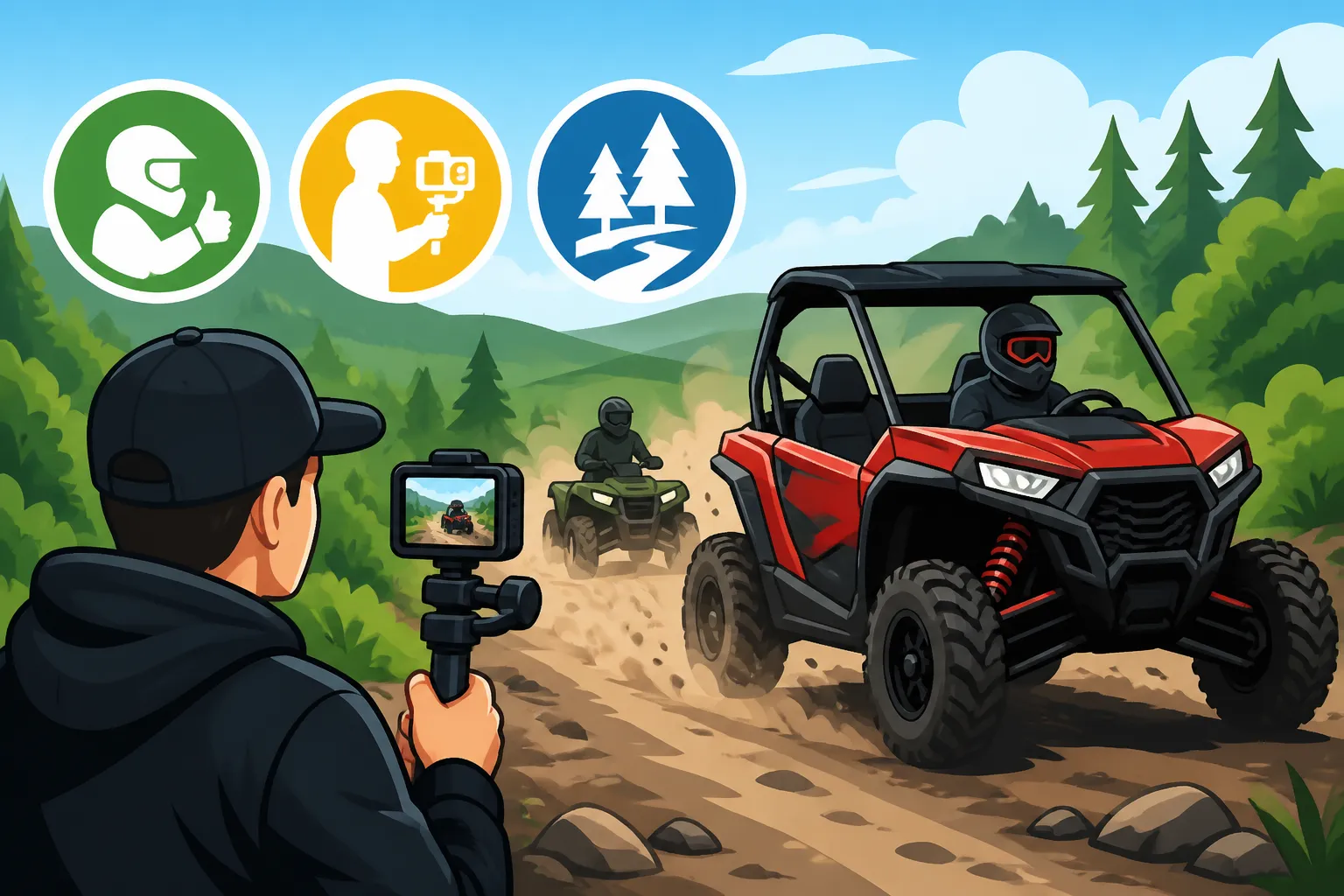
Kentucky Rules for Filming on a Trail
A camera on your helmet or UTV can capture a great Kentucky ride, but access to a trail does not automatically answer every filming question. The rules may depend on who manages the land, whether the footage is personal or commercial, and whether you plan to use a drone or crew. Here’s how to check permissions without confusing a riding permit with approval to film.
Start With Who Controls the Trail
Kentucky has no single filming permission that covers every off-road trail. A trail may be on private property, leased coal land, a park, a national forest or another managed area. The authority that allows riding may also set separate conditions for filming, photography, equipment or commercial activity.
First, identify the land manager or park operator. Then ask whether your intended filming is allowed under your riding permission. A permit to ride is not necessarily permission to set up a production, bring a crew, block a trail or sell footage.
That distinction matters even if you are only carrying a phone or action camera. A rider recording their own outing is different from a planned shoot involving several people, lighting, a tripod, a vehicle staged off-trail or a paid brand partnership. The difference may affect what the land manager asks you to do, not just what you intend to publish.
For an organized shoot, ask the operator before you arrive. Explain the location, date, number of people and machines, the equipment you plan to use, and whether the footage will be used commercially. Ask whether you need written authorization, a separate permit, proof of insurance or an escort. Do not assume that a social media post makes commercial filming personal, or that a small crew is automatically exempt.
| Filming situation | What to check |
|---|---|
| Recording your own ride with a helmet camera | Whether ordinary visitor filming is allowed and whether cameras must be secured |
| Stopping to film scenery | Whether stopping is safe and permitted at that location |
| Bringing a tripod, crew or extra vehicle | Whether the operator requires advance approval or a separate filming permit |
| Making paid, sponsored or promotional footage | Whether commercial-use permission, insurance or additional conditions apply |
| Flying a drone | Both aviation requirements and the land manager’s rules |
| Filming a group ride or event | Whether event approval and participant permissions are needed |
For land under a private or commercial operator’s control, ask the operator directly. Some eastern Kentucky riding areas use leased coal property, where access and trail rights can involve more than one organization. A gate being open or a trail being marked does not tell you who can approve a production. Review Kentucky Rules for Riding a Leased Coal Property and Kentucky Landowner Permission Requirements before planning a shoot on that kind of land.
Public land also has its own management rules. A riding pass or trail permit can authorize a particular kind of recreation without granting permission for every activity. Check the current rules for the specific place, including Kentucky Rules for Riding a National Forest and Kentucky Rules for Riding Land Between the Lakes. If an operator’s answer is unclear, ask which office or land manager handles filming requests and get the answer in writing.
Personal Recording, Commercial Filming and Group Shoots
For a personal ride, keep the setup simple and stay within the normal visitor rules. A securely mounted action camera is generally less disruptive than stopping repeatedly with a tripod or asking other riders to perform for the camera. Still, check the location’s posted conditions and ask the operator if it has camera restrictions. Some places may set rules about equipment, filming in sensitive areas or recording other visitors.
A commercial or organized shoot calls for more planning. “Commercial” can mean more than a television crew. If footage is commissioned, sponsored, used to advertise a product or service, or produced as part of a paid project, ask the land manager how it classifies the activity. The operator can tell you whether a separate approval is needed; do not decide based only on how small the crew is.
A group filming session can also change how your visit affects other people. A camera crew may occupy a staging area, hold up riders, or require several takes in one spot. Ask whether you can reserve space, what areas are off limits, and whether the shoot must avoid busy periods. If the shoot is part of a race, tour or organized ride, check the separate event requirements as well. Kentucky Rules for an Organized Ride and Kentucky Permits for a Race cover related situations, but an event approval should not be treated as filming approval unless the responsible authority says so.
Before you book, get clear answers to practical questions:
- Who approves the filming? Confirm the land manager or operator, not just the person who sells riding permits.
- Does the approval cover your intended use? Describe whether the footage is personal, sponsored, paid, promotional or intended for distribution.
- Who can be filmed? Ask about other riders, staff, visitors and identifiable people in the background.
- Where can equipment go? Confirm whether tripods, lights, microphones, support vehicles or staging areas are allowed.
- Are there insurance or release requirements? If so, ask what documentation is required and who must provide it.
- What happens if conditions change? Find out whether weather closures, maintenance or crowded trails can change your approved plan.
If you are renting a machine, check the rental agreement too. Permission to rent and operate a UTV does not necessarily include permission to film for a commercial project or to mount equipment in any position you choose. Ask the rental provider about camera mounts, passenger filming and damage responsibility, and get the land manager’s answer separately.
Drones, Safety and Respect for Other Riders
A drone adds a second set of rules. The fact that you can legally fly in a general area does not automatically mean the trail operator allows launches or flights there. You may need to consider aviation requirements as well as the land manager’s rules, restricted areas, other airspace users and the safety of people on the ground. Confirm both sides before bringing a drone; a riding permit is not a drone authorization.
Do not launch or land where riders, vehicles or emergency access could be put at risk. Avoid flying close to people, animals or moving machines, and do not assume that a quiet section of trail will stay empty. If the operator prohibits drones or cannot confirm permission, leave the drone behind.
Ground filming can create hazards, too. A camera operator standing on a narrow trail can surprise riders coming around a bend. Do not stop on a blind climb, in a rut, at a creek crossing or where a rider has limited room to pass. Choose a safe pull-off, keep gear out of the riding line, and have a spotter if the location or traffic makes that prudent. Never ask a rider to repeat a risky maneuver for a shot.
Respect the people in your footage. Other visitors may not want to appear in a promotional video or public post. Ask before featuring someone prominently, especially children, and follow the land manager’s requirements for releases or privacy. A person in the background is not the same as someone who has agreed to be the subject of a campaign. If you are filming a group, tell participants how the footage may be used and obtain any permissions the operator requires.
Keep audio and lighting considerate. Loud production equipment, bright lights or repeated takes can disturb wildlife and other visitors. Do not enter closed areas to get a better angle, move signs, or ride off marked routes. Check Kentucky Trail Closures to Check before your trip and follow any temporary instructions posted at the gate or trailhead.
A mount, spare battery or weather-resistant case can make personal filming easier, but equipment does not substitute for permission. If you buy filming accessories through a retailer such as Amazon, check that the mount fits the machine and does not interfere with controls, visibility or safety equipment. Ask the rental company before attaching anything to a rented machine.
A Practical Permission Checklist Before You Go
A short written confirmation can prevent a long argument at the gate. Contact the operator well before travel if the shoot involves commercial use, a crew, a drone, a tripod, a vehicle beyond the riding group or any plan to occupy a specific area. Include enough detail for the operator to give a useful answer.
Keep these records together:
- The name of the park, land manager or property operator
- The person or office that approved the shoot
- The approved date, location and activity
- Any conditions on equipment, crew size, access, insurance or publication
- Your riding permits and any separate filming or event authorization
- Contact information for the operator in case the plan changes
On arrival, check posted notices and confirm that the approved area is open. Conditions can change because of weather, maintenance, events or other closures. If the operator’s rules differ from what you expected, follow the current instructions and ask before filming. Kentucky Trail Permits Explained can help distinguish site-specific riding access from broader permissions; Why a Kentucky Park Permit Is Not a State Permit explains why approval at one location should not be assumed to carry over elsewhere.
The safest rule is straightforward: ask the organization that controls the land, describe the filming honestly, and get any special permission in writing. Personal footage may be simple, but commercial productions, drones and organized shoots deserve a direct check before you load the machines.
Disclaimer
This article is for general informational purposes only and does not constitute professional advice. Laws, prices and regulations vary by location and change over time. Consult a qualified professional for guidance on your specific situation.